


A Planet's Shifting Colours
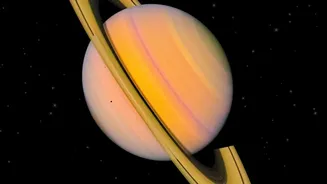
The latest observations come from Hubble’s Outer Planet Atmospheres Legacy (OPAL) program, which has been monitoring the solar system's gas giants annually. These long-term studies allow scientists to track subtle atmospheric shifts that would otherwise
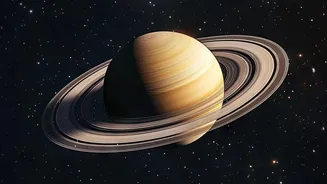
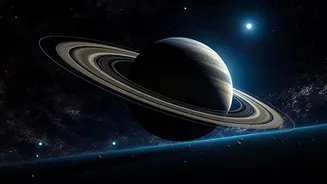
be missed. The new data, gathered as Saturn’s northern hemisphere moves from summer toward autumn, reveals fascinating year-to-year changes in the planet's colourful cloud bands. From 2018 to 2020, for instance, Saturn's equator brightened by 5 to 10 percent, and wind speeds that had been measured at 1,600 kilometres per hour returned to the slower 1,300 km/h previously recorded by the Cassini spacecraft. These shifts hint at changes in cloud height and composition, painting a picture of a living, breathing atmosphere.
Why Infrared Is Key
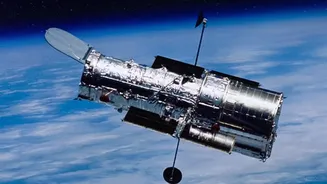
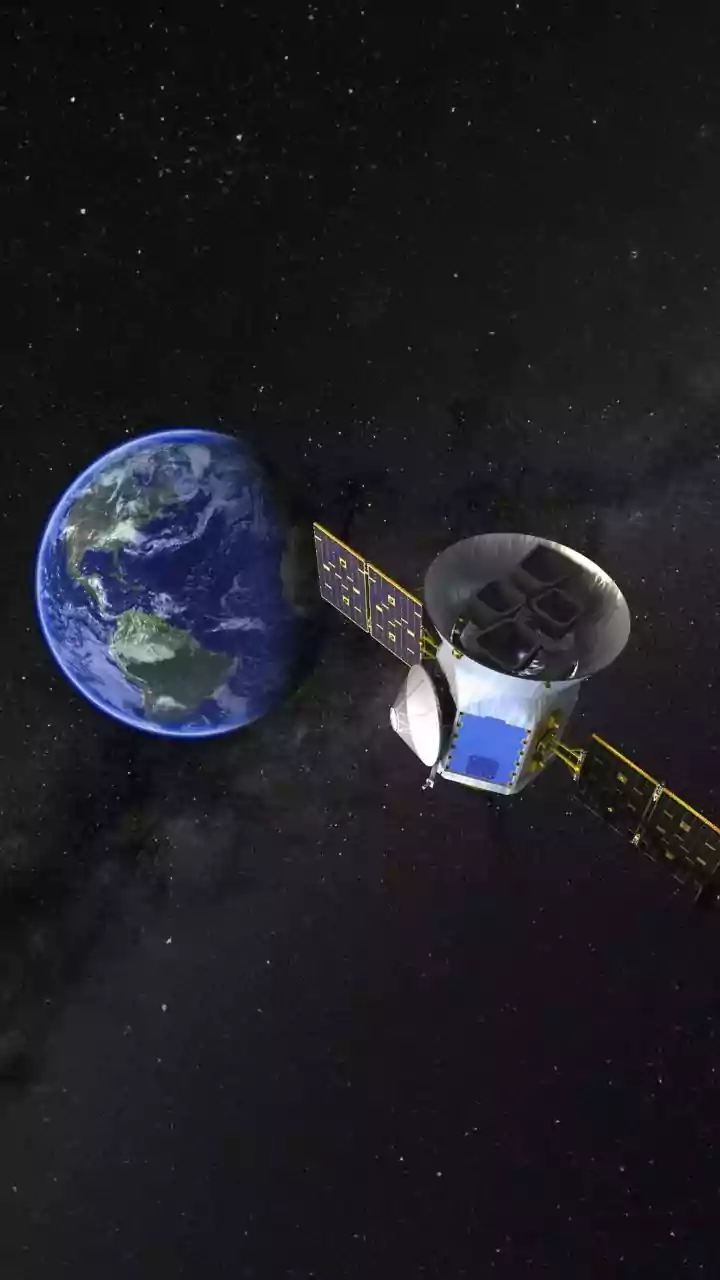
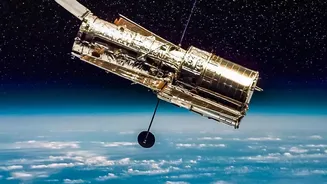
While the headline mentions Hubble, recent insights also combine its visible-light observations with the powerful infrared capabilities of the James Webb Space Telescope. This teamwork allows scientists to effectively peel back Saturn’s atmospheric layers like an onion. Hubble sees the subtle colour variations in the upper cloud decks, but Webb’s infrared vision penetrates the haze to sense heat, chemicals, and cloud structures at much deeper altitudes. This multi-wavelength approach reveals features invisible to one telescope alone, such as deep storm systems and meandering jet streams, giving us a more complete, three-dimensional understanding of how the planet's weather works.
The Long, Slow Seasons of a Gas Giant
Saturn’s seasons are far more extreme than Earth’s. The planet is tilted on its axis much like our own, but its orbit around the sun takes a staggering 29.5 years. This means each season lasts for more than seven Earth years, with its poles plunged into either constant sunlight or total darkness for nearly 15 years at a time. This vast timescale has made seasonal changes difficult to study, which is why the consistent, long-term observations from the OPAL program are so valuable. The program began tracking Saturn in 2018, picking up where the Cassini mission left off, to build a continuous record of its atmospheric evolution through a significant portion of a Saturnian year.
A Tale of Two Heat Sources
What drives Saturn's dynamic weather? It’s a complex interplay between two powerful engines: the Sun and the planet’s own internal heat. Saturn actually radiates about twice as much energy as it receives from the Sun. This immense internal heat, left over from its formation, drives powerful winds and shapes the planet-wide storms that can rage for years. However, seasonal changes in sunlight also play a crucial role. As the planet's tilt exposes different hemispheres to more direct sunlight, atmospheric temperatures and chemistry change. Even the massive shadow cast by Saturn's rings creates cooler, shaded regions that trigger interesting atmospheric dynamics as they emerge back into the light during the spring.
Piecing Together the Planetary Puzzle
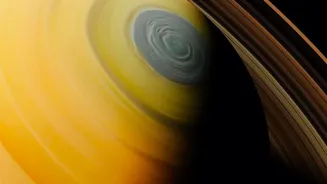
Studying the weather on a distant gas giant isn't just about curiosity; it's a natural laboratory for understanding planetary atmospheres everywhere, including our own. The powerful winds, long-lived storms like the famous north-polar hexagon, and the delicate balance of internal and external energy help scientists refine their models of fluid dynamics and climate under extreme conditions. By tracking how Saturn’s atmosphere responds to its long seasons, researchers gain crucial insights into the fundamental processes that govern all planets. These observations from Hubble and Webb are not just snapshots but vital data points in the ongoing story of how our solar system formed and continues to evolve.