



A stark new report released during the UN climate summit in Antalya, Türkiye, confirms what many have feared: global climate action has effectively stalled. This inertia puts the critical goal of limiting global warming to 1.5°C in serious jeopardy.
A Sobering Diagnosis from the UN
Multiple
recent UN reports paint a grim picture of the world's fight against climate change. The UN Environment Programme's (UNEP) 2026 Emissions Gap Report, subtitled 'The Point of Return', has concluded that it is now essentially unavoidable that the world will temporarily exceed the 1.5°C warming threshold. This 'overshoot' is a direct result of decades of insufficient action. According to the independent Climate Action Tracker report, released at the COP31 summit in Antalya, aggregated climate efforts have now stalled for five consecutive years, with positive steps being cancelled out by setbacks and unfulfilled promises. If current policies continue, the world is on a trajectory for a dangerous 2.8°C of warming by the end of the century.
Why 1.5°C is a Critical Lifeline
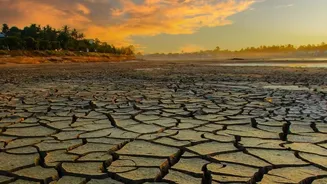
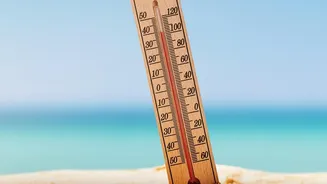
The 1.5°C target, set by the Paris Agreement, is not an arbitrary number. It is a crucial guardrail against the most catastrophic and irreversible impacts of climate change. According to the Intergovernmental Panel on Climate Change (IPCC), the difference between 1.5°C and 2°C of warming is stark. Limiting warming to 1.5°C means less extreme heatwaves, less intense rainfall, and a lower risk of droughts. It means 10 million fewer people would be affected by sea-level rise compared to a 2°C world. For ecosystems, it’s the difference between a world where some coral reefs might survive versus one where they are almost entirely wiped out. Every fraction of a degree avoided saves lives, protects ecosystems, and reduces economic losses.
The Anatomy of Stalled Action
So, what does 'stalled action' look like? It's a chasm between promises and reality. The Emissions Gap Report reveals a massive gap between what countries have pledged in their Nationally Determined Contributions (NDCs) and the cuts required. Full implementation of current pledges would only reduce emissions by 11-15% by 2035, a far cry from the 45% reduction needed to keep the 'lowest possible' overshoot scenario in play. Furthermore, finance for adaptation—helping vulnerable nations cope with the climate impacts already happening—is flatlining. Developing countries will need an estimated $305 billion annually by 2035 for adaptation, yet international public finance flows were only around $32 billion in 2024.
The Türkiye Connection: A Summit at a Crossroads
The headline's reference to Türkiye points to the critical COP31 climate summit being held in Antalya from November 9–20, 2026. The release of several of these sobering reports was timed to pressure leaders and negotiators at the conference. The host nation itself has acknowledged the grim reality, with Turkish Environment Minister Murat Kurum stating, 'This is the first COP where it is clear beyond a reasonable doubt that the world will overshoot the 1.5–degree target'. The summit in Antalya is therefore a pivotal moment, not to celebrate victory, but to grapple with failure and forge a credible path forward to minimize the duration and severity of the temperature overshoot.
Is There Still a Path Forward?
While the reports are bleak, they are not a call for surrender. UN Secretary–General António Guterres was clear: 'Overshoot is not surrender'. The focus has now shifted to making any overshoot as small and as short as possible, with the goal of returning temperatures to below $1.5$°C by the end of the century. The UNEP report outlines what is needed: a tripling of renewable energy capacity, a $75$% cut in electricity from coal by $2035$, and a rapid phase–out of all fossil fuels. The technology and the pathways exist. The reports serve not as an obituary for the $1.5$°C goal, but as the most urgent alarm bell yet for the political will and collective action required to heed the science.