
Understanding Space Weather
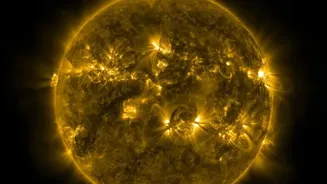
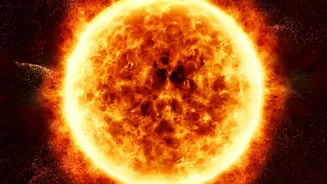
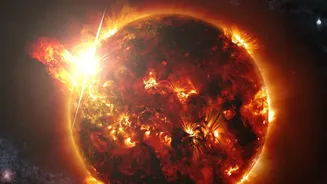
When we think of weather, we typically picture rain, snow, or sunshine. But there's another kind of weather that originates 93 million miles away, on the surface of the Sun. This is space weather, and it’s driven by powerful solar events. The Sun isn't
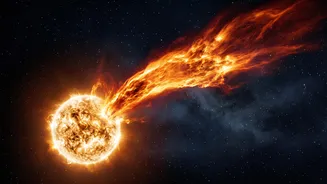
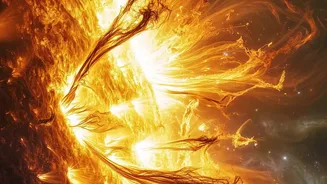
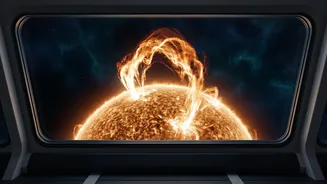
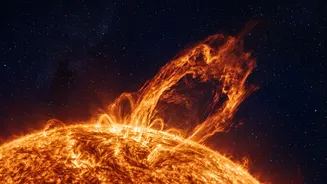
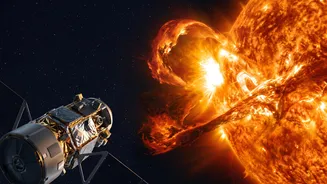
just a steady ball of light; it's a dynamic star that occasionally unleashes massive bursts of energy and charged particles. These events, known as solar flares and coronal mass ejections (CMEs), send radiation and plasma hurtling through space. If Earth is in the path of one of these eruptions, the resulting geomagnetic storm can have profound consequences.
The Threat to Our High-Tech World
Our planet's magnetic field and atmosphere protect us from the worst effects of space weather. However, our increasing reliance on technology makes us more vulnerable than ever. A powerful solar storm could overload power grids, potentially causing widespread and long-lasting blackouts, as happened in Quebec in 1989. It could also damage the sensitive electronics on satellites, disrupting everything from GPS navigation and weather forecasting to global communications and financial transactions. For astronauts in space, the risk from radiation is even more direct and dangerous. Essentially, the backbone of our modern, interconnected society is at risk.
The Challenge of Forecasting
Predicting exactly when and where a solar storm will impact Earth has been a significant challenge. Previous models often struggled to provide timely and precise global forecasts. Some could produce local forecasts, while others provided global predictions that were not fast enough to be truly actionable. In many cases, we wouldn't know the full extent of a storm's impact until it had already begun to affect us, leaving little time to take protective measures. For grid operators and satellite controllers, this lack of warning has been a persistent concern.
Enter DAGGER: AI as a Solar Sentry
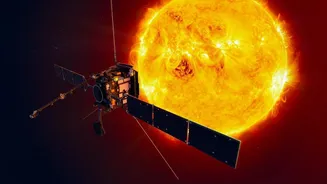
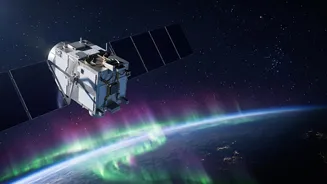
This is where NASA’s new AI model comes in. Developed by researchers at the Frontier Development Lab, the system is called DAGGER, which stands for Deep Learning Geomagnetic Perturbation. By combining artificial intelligence with data from NASA satellites monitoring the solar wind, DAGGER can analyze the constant stream of particles from the Sun and spot the signs of an impending storm. The model uses a process called 'deep learning' to recognize complex patterns in vast amounts of data, allowing it to learn the connections between activity on the Sun and its effects on Earth.
A Critical 30-Minute Warning
The key benefit of the DAGGER system is its speed and accuracy. It can predict where a solar storm will strike anywhere on Earth with about 30 minutes of advance warning. This is possible because the data, traveling at the speed of light, reaches the AI faster than the solar material itself. While half an hour might not sound like much, it's a critical window for action. This lead time can allow power grid operators to take sensitive systems offline, satellite controllers to move their spacecraft into safer orbits, and telecommunication companies to protect their infrastructure. The model's code is open source, meaning companies can adapt it to their specific needs to help prevent or minimize devastation. In tests against past geomagnetic storms from 2011 and 2015, DAGGER was able to accurately forecast their impacts.