



Kolkata, the 'City of Joy', is a captivating paradox where history breathes through grand colonial facades while modern life pulses in its bustling lanes. To truly know it is to wander beyond the landmarks and embrace its many vibrant experiences.
Marvel at Colonial Grandeur
No exploration
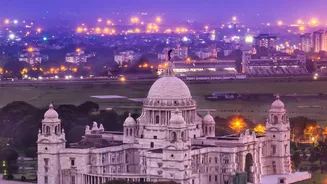
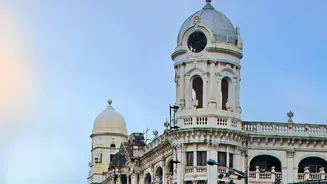
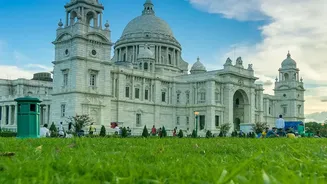
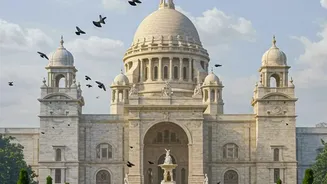
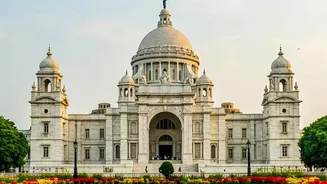
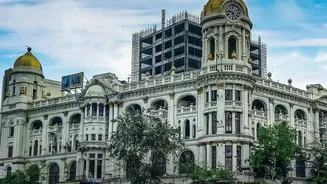
of Kolkata is complete without acknowledging its past as the capital of British India. This legacy is etched into the city's architecture, most magnificently in the Victoria Memorial. This sprawling white marble monument, often compared to the Taj Mahal, blends European and Mughal styles and stands as the city's most recognised landmark. Nearby, the imposing Writers' Building, with its Greco-Roman facade, was the original seat of power for the British East India Company clerks. Stroll through the B.B.D. Bagh area (formerly Dalhousie Square) to see a concentration of these historic structures, including the impressive General Post Office with its towering dome. Each building tells a story of a bygone era, offering a glimpse into the architectural ambitions of the empire.
Ride Through Time on a Tram
In a city hurtling towards the future, the tram is a cherished emblem of a slower, more graceful pace. As the only operating tramway in India, Kolkata's network is a living piece of history. The first horse-drawn trams appeared here in 1873, with electric trams being introduced in 1902, making it one of Asia's oldest electric tram systems. Taking a ride is less about getting somewhere quickly and more about the experience itself. The gentle rocking and the clang of the bell provide a unique soundtrack as you glide past bustling markets, historic colleges, and lively neighbourhoods. It's an affordable, eco-friendly, and deeply atmospheric way to see the city unfold at a human pace.
Get Lost in the Literary World of College Street
Known as 'Boi Para' or 'Book Town', College Street is a paradise for any bibliophile. It is Asia's largest second-hand book market, a nearly kilometre-long stretch packed with makeshift stalls and established bookstores. You can find everything here, from academic textbooks and contemporary bestsellers to rare first editions and out-of-print pamphlets at bargain prices. The street is also home to the legendary Indian Coffee House, a historic hub for the city's intellectuals, artists, and students for decades. The air here, thick with the scent of old paper and freshly brewed coffee, buzzes with debate and discussion, making it the city's intellectual heart.
Discover Where Gods Are Born in Kumartuli
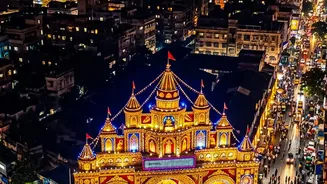
In the narrow lanes of North Kolkata lies Kumartuli, the traditional potters' quarter, where skill and devotion merge. For over 300 years, generations of artisans, or 'Kumors', have been sculpting exquisite clay idols of Hindu deities. This is the place where thousands of idols for Durga Puja, Kolkata's biggest festival, are created. Visitors can wander through the workshops and witness the entire creation process: from the initial bamboo and straw frames to the final, expressive painting of the eyes in a ritual known as 'Chokkhu Daan'. Kumartuli is more than just a production hub; it's a living museum and the artistic soul of the city's most cherished festival.
Embark on a Street Food Pilgrimage
To taste Kolkata is to taste its street food. The city offers a culinary adventure on every corner. Start with phuchka, the local version of pani puri, where a spicy potato mix fills a crispy shell that bursts with tamarind water in your mouth. Another essential snack is jhalmuri, a mix of puffed rice, peanuts, spices, and a drizzle of sharp mustard oil served in a paper cone. Don't miss the famous kathi roll, a warm paratha wrapped around succulent kebab fillings, a creation credited to the city. From the Indo-Chinese breakfast at Tiretti Bazaar to the rich biryani with its signature potato, Kolkata's streets are a feast waiting to be devoured.