




What Exactly Are Sodium-Ion Batteries?
At its core, a sodium-ion battery works much like the lithium-ion batteries found in our phones and current electric vehicles. It stores and releases energy by moving ions between a positive and a negative electrode. The crucial difference, however, lies
in the main ingredient. Instead of lithium, it uses sodium, the sixth most abundant element on Earth. This is the same element found in table salt and soda ash, resources that India has in plentiful supply. This simple switch from scarce lithium to abundant sodium is the foundation of its transformative potential, offering a pathway to break free from complex and costly global supply chains.
The Undeniable Cost Advantage
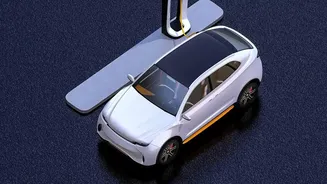
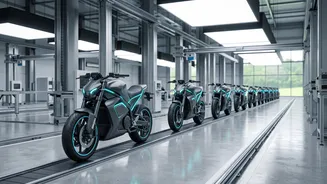
The single biggest barrier to EV adoption in India is the upfront cost, and the battery pack is the most expensive component. This is where sodium-ion technology presents a compelling economic argument. Sodium is over 1,000 times more abundant than lithium, and its raw material form, soda ash, is significantly cheaper than battery-grade lithium carbonate. Companies developing this technology project cost reductions of 25-30% compared to equivalent lithium-ion packs. This cost advantage isn't just theoretical; it's a direct result of using cheaper, more geographically diverse raw materials, including using aluminium as a current collector instead of more expensive copper. As manufacturing scales up, these savings could directly translate into lower sticker prices for electric two-wheelers, three-wheelers, and budget-friendly passenger cars.
A Strategic Move for 'Atmanirbhar Bharat'
Beyond just cost, sodium-ion batteries align perfectly with India's mission of self-reliance, or 'Atmanirbhar Bharat'. Currently, India is heavily dependent on imports for lithium-ion cells and their critical mineral components like lithium, cobalt, and nickel—resources whose supply chains are largely controlled by a handful of countries. Developing a domestic sodium-ion battery ecosystem would drastically reduce this import dependency, bolstering the nation's energy security. Indian companies are already making significant strides. Pune-based KPIT Technologies has developed its own sodium-ion technology, which is now being commercialized by Trentar Energy Solutions. Meanwhile, corporate giant Reliance Industries is fast-tracking the commercialization of its sodium-ion technology, acquired through its UK subsidiary Faradion, with plans for a giga factory set to begin operations in 2026.
Performance, Safety, and a Reality Check
So, are sodium-ion batteries a perfect replacement? Not quite—there are trade-offs. Their main limitation is lower energy density, meaning they store less energy for their weight compared to high-performance lithium-ion batteries. This translates to a shorter driving range, which might make them less suitable for premium, long-range SUVs. However, they excel in other areas. They are generally considered safer, with a lower risk of thermal runaway (fires), and perform well in a wide range of temperatures. Many also boast faster charging capabilities and an impressive cycle life, with some prototypes retaining 80% capacity after 3,000 to 6,000 cycles. For the bulk of the Indian market—think city commuters, electric scooters, and commercial three-wheelers—where daily travel distances are predictable and extreme range is not a priority, the performance is more than adequate.
The Road Ahead for India's EV Dream
The path to mass adoption is not without challenges. While the technology is proven, scaling up manufacturing to compete with the massive, established lithium-ion industry will take time and significant investment. As of 2026, even with growing production, sodium-ion batteries have not yet achieved clear cost parity with the most optimized lithium iron phosphate (LFP) cells. However, the momentum is undeniable. With Indian firms like Reliance and KPIT pushing forward and global players like CATL and BYD ramping up commercial production, the technology is maturing rapidly. Many experts see sodium-ion not as a direct replacement for all lithium-ion batteries but as a complementary technology, perfectly suited for the affordable mobility segment that will define India's EV market.