




Meet Prithvi: An AI for Planet Earth
At the heart of this initiative is a powerful new tool developed in collaboration with IBM. Named Prithvi, the Sanskrit word for Earth, it’s a type of artificial intelligence known as a foundation model. Much like large language models are trained on the vast
expanse of the internet to understand text, Prithvi has been trained on immense archives of satellite imagery. Specifically, it has learned from years of data collected by the Harmonized Landsat and Sentinel-2 (HLS) program, which combines observations from NASA and European Space Agency satellites. This allows the AI to understand the visual language of our planet—what a forest looks like, how a river flows, and the subtle textures that signal drought or urban expansion. Think of it less as a single-purpose tool and more like a Swiss Army Knife for Earth science, capable of being adapted for countless different tasks.
From Raw Data to Actionable Insight
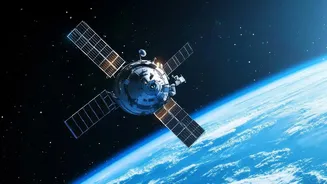
The sheer volume of data NASA collects is staggering—by 2024, it was estimated to hold 250,000 terabytes. Sifting through this for meaningful patterns is a huge bottleneck for scientists. This is where Prithvi changes the game. By learning the fundamental patterns of Earth's surface, the model can be quickly “fine-tuned” with a small amount of new data to spot specific phenomena. For example, researchers have already demonstrated its ability to map floodwaters after a disaster, identify burn scars left by wildfires, and classify different types of land use and crops. In May 2026, a version of Prithvi even became the first geospatial AI model to be deployed in orbit, running on platforms aboard the International Space Station to test its abilities in real-time. This allows for analysis to happen in space, before the data even reaches the ground.
Real-World Impact: Floods, Fires, and Food
The applications of this technology are vast and vital. For disaster response, quickly and accurately mapping the extent of a flood or the perimeter of a wildfire can help authorities direct resources more effectively and save lives. In agriculture, the model can be trained to monitor crop health and predict yields, offering a powerful tool for enhancing global food security. It can also be adapted to monitor greenhouse gas emissions, track deforestation, and observe changes in biodiversity. The goal is to move from a reactive to a proactive stance on environmental management. By detecting the subtle precursors to events like droughts or famines, these AI models give us a chance to intervene earlier and mitigate the worst effects of a changing climate.
Open Science for a Global Challenge
Crucially, NASA and IBM have made the Prithvi models open-source, available to researchers, developers, and scientists around the world through platforms like Hugging Face. This collaborative approach is essential. By making the foundational tool freely available, smaller research groups, developing nations, and private companies can build upon it without needing the immense computational power required to create such a model from scratch. This has already led to unexpected applications, such as one group using the model to predict locust breeding grounds in Africa. NASA is also expanding the Prithvi family of models, releasing versions focused on weather and climate (Prithvi-WxC) and another, named Surya, designed to understand our Sun and predict space weather.