
Long before 'sustainability' became a global buzzword, Indian households practised it as a way of life. Fabric, infused with memories and value, was never just thrown away. Here are five textile traditions that masterfully turn old cloth into new art.
Kantha: Bengal’s Stitched Narratives
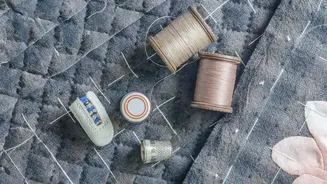
Originating from Bengal, Kantha is a centuries-old tradition where women layer old, soft saris and dhotis, stitching them together with a simple running stitch. What began as a thrifty way to create light quilts ('lep') and covers has evolved into an expressive art form. The thread for the embroidery was often pulled from the borders of the old saris themselves, making it a true exercise in resourcefulness. Kantha pieces often feature motifs from mythology, nature, and daily life, essentially creating a visual story stitched into the fabric. This craft was never for kings or commissions; it was a domestic art passed from mother to daughter, embedding personal histories into every piece.
Godhadi: Maharashtra’s Heirloom Quilts
In Maharashtra, the Godhadi is more than just a quilt; it's a multi-layered heirloom. Crafted from worn-out clothes and saris, each Godhadi is hand-stitched with love and memory. The process is a community affair, with women often gathering in the afternoons, especially during summer, to layer the fabrics and sew them together while sharing stories and songs. Traditionally, a strong white thread is used because coloured dyes were believed to weaken it. The result is a warm, durable blanket filled not just with scraps of cloth, but with the warmth of shared moments. Villagers often refuse to sell their Godhadis, as they are considered a personal chronicle of a family's life and a mother's affection.
Chindi: The Woven Wonders of Waste
The word 'Chindi' literally means torn cloth or rags in Hindi. This craft, prominent in states like Maharashtra, Uttar Pradesh, and Rajasthan, transforms textile waste into vibrant, functional items. Strips of fabric scraps, sourced from households or garment manufacturing units, are woven, braided, or coiled to create colourful floor coverings known as 'dhurries', mats, and bags. Unlike many traditional textile practices, the production of Chindi dhurries is often handled by women, providing them with a commercially viable product made from repurposed materials. This craft is a powerful example of turning waste into wealth, creating beautiful, durable products from what would otherwise be discarded.
Sujani: Bihar’s Embroidered Stories
Much like Kantha, Sujani (or Sujini) from Bihar began as a way to make soft quilts for newborn babies by layering old dhotis and saris. The word itself is a combination of 'su' (easy) and 'jani' (birth). Traditionally, the motifs stitched onto the quilt represented the mother's dreams and wishes for her child. Using a simple running stitch for filler and a chain stitch for outlines, women artisans create narrative panels depicting folklore, social issues, and personal experiences. The craft nearly vanished but was revived in the late 1980s and has since become an important source of livelihood for hundreds of rural women, transforming a domestic tradition into a powerful voice. It has even earned a Geographical Indication (GI) tag for its unique heritage.
Dhabla: The Woven Blankets of Kutch
Hailing from the Kutch region of Gujarat, the Dhabla is a traditional woollen blanket woven by the Vankar community for pastoral groups like the Rabaris. The Vankars, who migrated from Rajasthan, would use hand-spun wool provided by the Rabaris to weave these dense, durable shawls and blankets. Traditionally, a Dhabla was so tightly woven that it was water-resistant and served as protection during monsoons. They were woven in two separate pieces on narrow looms and then stitched together by Rabari women. Adorned with geometric motifs, these white woollen textiles are a testament to the symbiotic relationship between communities and the ingenuity required to create functional, beautiful textiles from local resources.