






What Is the Graded Response Action Plan?
The Graded Response Action Plan (GRAP) is a set of emergency measures that kick in to prevent further deterioration of air quality in the Delhi-NCR region. It was first notified by the Environment Ministry in 2017 following a Supreme Court order. Think
of it as a four-stage, colour-coded rulebook tied directly to the Air Quality Index (AQI). The plan is incremental; as the air quality worsens, stricter measures are enforced. Stage I is triggered when the AQI is 'Poor' (201-300), Stage II for 'Very Poor' (301-400), Stage III for 'Severe' (401-450), and Stage IV for 'Severe+' (above 450). The Commission for Air Quality Management (CAQM), a statutory body, is responsible for invoking and implementing GRAP across Delhi and its adjoining areas in Haryana, Uttar Pradesh, and Rajasthan.
Why Stage 1 Is Active Now
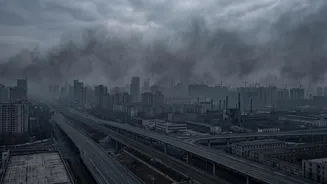
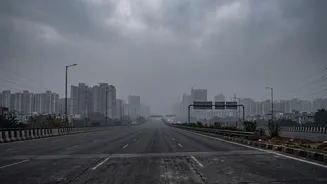
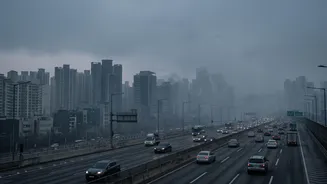
The CAQM implemented Stage 1 measures across the NCR on Wednesday, October 21, 2026. The decision came after Delhi’s daily average AQI jumped sharply from 179 ('moderate') on October 20 to 244 ('poor') the next day. On Thursday morning, the AQI remained in the 'poor' category, with some areas even touching 'very poor' levels. Forecasts from the India Meteorological Department (IMD) and the Indian Institute of Tropical Meteorology (IITM) predict that the air quality is likely to remain in the 'poor' category for the coming days, necessitating these pre-emptive measures to stop the situation from getting worse.
Construction and Dust Control Measures
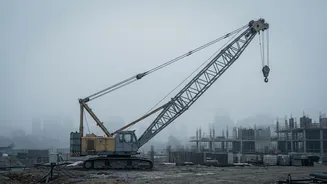
A major focus of Stage 1 is controlling dust, a primary contributor to particulate matter pollution. All construction and demolition (C&D) sites are now under strict scrutiny. Agencies have been directed to enforce dust control measures, including installing wind barriers and dust screens. For larger C&D projects, those over 500 square metres, a dust management plan must be in place. The Municipal Corporation of Delhi (MCD) has been specifically instructed to increase its efforts in road dust mitigation through mechanised sweeping and regular water sprinkling on key routes. Open burning of all kinds of waste—including garbage, leaves, and biomass—is strictly banned.
Restrictions on Industries and Tandoors
Stage 1 also brings targeted restrictions on certain industrial and commercial activities known for causing pollution. The use of coal and firewood in the tandoors of hotels, restaurants, and other open eateries is now prohibited. The operation of diesel generator sets is also restricted, with usage permitted only for emergency and essential services as specified by the rules. Furthermore, all industries, brick kilns, and hot mix plants must comply with emission standards and use only approved fuels. Thermal power plants within a 300 km radius of Delhi are also under notice to adhere strictly to emission norms.
What This Means for the Public
For the general public, the immediate impact of Stage 1 is more about heightened enforcement than major lifestyle changes. Traffic police have been directed to take action against visibly polluting vehicles and step up checks for valid Pollution Under Control (PUC) certificates. Authorities will also deploy additional traffic personnel at busy intersections to ensure smooth traffic flow and encourage drivers to turn off their engines at red lights. While there is no 'odd-even' rule or ban on private vehicles at this stage, the restrictions on BS-III petrol and BS-IV diesel four-wheelers will come into effect if the situation deteriorates to Stage III. Citizens are urged to cooperate by using public transport, ensuring their vehicles are well-maintained, and refraining from burning any waste.