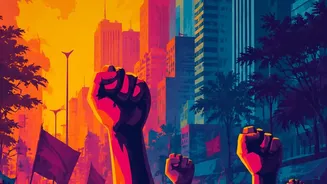







In the high-stakes arena of Brazilian politics, recent elections were not just fought on the streets but in the sprawling digital world of social media. A massive online network of supporters for Luiz Inácio Lula da Silva emerged as a formidable force.
The Rise of a Digital Army
During recent election cycles, particularly the knife-edge 2022 presidential race and subsequent campaigns, a vast, digitally-native mobilization took shape in support of Luiz Inácio Lula da Silva. At its heart was a strategy that mirrored the tactics long dominated by the political right: leveraging the immense power of messaging apps. This effort became widely known through initiatives like 'Exército do Lula' or 'Lula's Army', a WhatsApp channel spearheaded by Congressman André Janones. Starting with a relatively modest follower count, the channel exploded in popularity, gathering over 10 million followers. This network was not just a top-down broadcast system; it was a participatory movement where millions of 'soldiers' received daily instructions, transforming their personal social media accounts into nodes of a sprawling campaign machine.
Mobilise, Amplify, Repeat
The network's tactics were precise and relentless. Congressman Janones acted as a virtual 'general', issuing daily 'missions' to his followers. These tasks were designed to manipulate social media algorithms and shape public discourse. Supporters were instructed to push specific hashtags, run coordinated Google searches to boost certain terms, and share campaign-produced videos and memes across platforms like WhatsApp, Instagram, and X (formerly Twitter). The strategy was to create a constant drumbeat of pro-Lula messaging, counter disinformation from opponents, and pierce the information bubbles of undecided voters. The campaign taught followers not only what to share, but how to do it effectively, and crucially, to avoid engaging with opponents' content, as even negative interaction can boost its visibility. This created a sense of collective purpose and transformed passive support into active, coordinated digital activism.
The Unproven Link to the Ballot Box
Despite its immense scale and undeniable success in dominating online conversation, the exact electoral impact of this digital network remains a subject of intense debate among analysts. While pundits credited the mobilization with helping to energize the base and increase voter turnout, drawing a straight line from a shared WhatsApp message to a vote cast is notoriously difficult. Political scientists point out that correlation is not causation; a surge in online activity happens alongside many other campaign efforts, including traditional rallies and media appearances, making it hard to isolate one factor as decisive. Research into Brazil's 2022 election highlights that while participation in political messaging groups is high, it is also linked with belief in misinformation, complicating the narrative of a purely positive mobilization. Furthermore, studies suggest social media campaigns often reproduce existing inequalities, with well-funded and already-prominent political figures benefiting most, rather than levelling the playing field.
More Than Just Votes?
Even if the direct impact on voting numbers is unproven, supporters argue the network was crucial for other reasons. The constant online activity demonstrably raised supporter morale, especially after disappointing first-round results in past elections. It provided an effective counterndative to the right's powerful digital machine, fighting disinformation in realndime and reclaiming national symbols like the Brazilian football jersey that had been coopted by the right. The digital effort also fed into realworld action, connecting online calls to action with offline rallies and getoutthevote efforts. Some analysts argue the campaign successfully pierced information bubbles, reaching audiences beyond algorithmically curated feeds through direct, peertopeer sharing on WhatsApp. In this view, the network's main achievement was not necessarily changing minds, but energizing a base and ensuring they turned up to the polls.