








More Than Just Fuel
Think of your first meal not just as calories, but as a set of instructions for your body. After a night of fasting, your body is primed for signals. This meal effectively ‘wakes up’ your metabolism and helps synchronise your internal body clock, or circadian
rhythm. Eating a balanced meal within a few hours of waking tells your body that resources are available, encouraging it to burn energy efficiently. Conversely, skipping this meal or starting with something imbalanced can send a stress signal, telling your body to conserve energy, which can make you feel sluggish and slow your metabolic rate over time.
Avoid the Sugar Crash
The most common breakfast mistake in India is starting the day with a meal high in refined carbohydrates and sugar—think sweet chai with biscuits, a bowl of sugary cereal, or even just white bread toast with jam. While these provide a quick burst of energy, it’s a trap. This type of meal causes a rapid spike in your blood sugar. Your body then releases a large amount of insulin to manage this spike, which soon leads to a ‘crash’. This crash is what causes the infamous 11 a.m. slump, leaving you feeling tired, irritable, and craving more sugar or carbs. This cycle of spiking and crashing can disrupt your energy, mood, and appetite control for the entire day.
Power Up Your Brain
Your brain is an energy-hungry organ that relies on a steady supply of glucose to function optimally. The blood sugar rollercoaster started by a poor breakfast directly impacts your cognitive performance. That feeling of ‘brain fog’ is often a direct result of fluctuating glucose levels. A well-constructed first meal provides a slow, steady release of energy, which is essential for concentration, memory, and problem-solving. Studies have consistently shown that individuals who eat a nutritious breakfast perform better on cognitive tasks and report better moods throughout the morning compared to those who skip it or opt for a low-quality meal.
The Perfect Breakfast Formula
So what does a ‘good’ first meal look like? It doesn't have to be complicated. Just focus on a simple formula: Protein + Healthy Fat + Fibre. This combination is the key to satiety, stable blood sugar, and sustained energy.
- **Protein** (e.g., eggs, Greek yoghurt, paneer, sprouts, dal) helps you feel full and builds and repairs tissues.
- **Healthy Fat** (e.g., avocado, nuts, seeds) slows digestion, keeping you satisfied for longer, and is crucial for brain health.
- **Fibre** (e.g., whole grains like oats or whole-wheat roti, fruits, vegetables) also aids in slow digestion and supports a healthy gut.
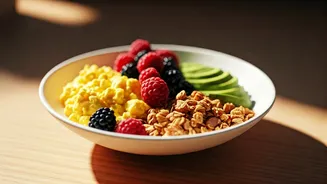
This could be as simple as two eggs with a slice of whole-wheat toast and some avocado, a bowl of unsweetened dahi with nuts and fruit, or even leftover sabzi and dal with a whole-wheat roti. The key is balance, not perfection.
Common Mistakes to Avoid
Besides the high-sugar start, a few other common habits can sabotage your day. The first is skipping breakfast entirely. While intermittent fasting has its followers, for many people, chronic meal skipping leads to intense hunger later on, often resulting in overeating and poor food choices for lunch and dinner. Another mistake is believing that coffee is a meal. The caffeine might give you a temporary jolt, but it provides no nutrients and can exacerbate feelings of anxiety and the eventual energy crash. Finally, avoid liquid-only breakfasts like a packaged fruit juice, which are often just sugar and water without the beneficial fibre of whole fruit, leading to the same blood sugar spike you're trying to avoid.