



The English Summer of Redemption
In the often-tricky conditions of the English domestic season, both Kuldeep Yadav and Yuzvendra Chahal are not just competing; they are dominating. Playing for Yorkshire, Kuldeep has been a revelation, delivering match-winning spells consistently. His
recent performance against Durham, where he claimed the prized scalp of Ben Stokes, was a masterclass in control and deception, finishing with figures of 2 for 23. He's taken crucial wickets in successive matches, including a double-wicket maiden over that showcased his rediscovered confidence. Across county lines, Yuzvendra Chahal, representing Northamptonshire, has been equally impressive. Though his team saw a recent defeat, Chahal’s own performance, where he bagged two wickets, demonstrated that his knack for breaking partnerships remains as sharp as ever. Their combined efforts are making them impossible to ignore, turning the One-Day Cup into a showcase of Indian spin artistry.
A Flashback to the 'Kul-Cha' Heyday
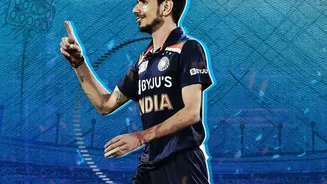
It’s easy to forget just how dominant the 'Kul-Cha' duo was between 2017 and 2019. In an era where middle-over consolidation was the norm, they brought wicket-taking aggression. Together, they played 37 ODIs and picked up a staggering 130 wickets. They were captain’s dream, strangling opposition batting lineups with wrist-spin from both ends. One would attack, the other would build pressure, and they hunted in a pack. Kuldeep’s rare left-arm wrist spin combined with Chahal’s classical leg-breaks created a web that even the best in the world struggled to untangle. This wasn't just a partnership; it was a phenomenon that defined India's white-ball strategy and success during that period.
The Strategic Shift That Broke the Pair
So, what went wrong? The beginning of the end came after the 2019 World Cup. A combination of factors contributed to their separation. Batters began to adapt, and a slight dip in form for both spinners coincided with a major strategic shift in the Indian team's thinking. The management, under different leadership, started prioritizing batting depth. The rise of spin-bowling all-rounders like Ravindra Jadeja and Axar Patel offered the team a safety net, allowing them to field a longer batting lineup. A specialist bowler who couldn't contribute significantly with the bat became a luxury the team felt it couldn't afford. Chahal himself noted that Hardik Pandya's injury and Ravindra Jadeja's subsequent return as a batting all-rounder was the key reason the combination was broken up.
The Argument for a Reunion
Their current form presents a compelling counterargument to the prevailing strategy. By excelling in England, a country where spinners can often struggle, Kuldeep and Chahal have shown they have evolved. Kuldeep was specifically signed by Yorkshire because the management expected spin to be crucial in the dry English summer. This isn't just about form; it's about skill and adaptability. The current Indian selection philosophy appears to favour control over outright attack in the spin department. However, the 'Kul-Cha' formula was built on the premise that taking wickets is the best way to control a game. In a 50-over format, having genuine wicket-takers in the middle overs is invaluable. It prevents partnerships from building and stops the opposition from launching an assault in the final ten overs. Their success proves that specialists who can win you a match with the ball are worth their weight in gold, perhaps more so than a batsman at number eight who might score a quick 15.
A Conundrum for the Selectors
The selectors, led by Ajit Agarkar, now face a fascinating dilemma. Do they stick with the established template of favouring all-rounders, or do they acknowledge the overwhelming evidence from England and reconsider the role of specialist wrist-spinners? Chahal has been out of the ODI setup since early 2023 and the T20I side since August 2023. Kuldeep, while part of the Test squad for the upcoming Sri Lanka tour, was notably left out of the white-ball games during the recent series against England, which India lost. Reintegrating the duo would mean rethinking the team's balance. It's a classic clash of philosophies: the safety-first approach of batting depth versus the high-risk, high-reward strategy of deploying two attacking wrist-spinners. Their performances have forced a question that was considered settled: Is it time to bring 'Kul-Cha' back?