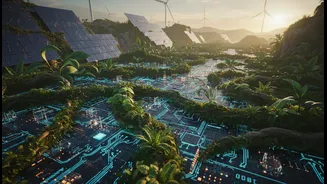






Why We Search for a Silver Bullet
Simple narratives are compelling. Whether it's the call to “just plant more trees” or the belief that switching to solar power will solve everything, we are naturally drawn to straightforward answers. These ideas provide a sense of agency and a clear
path forward. Individual actions like reducing waste and conserving energy are important pieces of the puzzle, but they cannot address the systemic nature of the climate crisis on their own. Climate change is a collective-action problem rooted in our global economic and energy systems. Relying on one solution, or even one category of solutions, oversimplifies the challenge and can distract from the most critical task: dramatically reducing emissions across all sectors.
Renewables: The Powerful, Incomplete Answer
Shifting to renewable energy sources like solar and wind is the cornerstone of decarbonisation. Unlike fossil fuels, their fuel source — sunlight and wind — won't run out. However, they are not a complete solution on their own. The primary drawback is intermittency; the sun doesn't always shine, and the wind doesn't always blow. This creates a need for massive energy storage systems, which are currently expensive and have their own environmental footprint related to mining and manufacturing. Furthermore, large-scale renewable projects require vast amounts of land. This can create conflict with agriculture and local communities, a particular challenge in densely populated countries like India. While costs are falling, the high initial investment for panels, turbines, and grid infrastructure remains a significant hurdle.
Nature's Role: Beyond Just Planting Trees
Nature-based solutions, especially afforestation (planting new forests), are often touted as a key strategy. Trees are powerful carbon sinks, and restoring ecosystems offers numerous co-benefits for biodiversity and soil health. However, scientists warn that the potential of tree planting is often overstated. It can only offset a fraction of annual global emissions, and it takes decades for new forests to sequester substantial amounts of carbon. In fact, protecting existing, mature forests is a more effective and immediate climate solution. Poorly planned projects, such as planting vast monocultures or trees in the wrong ecosystems like natural grasslands, can harm biodiversity and even disrupt local water cycles. The focus on planting can sometimes serve as a distraction from the more urgent need to stop burning fossil fuels.
Can Technology Bridge the Gap?
Technological innovation offers another set of tools, most notably Carbon Capture, Utilisation, and Storage (CCUS). This technology aims to capture CO2 emissions from sources like power plants and industrial facilities, preventing them from entering the atmosphere. It holds promise for decarbonising hard-to-abate sectors such as cement and steel manufacturing. However, the technology faces major obstacles. It is expensive, energy-intensive, and questions remain about the long-term safety and permanence of storing carbon underground. Critics also argue that focusing on carbon capture risks prolonging our reliance on fossil fuels, allowing polluters to continue business as usual under a banner of 'green' technology. For now, it remains a costly and unproven solution at the scale required.
The Policy That Binds It All
Ultimately, none of these solutions can be implemented at the necessary scale and speed without strong, coherent government policy. Market forces alone are not enough. A key policy tool is carbon pricing, which works by making polluters pay for their emissions. This can be done through a direct carbon tax or a cap-and-trade system where a limit is set on total emissions and permits are traded. Carbon pricing creates a powerful economic incentive across the entire economy to reduce emissions, invest in efficiency, and accelerate the shift to cleaner technologies. Revenue generated can be used to fund green infrastructure, support affected communities, or be returned to citizens. It's the framework that can weave together technological, natural, and energy-based solutions into a cohesive strategy.