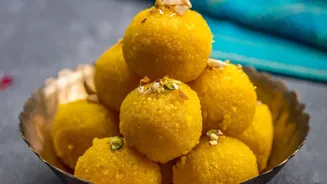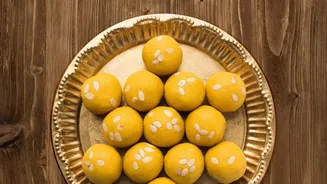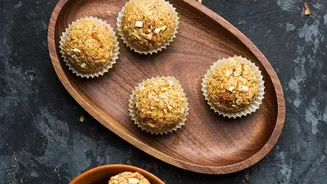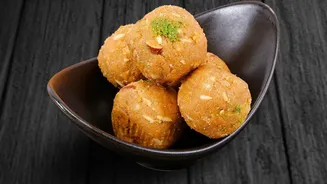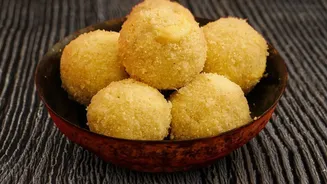



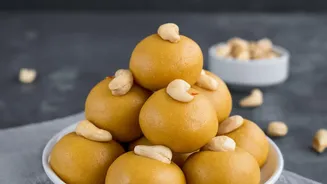
Besan ladoo is a beloved Indian sweet, but getting that perfect, soft texture can be tricky. Many home cooks face issues like hard, raw-tasting, or crumbly results. Let's explore the common mistakes that stand between you and flawless ladoos.
Rushing the Roasting Process
Patience
is the most crucial ingredient in a besan ladoo recipe. A common mistake is roasting the gram flour (besan) on a high flame to speed things up. This almost always leads to disaster, as the besan burns on the outside while remaining raw on the inside, resulting in a bitter or pasty taste. The key is to roast the besan on a low to medium-low flame, stirring continuously. This slow-roasting process, which can take 20 minutes or more, is essential to cook the flour evenly and develop a deep, nutty aroma, which is the hallmark of a delicious ladoo. You'll know it's ready when the colour deepens to a golden brown and the mixture smells fragrant.
Incorrect Ghee to Besan Ratio
The amount of ghee you use directly impacts the final texture. Using too little ghee is a frequent error that results in dry, crumbly ladoos that refuse to hold their shape. On the other hand, adding too much ghee can make the mixture greasy and loose, making it impossible to form into firm balls. A good starting point is a ratio of roughly 1 part ghee to 2 parts besan by weight. However, the exact amount can vary depending on the texture of your besan—coarser flour might absorb more ghee. Many experts recommend adding the ghee gradually rather than all at once, which allows the flour to roast evenly and helps you achieve a mixture that is moist enough to bind without being oily.
Choosing the Wrong Type of Besan
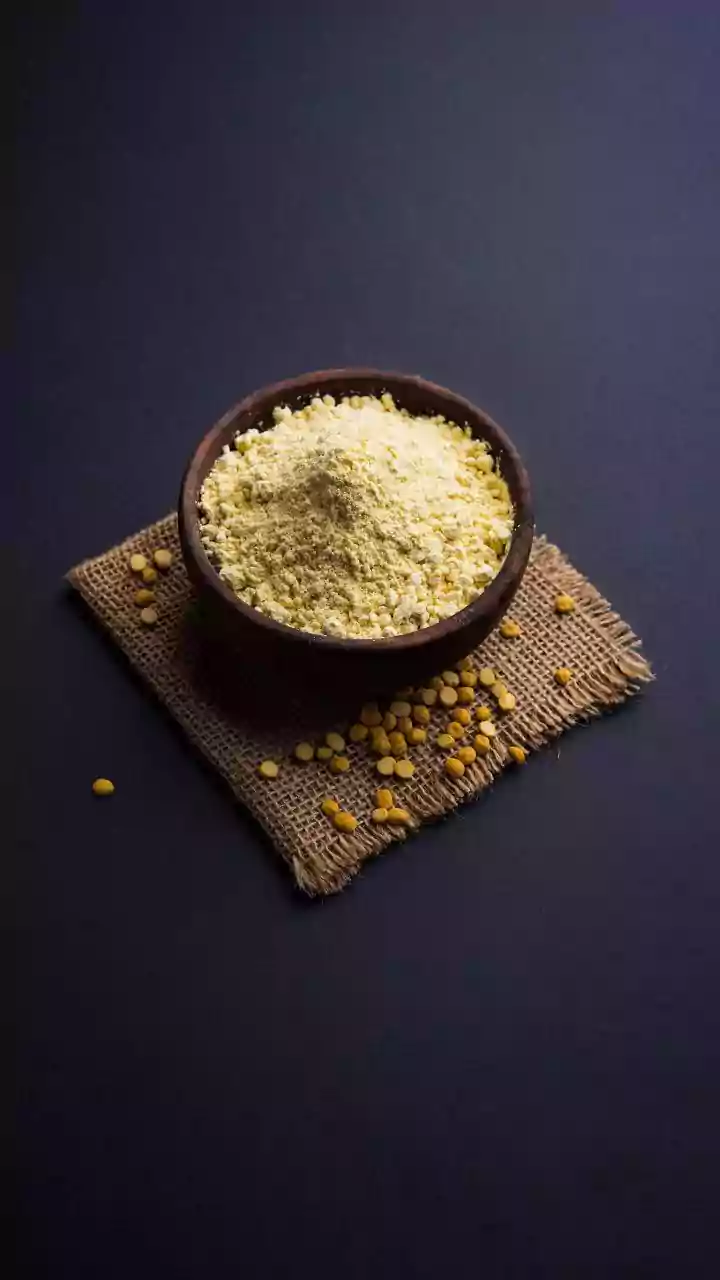
While it may seem like a minor detail, the type of besan used can make a noticeable difference. Many traditional recipes call for a coarse variety of besan, often sold as 'ladoo besan' or 'mota besan'. This type of flour gives the ladoos a desirable grainy, or 'danedar', texture. Using a very fine besan can result in denser, smoother ladoos that might stick to the roof of your mouth. If you can't find coarse besan, a popular trick is to add a tablespoon or two of semolina (rava/sooji) to the fine besan during the roasting process. Another method to create a grainier texture involves sprinkling a tablespoon of water or milk into the roasted besan mixture at the end, allowing it to bubble and create a granular feel.
Adding Sugar at the Wrong Temperature
This is perhaps the most critical mistake that can ruin the texture of your ladoos. Many recipes warn against adding sugar, especially powdered sugar, to the besan mixture while it is still hot. Doing so will cause the sugar to melt into a syrup, creating a sticky, dense, and often flat ladoo instead of a soft, meltinng mouth one. The correct method is to remove the roasted besan mixture from the heat, spread it onto a plate, and let it cool until it is just warm to the touch. At this stage, the mixture is cool enough that the sugar won't melt but warm enough that the ghee is still soft, allowing everything to bind together perfectly when you shape the balls.
Using Granulated Sugar
The type of sugar matters as much as the timing. Using regular granulated sugar will leave your ladoos with a gritty, unpleasant texture because the crystals won't dissolve properly into the mixture. For a smooth, professional finish, it is essential to use powdered sugar. If you don't have storebought powdered sugar, you can simply grind granulated sugar into a fine powder using a blender. For an even more authentic texture, many traditional recipes use 'boora' or 'tagar', a type of porous, fine sugar that blends perfectly and gives ladoos their classic texture.