





The Foundation: Your Five-Minute Warm-Up
Never skip your warm-up. A proper warm-up prepares your muscles for exercise, increases blood flow, and reduces the risk of injury. Best of all, it requires very little space. Spend about five minutes cycling through these simple movements to get your body
ready. Start with one to two minutes of marching or jogging on the spot to gently raise your heart rate. Follow that with arm circles, performing ten repetitions forward and ten backward to loosen up your shoulders. Then, do ten slow, controlled bodyweight squats to activate your lower body and ten hip circles on each side to improve mobility in your joints.
Quiet Cardio for Apartment Living
Getting your heart rate up in an apartment without disturbing the neighbours can be a challenge, as many traditional cardio exercises involve jumping. However, you can still get a great cardiovascular workout with low-impact, quiet movements. Instead of loud jumping jacks, try 'walkout' burpees, where you walk your feet back into a plank position and then walk them back in to stand up. Mountain climbers, when done with control, are another excellent option that targets your core while elevating your heart rate. For a simple but effective choice, perform high knees at a moderate pace, focusing on bringing your knees towards your chest without stomping your feet. Aim to perform these cardio movements in intervals, for example, 40 seconds of work followed by 20 seconds of rest, for a total of 10-15 minutes.
Building Strength with Bodyweight
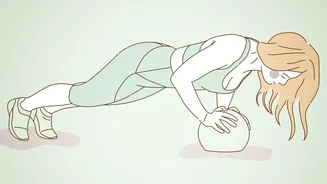
Your own body is the only weight you need to build functional strength. A balanced routine should target all major muscle groups. For your upper body, the classic push-up is king, strengthening your chest, shoulders, and triceps. If a standard push-up is too difficult, you can modify it by placing your knees on the floor. For your lower body, bodyweight squats and lunges are foundational. For squats, focus on sitting your hips back as if lowering into a chair, keeping your chest up. Lunges can be done in place as static lunges or alternating legs, which improves balance. To target your core and posterior chain, include planks and glute bridges. A plank involves holding your body in a straight line from head to heels, engaging your entire core. For glute bridges, lie on your back with your knees bent and lift your hips toward the ceiling, squeezing your glutes.
How to Structure Your Workout
To 'maximize' your workout, structure is key. A simple and effective method is circuit training. Select four to six exercises from the strength list—for instance, push-ups, squats, lunges, and a plank. Perform each exercise for a set number of repetitions (like 10-15 reps) or a set time (like 45 seconds) before moving to the next with minimal rest. Once you've completed one full round of all exercises, rest for one to two minutes before starting the next circuit. Aim to complete three to four rounds in total. This approach keeps your heart rate elevated while building muscular endurance and strength. For beginners, starting with two or three rounds is a great goal.
The Essential Cool-Down
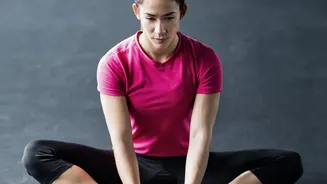
Just as important as the warm-up, a cool-down helps your body gradually return to its resting state and can improve flexibility. Dedicate the final five minutes of your workout to gentle stretching. Hold each stretch for 20-30 seconds without bouncing. Focus on the major muscles you just worked. A quadriceps stretch (standing and pulling your heel towards your glute), a hamstring stretch (sitting on the floor and reaching for your toes), and a chest stretch (clasping your hands behind your back) are excellent choices that can be done in any small space.