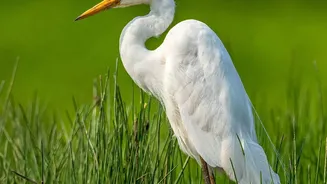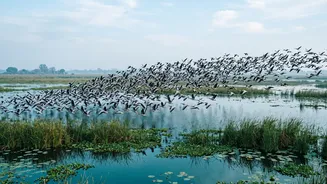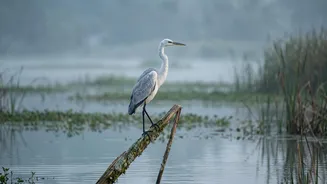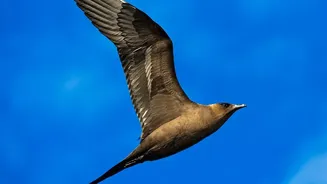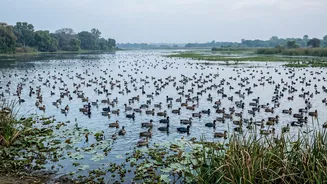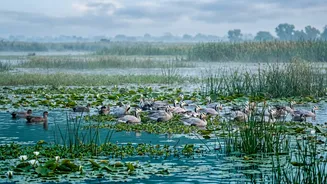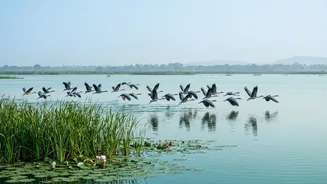





As winter descends on the Northern Hemisphere, India’s landscape transforms. Seemingly quiet floodplains and marshes swell with monsoon runoff, creating vibrant, temporary ecosystems that host one of nature's greatest spectacles.
The Great Annual Journey
Every year, millions of
waterfowl, including ducks, geese, and waders, embark on an arduous journey from their breeding grounds in Siberia, Central Asia, and Europe. They travel along the Central Asian Flyway, one of the world's major migratory routes, seeking refuge from the harsh northern winters. India, positioned at the heart of this flyway, offers a crucial stopover, providing the warmth and resources necessary for their survival. This epic flight can cover thousands of kilometres, with some birds, like the bar-headed goose, famously crossing the formidable Himalayas to reach their wintering grounds in the subcontinent.
What Makes a Wetland a Haven?
Not all bodies of water are created equal. For migratory waterfowl, seasonally flooded wetlands are perfect for several reasons. Their shallow depths, often less than a metre in the dry season, are ideal for dabbling ducks like the Northern Pintail and Northern Shoveler, which feed by tipping forward rather than diving deep. These temporary water bodies are exceptionally productive, bursting with a rich buffet of aquatic plants, insects, fish, and amphibians that provide the high-energy food required after a long flight. Furthermore, the dense vegetation, including reeds and floating plants like water hyacinth and sacred lotus, offers excellent cover from predators and disturbance, allowing the birds to rest and conserve energy.
Spotlight on India’s Avian Hotspots
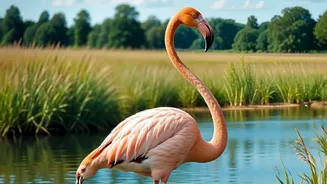
Across India, numerous wetlands serve as critical winter homes. Keoladeo National Park in Rajasthan, a UNESCO World Heritage Site, is perhaps the most famous. Once a duck-hunting reserve for maharajas, its man-made marshes now host thousands of geese, pintails, and spoonbills. In Assam, Deepor Beel, the state's only Ramsar site, becomes a vital refuge for critically endangered species like the Baer's Pochard and the Greater Adjutant Stork. Further south, coastal wetlands like Chilika Lake in Odisha and the salt flats of Gujarat’s Chhari Dhand attract huge congregations of flamingos, cranes, and shorebirds. Even human-made reservoirs like Sukhna Wetland in Chandigarh and Sauj Jheel in Uttar Pradesh play a significant role.
A Delicate System Under Threat
These seasonal havens are fragile ecosystems facing immense pressure. Rapid urbanisation and encroachment are causing many wetlands to shrink or disappear entirely, as seen with the Najafgarh wetland near Delhi. Pollution from agricultural runoff and industrial effluents degrades water quality, leading to algal blooms that deplete oxygen and harm aquatic life. Invasive species, like certain types of water hyacinth, can choke the waterways, displacing native plants that birds rely on. Climate change further complicates matters by altering rainfall patterns and temperatures, which can disrupt the timing of both flooding and migration.
The Guardians of the Wetlands
Recognising these threats, India has stepped up its conservation efforts. The country now has the largest network of Ramsar Sites (Wetlands of International Importance) in Asia, with the government actively designating and protecting these crucial habitats. National initiatives like the National Plan for Conservation of Aquatic Ecosystems (NPCA) and the Amrit Dharohar scheme aim to restore wetlands through scientific management and community involvement. In many areas, local communities, sometimes known as 'Wetland Champions', are at the forefront of conservation, working to restore mangrove forests or monitor bird populations, proving that stewardship is as much about people as it is about policy.