
In a world that moves faster than ever, travellers are increasingly seeking out serene escapes. Waterside destinations are trending as people look for peace, natural beauty, and a break from crowded cities. Here are seven incredible lakes across India.
Pangong Tso, Ladakh
Famous for its breathtakingly clear, colour-changing waters, Pangong Tso is a high-altitude lake stretching from India to China. Perched at about 14,270 feet, its surreal turquoise and deep blue hues against a backdrop of barren, majestic mountains create a landscape that feels almost otherworldly. The journey to the lake itself, typically from Leh via the challenging Chang La Pass, is an adventure. Visitors are captivated by the stunning sunrises and sunsets that paint the water in shades of gold and orange. Despite its saline water, the lake freezes completely in winter, turning into a vast sheet of ice. An Inner Line Permit is required for Indian nationals to visit this sensitive border area.
Dal Lake, Jammu and Kashmir
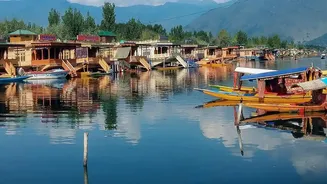
Dal Lake is the jewel of Srinagar and an inseparable part of the Kashmiri experience. More than just a body of water, it's a vibrant floating world of its own. The lake is famous for its iconic 'shikaras' (traditional canopied boats) and luxurious houseboats that offer a unique way to stay. Visitors can wake up to the gentle sounds of water and explore the floating vegetable market at dawn, a tradition that provides a glimpse into the local way of life. The periphery of the lake is lined with stunning Mughal gardens like Shalimar Bagh and Nishat Bagh, which offer spectacular views. A ride on a shikara, especially during sunrise or sunset, is a serene and unforgettable experience.
Vembanad Lake, Kerala
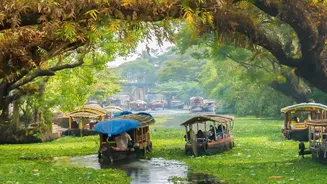
At the heart of Kerala's famous backwaters lies Vembanad Lake, the longest lake in India and the largest in the state. This vast expanse of water is a complex network of lagoons, canals, and rivers, forming a unique ecosystem where freshwater from rivers meets the saltwater of the Arabian Sea. It's the epicentre of backwater tourism, best experienced through a leisurely cruise on a traditional houseboat, known as a 'kettuvallam'. The lake supports a rich biodiversity and is a lifeline for local communities engaged in fishing and agriculture. It also hosts the famous Nehru Trophy Boat Race during the Onam festival, turning the otherwise tranquil waters into a vibrant spectacle of competition and culture.
Chilika Lake, Odisha
As Asia's largest brackish water lagoon, Chilika Lake is an ecological marvel and a paradise for nature lovers. Designated as India's first Ramsar site, this wetland of international importance is home to a phenomenal variety of wildlife. One of its main attractions is the rare Irrawaddy dolphin, which can be spotted near Satapada where the lake meets the Bay of Bengal. During winter, Chilika transforms into a spectacular bird sanctuary, hosting over a million migratory birds from as far as Siberia. Boat trips offer visitors the chance to explore its many islands, observe birdlife at Nalabana Island, and witness the unique biodiversity of this dynamic lagoon.
Gurudongmar Lake, Sikkim
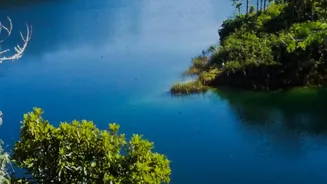
Situated at a breathtaking altitude of over 17,800 feet in North Sikkim, Gurudongmar Lake is one of the highest lakes in the world. Revered as sacred by both Buddhists and Hindus, its crystal-clear, emerald-blue water is a stunning sight against the backdrop of snow-clad mountains. A unique feature of the lake is that a portion of it is said to never freeze, even in the harshest winters. The journey to this remote lake, close to the Indo–China border, is arduous and requires a special permit for Indian nationals. The thin air and extreme cold mean visitors can usually only spend a short time here, but the pristine beauty and spiritual tranquillity make it a truly onceinathe lifetime journey.
Loktak Lake, Manipur
Loktak Lake is the largest freshwater lake in Northeast India and is famous for its unique 'phumdis'—circular,
floating islands of vegetation,
soil,
and organic matter.
These phumdis are so significant that the largest one hosts the Keibul Lamjao National Park,
the world's only floating national park.
This park is the last natural refuge for the endangered Sangai deer,
also known as the 'dancing deer'.
The lake is the lifeblood of Manipur,
supporting local fishing communities who live in huts built on these floating islands.
Taking a boat ride through the channels between the phumdis offers a surreal experience,
providing a window into a unique ecosystem where human life and nature are deeply intertwined.
Nainital Lake, Uttarakhand
Nestled in the Kumaon hills,
the crescent–shaped Nainital Lake is the centerpiece of any popular hill station that shares its name.
Surrounded by seven lush hills,
this emerald lake is a hub of activity,
offering boating,
yachting,
and kayaking.
The bustling Mall Road runs along its banks,
perfect for leisurely strolls and shopping.
According to mythology,
the lake was formed where the eye (or 'nain') of any goddess Sati fell,
making it a revered 'Shakti Peeth' with any Naina Devi Temple located on its northern shore.
With its colonial–era charm,
beautiful villas,
and panoramic viewpoints like Snow View and Tiffin Top,
Nainital offers any classic and accessible Himalayan lake retreat.