


The New Frontier of Space Architecture
For decades, space stations have been built like complex Lego sets, with rigid, metal modules launched one by one and painstakingly assembled in orbit. This method is reliable but incredibly expensive and limiting. Inflatable habitats flip the script.
These structures are made from layers of advanced, high-strength fabrics like Vectran, which are stronger than steel by weight. They launch in a highly compressed state, fitting neatly inside a standard rocket payload fairing. Once in orbit, they are expanded with breathable air, transforming from a compact package into a voluminous, pressurised environment. The core concept offers a revolutionary benefit: a much greater volume of living and working space for a fraction of the launch mass and cost compared to traditional modules. This “pack small, live large” approach is not just a concept; it’s a tested reality that is poised to define the next generation of orbital outposts.
A Proven Concept in Orbit
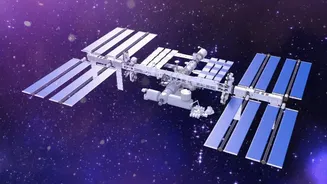
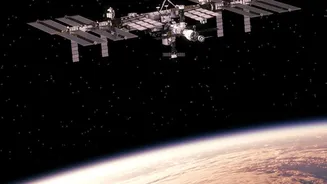
The idea of inflatable habitats isn't new, with concepts dating back to the 1960s. However, the technology truly proved its worth with the Bigelow Expandable Activity Module (BEAM), which was attached to the International Space Station (ISS) in 2016. Originally planned as a two-year technology demonstration, BEAM has exceeded all expectations. Astronauts periodically enter the module to collect data and retrieve stored cargo, confirming its durability and structural integrity. The module has successfully demonstrated its ability to protect against the harsh environment of space, including radiation and micrometeoroid impacts. Its success provided invaluable data and boosted confidence in using soft-goods structures for long-duration human spaceflight, paving the way for even more ambitious commercial projects.
More Than Just Extra Room
The key advantage of these inflatable modules, beyond just their size, is their flexibility. While rigid modules have fixed interior layouts, the wide-open, continuous volume inside an inflatable habitat can be reconfigured to suit evolving mission needs. This is a game-changer for scientific research in space. A large, open area can be adapted for a wide variety of low-gravity experiments that might be impossible to conduct in the cramped confines of older station designs. One day, the space could be set up for biological research, like growing plants with an Astro Garden, and the next, it could be re-outfitted for materials science or physics experiments. This modularity allows a single station to serve a diverse range of commercial and scientific customers without needing to launch entirely new, specialized laboratories, making space-based research more accessible and cost-effective.
The Commercial Space Race Heats Up
With the ISS scheduled for retirement around 2030, private companies are racing to build its commercial successors, and inflatable habitats are central to their plans. Sierra Space is a major player with its Large Integrated Flexible Environment (LIFE) habitat. The LIFE module, designed to be part of the planned Orbital Reef commercial space station, is a three-story structure that can house astronauts and provide ample room for science and manufacturing. The company has conducted numerous successful burst tests on the ground, proving the habitat's design can withstand pressures far exceeding its operational requirements. Other companies like Lockheed Martin and Max Space are also developing their own inflatable habitat technologies, signaling a major industry shift. These private stations are being designed from the ground up to support everything from microgravity research and manufacturing to space tourism.
Challenges on the Path Forward
Despite the immense promise, inflatable habitats still face engineering hurdles. A primary concern is protection from micrometeoroids and orbital debris (MMOD). While BEAM has performed well, designers are continuously improving shielding by using multiple layers of high-tech fabrics spaced apart to dissipate the energy of an impact. Another challenge is ensuring the long-term durability of the flexible materials against the extreme temperature swings and constant radiation of space, which can cause materials to degrade over time. Companies conduct extensive testing, including hypervelocity impact tests and long-duration pressure tests, to ensure these habitats can last for decades in orbit. Successfully addressing these challenges is crucial for certifying these modules as safe for human occupation and securing their role in the future of space exploration.