








The Limits of Generic Advice
As the monsoon sweeps across India, it brings a predictable wave of public health advisories. Citizens are told to avoid stagnant water, use mosquito nets, drink boiled water, and be wary of street food. While sound, this one-size-fits-all guidance fails
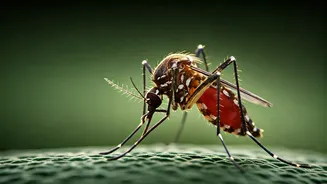
to capture the dynamic and highly localised nature of disease outbreaks. The risk of dengue from an Aedes mosquito breeding in a discarded tyre in one neighbourhood is different from the risk of cholera spreading from a contaminated well in another. Broad-stroke warnings about malaria, typhoid, and leptospirosis do little to inform a family about the specific water source that has just been contaminated by sewage overflow or the particular construction site that has become a hotspot for mosquito breeding. This lack of specificity creates a sense of helplessness; when every place is a potential risk, no single warning feels urgent. This information gap is where preventable illnesses take root, turning a manageable local issue into a wider outbreak.
What 'Local Signals' Actually Mean
The solution lies in harnessing 'local signals'—granular, real-time data points that paint a precise picture of health risks at the community level. Instead of a city-wide alert for dengue, a local signal would be a notification that Aedes mosquito larvae have been found in three specific housing societies in your postal code. Instead of a general warning about water-borne diseases, it would be an SMS alert from the municipal corporation stating that the water supply in a particular zone has shown bacterial contamination and should be boiled until further notice. These signals can be generated from various sources: data from local health clinics tracking a spike in fever cases, water quality tests from specific municipal wards, and entomological surveillance mapping mosquito breeding sites. India's Integrated Disease Surveillance Programme (IDSP) and its newer Integrated Health Information Platform (IHIP) are designed to create this very capability, enabling a decentralised, IT-based system to detect early warnings. The goal is to move from passive, generic advice to active, targeted intelligence.
The Challenge of Localisation
Implementing a truly localised health communication system is fraught with challenges. India's vast linguistic and cultural diversity means that messages must not only be geographically specific but also culturally resonant and available in multiple dialects. A significant portion of the population, particularly in rural and low-income urban areas, may have limited health literacy or face a digital divide, making it difficult to reach them through apps or web portals. There is also the challenge of data integration. For local signals to be effective, information from various departments—sanitation, water supply, public health, and pest control—must be seamlessly shared and analysed. This requires robust digital infrastructure and inter-agency coordination, which can be inconsistent. The COVID-19 pandemic exposed many of these cracks in India's health communication network, highlighting how misinformation can flourish in the absence of clear, trusted, and accessible local information.
A Roadmap for Smarter Monsoon Health
Building a more responsive system is not impossible. It begins with empowering local bodies and frontline health workers, like ASHA workers, who are the eyes and ears of the community. Training them to use simple digital tools to report syndromic data—like clusters of fever or diarrhoea cases—can provide the earliest signals of an outbreak. This data can then be fed into a unified dashboard, like the IHIP, which uses GIS mapping to visualise hotspots in near real-time. Municipal corporations can then use this intelligence to deploy resources precisely where they are needed, whether it's for targeted fogging, emergency water purification, or setting up a mobile health clinic. The state of Uttar Pradesh has demonstrated success with its Unified Disease Surveillance Platform, which integrates data from labs, facilities, and communities to drastically reduce cases of Acute Encephalitis Syndrome (AES). This model of convergence, where data drives action, is the future of public health.