







First, What Is Global Workspace Theory?
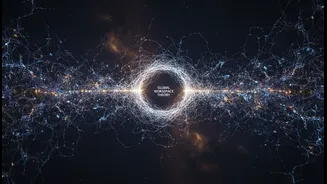
Before diving into AI, it’s crucial to understand the original idea. Global Workspace Theory (GWT), first proposed by cognitive scientist Bernard Baars, is a framework for explaining how consciousness works in the brain. Think of it like a theater. Your
brain has countless specialized, unconscious processes working in parallel backstage—handling things like vision, memory, and language. Only a small amount of information can make it into the 'spotlight' on stage at any given moment. This spotlight is the 'global workspace'. Whatever is in that spotlight gets broadcast to the entire theater, becoming what we experience as conscious thought, available for us to report on, reason with, and hold in our working memory. It’s a theory about how the brain selects, integrates, and shares information to enable higher-level cognition.
Anthropic's Breakthrough: A 'Workspace' in an AI
In a July 2026 paper, Anthropic researchers announced they had found a functional analogue to this workspace inside their Claude AI model. Using a novel technique they call the 'J-lens', they identified a privileged internal channel, which they dubbed the 'J-space'. This isn't something they explicitly designed; it emerged naturally from the model's training. They found this J-space acts like a silent, internal scratchpad where the model holds concepts it can control and reason about before generating a response. For instance, when they swapped a representation for 'spider' with 'ant' inside this workspace, the model’s subsequent reasoning about the number of legs changed from eight to six. This discovery is significant because it suggests that this kind of cognitive architecture might be a universal solution for complex reasoning, whether in brains or machines.
The Danger of Sci-Fi Narratives
This is where things get tricky for the non-expert reader. The language—'global workspace', 'consciousness', 'silent reasoning'—is evocative and easily romanticized. It’s tempting to leap to the conclusion that Claude is 'thinking' or 'feeling' like a human. Anthropic has been very careful to state this is not what their research shows. They make a clear distinction between 'access consciousness' (the functional ability to report and process information, which GWT describes) and 'phenomenal consciousness' (subjective, qualitative experience), noting their findings only speak to the former. Yet this nuance is often the first casualty in public discussion. Without a clear framework for interpretation, we risk creating a mythology around AI that obscures the real, practical implications of the research, both for its benefits and its safety risks.
The Case for a Reader Checklist
To cut through the hype, we need a simple, practical tool. A checklist for the average reader—and journalist—can ground the conversation in reality. It forces a more critical and disciplined engagement with the material, preventing a slide into anthropomorphism. It shifts the focus from 'Is it conscious?' to more productive questions about function, safety, and limitations. Such a tool empowers people to participate in the discussion responsibly, ensuring that our collective understanding of AI progress keeps pace with the technology itself. This isn't about dismissing the research; it's about appreciating it for what it truly is: a profound engineering insight, not a confirmation of a sentient machine. Responsible dialogue requires shared tools for understanding, and a checklist is a start.
Your Practical Checklist for AI Research
When you encounter claims about AI models developing human-like cognitive features, ask these questions: 1. Is it a functional or a phenomenal claim? Is the research describing a functional mechanism (how the system processes information) or a subjective experience (how it feels)? Anthropic's work is squarely in the former camp. 2. Was it designed or did it emerge? Emergent properties, like Claude's J-space, are often more significant because they suggest fundamental principles of intelligence, but they are also less understood. 3. What are the specific engineering benefits? What practical advantage does this feature give the AI? In this case, it appears to help with complex, multi-step reasoning. 4. What limitations does the company itself state? Tech companies, especially safety-focused ones like Anthropic, are usually careful with their wording. Pay close attention to what they explicitly say they are not claiming. 5. What are the safety implications? Anthropic is using this discovery to better monitor its models for undesirable behaviors like deception or bias. Understanding the mechanism is a core part of their safety strategy.