






The Challenge of Urban Stargazing
For countless city dwellers in places like Mumbai, Delhi, or Bengaluru, the night sky is a distant concept. The culprit is light pollution—the excessive and misdirected artificial light from streetlamps, buildings, and vehicles. This ambient glare creates
a bright haze, known as skyglow, that obscures fainter stars and celestial objects. While the Moon and a handful of the brightest stars might still be visible, identifying planets becomes a frustrating guessing game. Is that bright, unwavering dot the planet Jupiter, or is it just another aeroplane on its final approach? This is the primary challenge that makes urban astronomy feel almost impossible for the unaided eye.
Your Phone as Your Guide
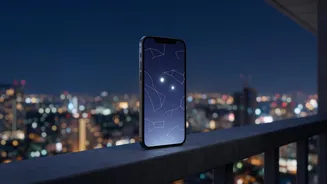
This is where smartphone astronomy apps come in, acting not as a magical filter, but as an incredibly intelligent guide. The headline's promise that they "render planets visible" isn't about making them physically brighter to your naked eye. Instead, these apps solve the critical problem of identification. They use your phone's built-in sensors—GPS to know your location, and a compass and accelerometer to know exactly where you're pointing the device. By combining this data with a precise map of the solar system, the app knows that the bright point of light in a specific patch of your sky is, in fact, Saturn.
The Magic of Augmented Reality
The core technology that makes these apps so effective is Augmented Reality (AR). When you launch an app and point your phone towards the sky, it overlays a map of celestial objects directly onto your screen, often using your camera's live view. Suddenly, the sky is no longer a collection of anonymous dots. The app will draw lines to trace constellations, label stars with their names, and put a clear tag on planets. So, even if your eyes can only perceive a faint speck, the app confirms its identity, transforming a moment of uncertainty into one of discovery. This ability to instantly identify what you're seeing is what truly makes the planets 'visible' to an urban astronomer.
Key Features for City Stargazers
When choosing an app, look for a few essential features that enhance the experience in light-polluted areas. A 'Night Mode' is critical; it turns the app's interface red, which helps preserve your night vision as your eyes adjust to the darkness. Many apps also include a calendar of celestial events, sending you notifications for meteor showers, planetary conjunctions, or when the International Space Station is due to fly overhead. Another fun feature is 'Time Travel', which allows you to see how the sky will look hours, days, or even years in the future, helping you plan your stargazing sessions.
Top Apps to Download Tonight
Getting started is as simple as visiting your app store. Here are a few highly-regarded options perfect for beginners: SkyView Lite: Known for its intuitive AR interface, you simply point your phone at the sky to identify stars, planets, and satellites. It's user-friendly and great for a first-time experience. Star Walk 2: This app features a visually rich and polished design, offering detailed information and 3D models of celestial bodies. Its 'Sky Live' feature tells you exactly what is visible from your location at any given time. Stellarium Mobile: A powerful planetarium in your pocket, Stellarium offers a massive catalogue of stars and deep-sky objects. It’s excellent for those who want to go deeper, showing a realistic simulation of the night sky.
Tips for the Best Viewing Experience
While an app is a powerful ally, a few good habits can dramatically improve your success. First, find the darkest spot available to you, whether it's a quiet park, a terrace, or a rooftop with minimal direct lighting. Second, give your eyes at least 15-20 minutes to adjust to the dark; this will help you see fainter objects. Finally, focus on the brightest celestial players. The planets Venus, Mars, Jupiter, and Saturn are often bright enough to punch through a surprising amount of city skyglow once you know exactly where to look.