



We all want to breathe cleaner air at home, but the solutions can be confusing. Many people invest in houseplants or air purifiers, but do they both work? Let's break down the science to see which is truly effective for improving your indoor air.
What is 'Clean Air Delivery Rate'?
Before
comparing purifiers and plants, it’s crucial to understand what 'clean air' means in measurable terms. The industry standard is the Clean Air Delivery Rate, or CADR. Think of it as a measure of speed and efficiency. It tells you how much clean air a purifier can deliver in a specific amount of time, usually measured in cubic feet per minute (CFM) or cubic metres per hour (m³/h). A higher CADR means the device can clean the air in a room faster. This rating is tested against three common particle types: dust, pollen, and smoke, which represent a range of particle sizes. So, when you see a CADR number, you're looking at a certified score of how quickly a machine can remove specific pollutants from a room, giving us a solid benchmark for performance.
The Power of a Purifier
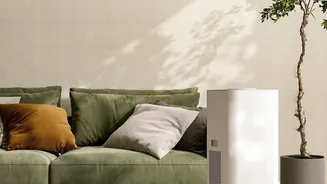
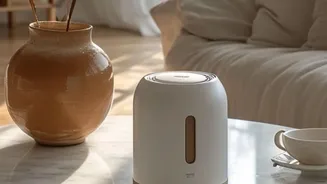
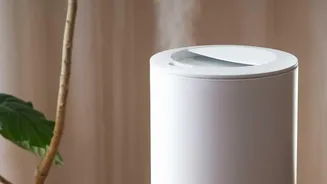
An air purifier is an active, mechanical solution designed for one job: to filter pollutants out of the air. Most high-quality purifiers use a multi-stage filtration system. This typically includes a pre-filter for large particles like hair and lint, and often an activated carbon filter for gases and odours. But the key component is the HEPA (High-Efficiency Particulate Air) filter. A true HEPA filter is engineered to capture at least 99.97% of airborne particles that are 0.3 microns in size. This size is a benchmark because it's one of the most difficult particle sizes to trap. These filters are highly effective against PM2.5—tiny particles from vehicle emissions, industrial pollution, and smoke—which can penetrate deep into the lungs. Studies confirm that using a HEPA purifier can significantly reduce indoor particle concentrations, sometimes by 50% or more, providing a measurable improvement in air quality.
The Myth of the Houseplant Solution
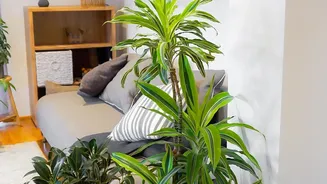
The idea that houseplants are effective air purifiers comes mainly from a popular NASA study from 1989. The study found that certain common houseplants could remove volatile organic compounds (VOCs) like benzene and formaldehyde from the air. However, there's a huge catch: these experiments were conducted in small, sealed chambers, like a tiny space station, not a typical home or office with regular air circulation. When scientists re-examined this concept in real-world settings, they found the effect of plants on air quality is practically negligible. While plants do absorb pollutants, they do so far too slowly to compete with the normal air exchange in a room. One analysis concluded you would need between 10 to 1,000 plants per square metre of floor space to achieve the same air-cleaning rate as a standard air purifier or a building's ventilation system. That means turning your living room into a dense jungle just to make a small dent.
The Verdict: Technology vs. Nature
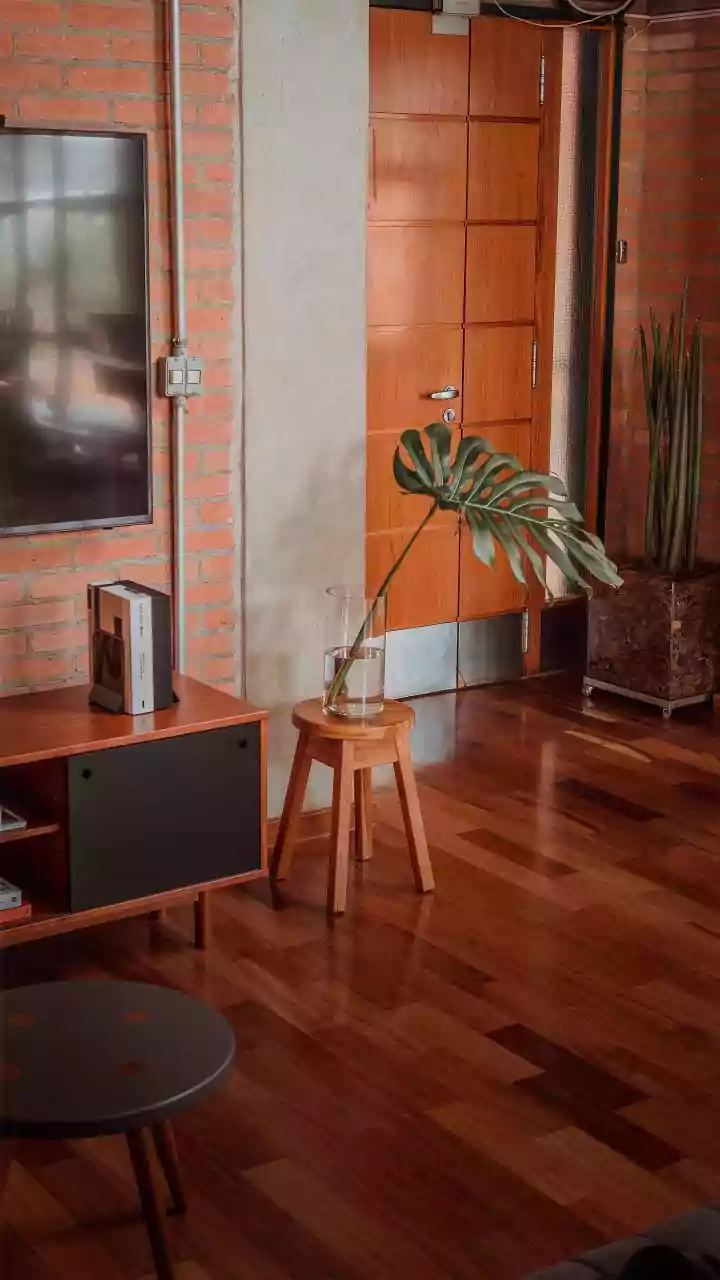
When placed head-to-head, the conclusion is clear: for meaningful and measurable air purification, an air purifier is the only effective choice. A single plant has a CADR of around 0.023 m³/h, while a modest air purifier can easily have a CADR of 400 m³/h. To match that purifier, you would need over 17,000 houseplants. This doesn't mean houseplants are useless. They offer many other benefits, including boosting humidity, reducing stress, and improving mental well being simply by bringing nature indoors. They add aesthetic value and can make a space feel more pleasant and alive. But they are not a substitute for a mechanical air purifier. Think of it this way: houseplants are for your soul; air purifiers are for your lungs. If your primary goal is to remove harmful pollutants like PM2.5, allergens, and VOCs from your indoor environment, technology is the proven solution.