




In the vast expanse of our solar system, a tiny, fast-spinning rock named 1998 KY26 is attracting major scientific attention. Its strange characteristics and puzzling orbit have made it the target for an ambitious space mission extension.
A Tiny Object with Extreme Traits
First discovered
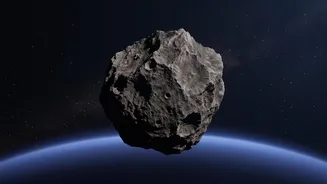
in 1998, asteroid 1998 KY26 is a Near-Earth Object that initially went unobserved for many years after its discovery. Recent observations, however, have painted a much clearer and more fascinating picture. New data from 2024 revealed the asteroid is much smaller than first thought, measuring only about 11 meters (36 feet) in diameter—roughly the size of a large truck. What truly makes it stand out is its astonishing rotation speed. It completes a full spin every 5.35 minutes, making it one of the fastest-rotating objects known in the solar system. This incredible velocity challenges our understanding of asteroid physics; an object spinning this fast should, in theory, fly apart unless it possesses significant internal strength.
The Puzzle of its Peculiar Path
Beyond its rapid spin, the orbit of 1998 KY26 is what truly perplexes scientists. While it is classified as an Apollo-class asteroid, meaning its orbit crosses Earth's, it exhibits a strange, anomalous acceleration. This motion, perpendicular to its orbital plane, cannot be explained by gravity alone. One theory was that 1998 KY26 is a 'dark comet'—an object that releases gas from frozen volatiles beneath its surface, creating a tiny, invisible thrust. However, recent modeling suggests the asteroid is too warm to hold onto buried ice for long periods. At its current temperature, any ice driving the acceleration would likely have vanished within decades, leaving scientists to hunt for another explanation for its unusual movement.
A New Mission for Hayabusa2
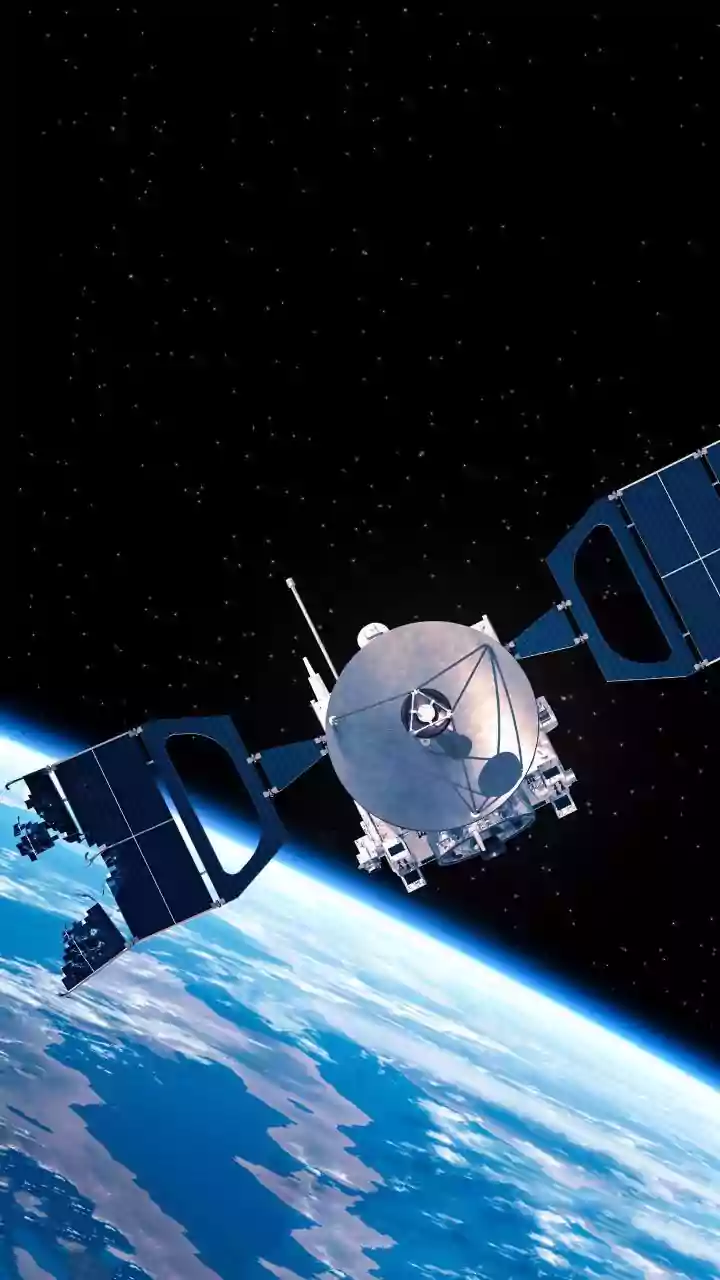
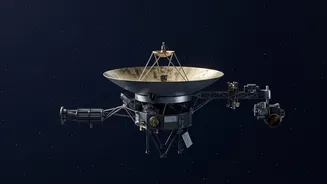
This combination of small size, rapid rotation, and a mysterious orbit makes 1998 KY26 an irresistible target. After successfully returning samples from the asteroid Ryugu in 2020, the Japan Aerospace Exploration Agency (JAXA) selected 1998 KY26 as the final destination for the extended mission of its Hayabusa2 spacecraft. The probe is scheduled to rendezvous with the tiny asteroid in July 2031. This will be the first time a spacecraft has visited a decameter-scale asteroid, offering an unprecedented opportunity to study such a small, fast-spinning body up close. The mission aims to gather data that could solve the mystery of its acceleration and provide insights into the structure of these tiny celestial objects.
Implications for Planetary Science and Defense
Studying 1998 KY26 isn't just about solving a cosmic riddle; it has significant implications for planetary science and planetary defense. Asteroids of this size are far more common than the large, kilometre-sized ones, and though a small object like this would likely burn up in Earth's atmosphere, understanding their composition and behaviour is crucial. Scientists believe 1998 KY26 may be a single, solid piece of rock rather than a 'rubble pile' like many larger asteroids. Its composition is thought to be similar to bright, enstatite-rich meteorites. The Hayabusa2 rendezvous will provide a ground truth for telescopic observations and help refine models of how these small bodies form and evolve. This knowledge is vital for developing strategies to mitigate potential impacts from more hazardous asteroids in the future.