








The Monsoon's New, Unsettling Rhythm
For centuries, life in India has been organised around the predictable arrival of the monsoon. This seasonal phenomenon governs everything from agriculture to water security. However, climate change is disrupting this vital cycle. Scientists now observe
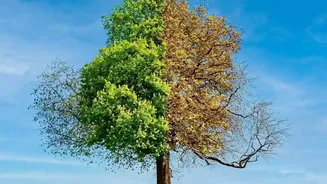
a clear shift towards more erratic and extreme weather. The problem is not just about the total volume of rain, but its timing and intensity. Delayed onsets extend dry seasons, increasing the risk of forest fires, while short, intense downpours can lead to soil erosion without adequately recharging groundwater. This unpredictability creates a high-stress environment for natural ecosystems that have evolved over millennia to sync with stable seasonal cues for everything from flowering to germination. Studies show that while some parts of India are experiencing a decrease in rainfall, many others are seeing a rise in extreme rainfall events, creating a volatile new reality.
How Unpredictable Rains Stress Our Forests
Forests are not just collections of trees; they are complex ecosystems deeply tied to water cycles. When rainfall patterns become erratic, the very foundation of this system is shaken. Many tree species depend on specific moisture levels to trigger flowering, fruiting, and seed germination. An ill-timed dry spell or a delayed monsoon can desynchronise these natural processes, affecting regeneration and the survival of certain species. Furthermore, drier conditions make forests more susceptible to fires. Studies, including one on the Panchmarhi Biosphere Reserve, have directly linked rising temperatures and shifting rainfall patterns to an increased risk of forest fires. Over time, these pressures can lead to significant changes in forest composition, with resilient, drought-tolerant species out-competing those that require more stable moisture.
The Most Vulnerable Landscapes
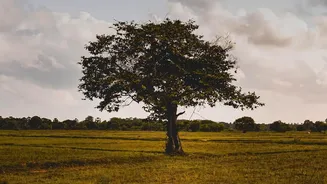
While all of India's forests are under pressure, some are more vulnerable than others. Research indicates that dry deciduous forests, such as the teak forests of Central India, are particularly at risk because they already operate close to their moisture threshold. A study in the Panchmarhi Biosphere Reserve found that dry teak forests saw the highest loss in canopy cover, a clear sign of climate stress. Projections suggest that vast swathes of India's forested areas are likely to undergo significant vegetation changes. Some analyses predict that by 2050, huge portions of forests in states like Madhya Pradesh, Chhattisgarh, and Odisha will be inside 'climate hotspots', facing severe climate-induced stress. In contrast, forests in higher rainfall zones, like the Southern Western Ghats and the Northeast, are projected to be somewhat less vulnerable, though not entirely immune to change.
Adapting to a Changing Climate
Given the scale of the challenge, passive conservation is no longer enough. The focus is now shifting to 'adaptation' — actively helping forests become more resilient. This involves a range of strategies, from science-led interventions to community-based management. One key approach is promoting biodiversity; forests with a wider variety of native species are generally more resilient than monoculture plantations. Other adaptation strategies include assisted migration, where seedlings of a species are planted in more favourable climatic zones, and soil and water conservation measures to improve moisture retention. In places like Arunachal Pradesh, there is an emphasis on combining scientific research with traditional indigenous knowledge to manage forests sustainably. The goal is to build long-term resilience to ensure these ecosystems can withstand the climatic shifts already underway.
The Path Forward
Protecting India's forests in the face of a changing climate requires a multi-pronged effort. It means strengthening conservation strategies, promoting sustainable land-use practices, and empowering the communities that depend directly on these forests. The Forest Survey of India now includes assessments of climate change hotspots in its biennial reports, providing crucial data for state forest departments to design mitigation and adaptation programs. Minimising human pressures like deforestation and encroachment is also critical, as fragmented and degraded forests are inherently less resilient to climatic stress. By understanding the specific vulnerabilities of different forest types and investing in proactive adaptation measures, India can work to safeguard its invaluable natural heritage for future generations.