







The Daily Grind of Desk Work
Modern work life often means spending eight or more hours a day in a seated position. While seemingly harmless, this prolonged sitting places significant strain on the body. Your hip flexors shorten, your gluteal muscles weaken, and your hamstrings tighten.
This combination can lead to poor posture, with shoulders rounding forward and the lower back taking on excess stress. Over time, these imbalances can cause chronic aches, stiffness, and an increased risk of injury. It's not just about discomfort; it's a physical response to a sedentary routine that your body wasn't designed for.
Your Personal At-Home Massage
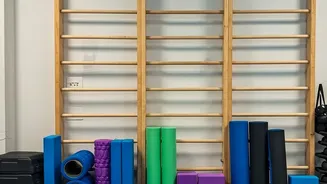
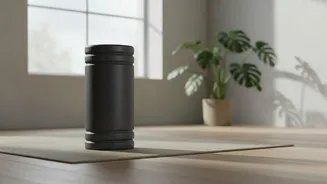
Enter the foam roller. This simple cylinder of dense foam is a powerful tool for what's known as self-myofascial release (SMR). Think of it as a deep-tissue massage you can give yourself. The fascia is a thin web of connective tissue that wraps around all your muscles. When you're inactive or hold a single posture for too long, this tissue can develop adhesions or "knots," leading to tightness and restricted movement. By applying pressure with a foam roller, you can help break up these knots, increase blood flow to the muscles, and reduce inflammation, which helps ease soreness and improve flexibility.
Key Areas for Office Warriors
For those who spend their days sitting, certain muscle groups need more attention. Start by focusing on these three areas: 1. Glutes and Piriformis: Sitting for long hours can make these muscles tight, sometimes leading to hip and even sciatic nerve-related pain. Rolling this area can release deep tension in your buttocks. 2. Hamstrings and Calves: These muscles on the back of your legs become shortened from being in a constant seated position. Releasing them can improve your overall lower body mobility. 3. Thoracic Spine (Upper and Mid-Back): Slouching over a keyboard causes the upper back to curve and become stiff. Rolling this area can counteract that desk posture and alleviate tension between your shoulder blades.
How to Roll Correctly
Technique is crucial for getting results and avoiding injury. The key is to move slowly and with control. When you find a tender spot or a 'knot', pause and hold the pressure on that spot for 20-30 seconds, or until you feel the muscle start to release. Don't rush through the movement; the goal is to give the muscle tissue time to relax under the pressure. For the glutes, sit on the roller with one leg crossed over the other knee and gently roll back and forth. For the hamstrings, sit with your leg straight on the roller and support yourself with your hands as you move. For the upper back, lie with the roller perpendicular to your spine and your arms crossed over your chest to expose the muscles between your shoulder blades.
Mistakes to Avoid
While foam rolling is beneficial, improper use can do more harm than good. The most critical rule is to never roll directly on your lower back (lumbar spine). Unlike the upper back, which is protected by the rib cage, rolling the lower back can put excessive pressure on the vertebrae and potentially aggravate spinal issues. Instead, focus on the muscles that connect to the lower back, like the glutes and hip flexors. Other common mistakes include rolling too quickly, which causes muscles to tense up rather than relax, and applying too much pressure, which can lead to bruising or tissue damage. Listen to your body; it should feel like a deep massage, not sharp pain.