

What It Is and Why It's Trending
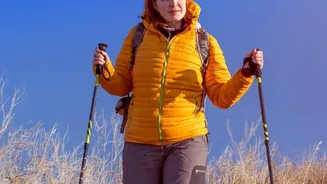
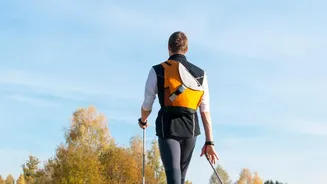
Nordic walking originated as a summer training method for cross-country skiers, but its appeal is now much broader. It involves walking with specially designed poles that you use to propel yourself forward. Unlike trekking poles, which are primarily for stability
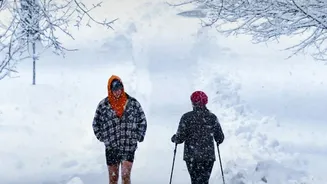
on uneven terrain, Nordic poles are designed to help you engage your upper body and core, turning your walk into a more comprehensive exercise. The recent revival is driven by a search for accessible, effective, and outdoor-friendly fitness. It’s a low-impact activity, making it gentle on the joints, yet it delivers a high-reward workout suitable for nearly all fitness levels and ages.
The Full-Body Fitness Benefits
The science-backed advantages of Nordic walking are impressive. By incorporating poles, you engage an estimated 80% to 90% of your body's muscles, compared to about 50% with regular walking. This increased muscle activation means you burn significantly more calories—studies suggest anywhere from 20% to 67% more—without necessarily feeling like you're working harder. The benefits extend to cardiovascular health, with research showing it can help lower resting heart rate, blood pressure, and 'bad' LDL cholesterol while improving oxygen consumption. It also enhances posture, balance, and muscle strength in the arms, shoulders, and core.
Mastering the Beginner-Friendly Form
Proper technique is crucial for reaping the full benefits. The core movement should feel like an enhanced version of your natural walking stride. The key is coordinating opposite limbs: as your right leg steps forward, your left arm swings forward with the pole, and vice versa. Stand tall with your shoulders relaxed and lean slightly forward from your ankles. Plant the pole between your front and back foot, keeping it angled diagonally backward. As you move past the pole, push off firmly to propel yourself forward, opening your hand to release the grip as your arm extends behind you. This 'plant, push, and release' motion is the heart of effective Nordic walking.
Common Mistakes to Avoid
Beginners often make a few common errors that can reduce the workout's effectiveness and lead to discomfort. A primary one is using the poles like hiking sticks by planting them vertically or too far in front of the body. This acts as a brake rather than a propeller. Another pitfall is keeping the elbows bent and using only the forearms instead of engaging the whole arm and shoulder in a long, smooth swing. Also, avoid a 'death grip' on the handles; the specialized straps are designed to allow you to push off even with an open hand. Finally, many newcomers walk in 'pace,' moving the arm and leg on the same side together. To fix this, simply drop the poles and let them drag by the straps while you walk normally to reset your natural rhythm.
Choosing the Right Poles
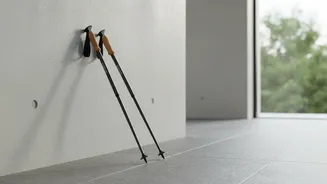
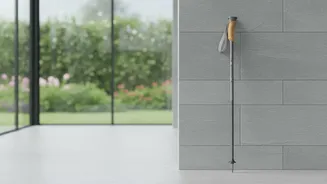
Your poles are your most important piece of equipment, and getting the right pair is essential. Don't use trekking or ski poles, as they are not designed for the forward propulsion technique of Nordic walking. Look for adjustable-length poles, which allow you to find the perfect height and are easier to store and transport. A general rule for height is to multiply your height in centimetres by 0.68, or adjust them so your elbow is at a 90-degree angle when you stand holding the grip with the pole tip on the ground. Poles made with some carbon are lighter and better at absorbing vibrations than cheaper, all-aluminium models. Pay attention to the grip and strap system; many modern poles feature strapless or quick-release glove-style straps for comfort and proper technique.