






The Great Data Traffic Jam in the Sky
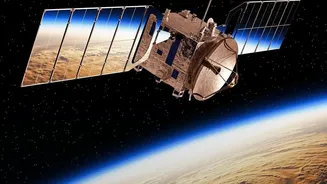
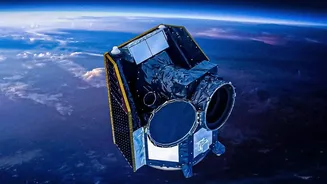
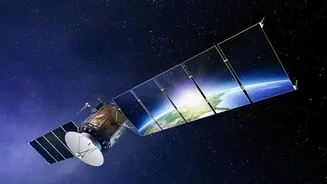
Think of an Earth observation satellite like a photographer on an epic, never-ending road trip. It snaps terabytes of high-resolution pictures of everything below—from swelling rivers and sprawling cities to vast agricultural fields. The problem is, it can
only send those photos home when it passes over a ground station, like a rest stop with a slow Wi-Fi connection. This creates a massive bottleneck. By the time the raw data is downlinked, processed, and analyzed, the critical window for action—whether for disaster response or crop monitoring—may have already passed. This reliance on ground-based processing has long been a fundamental limit on the real-time usefulness of satellite data.
Giving Satellites a Brain
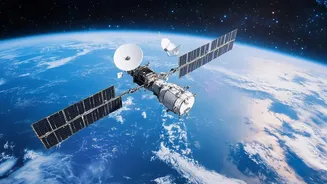
The solution that India's space agency, ISRO, and a growing number of private startups are pursuing is to stop treating satellites like simple cameras and start turning them into smart analysts. This is the core idea behind onboard processing, or "edge computing" in space. Instead of beaming mountains of raw data back to Earth, the satellite itself analyzes the information as it's collected. Using powerful, compact processors, the satellite can sift through the noise and identify only what’s important. For instance, instead of sending down a thousand images of an unchanged coastline, it could send down just the one image showing a new potential flood zone.
Where Artificial Intelligence Fits In
This is where AI becomes a game-changer. Machine learning models can be trained to perform complex analytical tasks right on the satellite. At a recent space technology conclave, ISRO experts highlighted that AI and machine learning will be transformative for India's future satellite systems. An AI algorithm could be tasked to autonomously detect changes in forest cover, identify ships at sea, or even spot the early signs of crop disease from orbit. This allows the satellite to move beyond simple data collection to generating real-time intelligence. The result is not just data, but immediate, actionable insights sent to the ground in a fraction of the time and using a fraction of the bandwidth.
The Real-World Payoff
The applications for this technology are vast and critical for a nation like India. During a cyclone, an AI-equipped satellite could process imagery in real-time to map flooded areas and damaged infrastructure, sending actionable intelligence directly to disaster management teams. For agriculture, it could enable precision farming by identifying which specific fields require irrigation or pesticides, saving resources and boosting yields. This technology is also vital for national security, enabling faster and more discreet surveillance. Both ISRO and private Indian firms like Agnikul Cosmos and NeevCloud are actively working on orbital data centers and AI-powered satellites, with some proof-of-concept missions planned by the end of 2026.
The Challenges of the Final Frontier
Putting sophisticated AI hardware into orbit isn't easy. These systems must be built to withstand the harsh environment of space, including extreme temperature fluctuations and constant bombardment by cosmic radiation that can corrupt data and damage electronics. AI processors also consume significant power, a precious commodity on a solar-powered satellite. Furthermore, ensuring the security of these systems against cyberattacks is a major concern, as a compromised satellite could have serious consequences. Engineers are tackling these issues with radiation-hardened components, innovative cooling systems, and highly efficient AI models designed specifically for the unique constraints of space.