






The Pesticide Question
A primary concern for safety is pesticide residue. Fruits with edible skins, like apples and pears, tend to retain more pesticides. In fact, they frequently appear on global 'Dirty Dozen' lists, which rank produce with the highest pesticide loads. Studies
in India have also shown that apples can contain pesticide residues, sometimes exceeding safe limits. Bananas, with their thick, inedible peel, generally offer better protection from surface-level chemicals, making them a conventionally 'safer' choice in this regard. However, this doesn't mean you should avoid apples or pears. Thoroughly washing produce can remove a significant portion of surface residues. Soaking fruits in a solution of baking soda and water or a vinegar solution is an effective way to reduce pesticide contamination.
Navigating Sugar and Glycemic Index
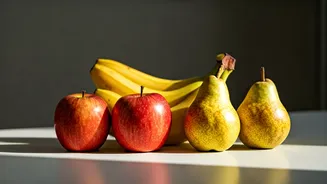
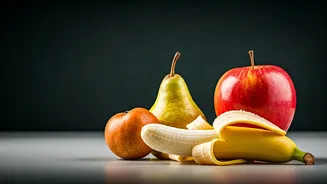
For many, 'safety' relates to managing blood sugar. Here, the fruits differ significantly. The glycemic index (GI) measures how quickly a food raises blood sugar. Pears have a very low GI of around 30-38, and apples are also low at about 36-39. Bananas have a higher GI, typically around 51-55, which can increase as the fruit ripens. In terms of total sugar, a medium apple contains about 10.5 grams, a pear has around 9.8 grams, and a banana contains about 12.2 grams. While bananas are sweeter, the fibre in all three fruits helps slow the release of sugar into the bloodstream. For individuals managing diabetes or watching sugar intake, pears and apples are generally the safer bet.
Allergies and Digestive Comfort
True allergies to apples, bananas, and pears are not extremely common, but they do exist. More frequent is Oral Allergy Syndrome (OAS), where proteins in these fruits are similar to pollens (like birch pollen), causing itching or tingling in the mouth for people with hay fever. Symptoms are usually mild and often disappear when the fruit is cooked. In terms of digestion, pears are known for being gentle on the stomach. All three fruits are good sources of fibre, which aids digestion. Apples are rich in pectin, a soluble fibre that supports gut health. Bananas contain fibre and resistant starch (especially when less ripe), which can also be beneficial, though some people find them constipating.
Nutritional Value and Overall Health
Beyond specific safety concerns, overall nutritional value is key. All three fruits are packed with vitamins and minerals. Apples are a great source of fibre and disease-fighting compounds called polyphenols, most of which are in the skin. Bananas are famous for their high potassium content, which is vital for heart health and muscle function, and they also offer significant amounts of vitamin B6 and magnesium. Pears are also a fibre powerhouse and provide Vitamin K and folate. While some reports suggest modern apples and pears have been bred for sweetness over nutrients, their fibre content remains beneficial for digestive health and managing blood sugar. The safest approach from a nutritional standpoint is variety, ensuring you get a wide range of benefits.