



Anatomy of a Prediction
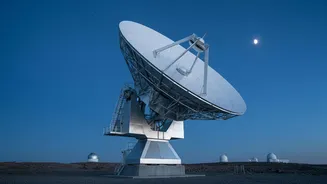
The journey from a forecast collision to a confirmed crater begins not on the Moon, but here on Earth, with a network of dedicated astronomers. Both professional and amateur sky-watchers play a crucial role. They use ground-based telescopes to spot and track
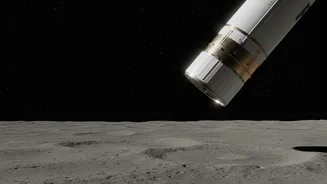
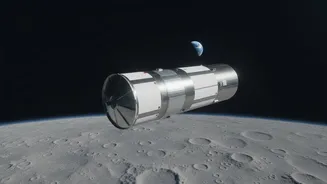
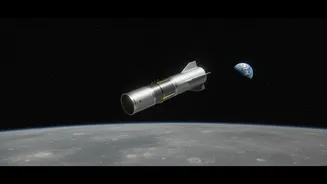
the thousands of objects humanity has left in high Earth orbit. When an object, like a spent rocket booster, is discovered on a trajectory that will intersect with the Moon, a complex process of calculation begins. Astronomers must factor in the gravitational pulls of the Earth, Moon, and Sun, and even the subtle push of solar radiation on the object’s surface. This data allows them to predict the time and location of the impact with remarkable accuracy, often narrowing it down to a specific region and a window of just a few minutes. This predictive work is the essential first step; without it, an impact would simply happen unnoticed.
A Cosmic Whodunit
Sometimes, tracking an object tells a detective story. A prime example is the rogue rocket body that struck the Moon on March 4, 2022. Initially, observers believed it to be a spent upper stage from a SpaceX Falcon 9 rocket. However, as more data was collected and orbital paths were refined, astronomers revised their assessment. Evidence pointed instead to the third stage of a Chinese Long March 3C rocket, launched several years prior. While China denied the claim, analysis from the U.S. Space Command supported the identification. This case highlighted the immense difficulty of keeping tabs on objects in cislunar space—the region between Earth and the Moon. It's a cosmic shell game where identifying a single piece of debris requires global cooperation and meticulous observation.
Finding the Scar
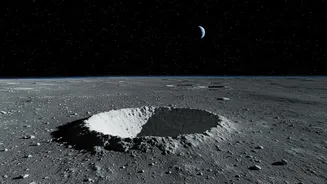
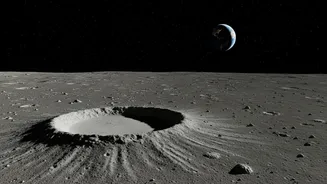
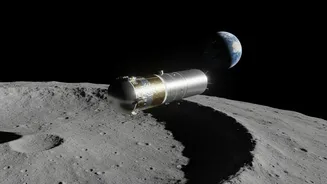
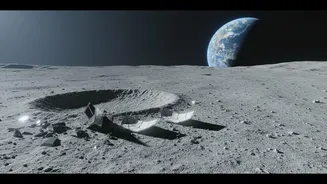
Once an impact occurs, the next practical step is to find the evidence. This is where orbital assets like NASA’s Lunar Reconnaissance Orbiter (LRO) become indispensable. The LRO has been mapping the Moon in high resolution since 2009, creating a comprehensive library of the lunar surface. To find a new crater, the LRO team employs a technique using “temporal pairs”—comparing a ‘before’ image of the predicted impact zone with an ‘after’ image taken once the orbiter passes over the site again. In the case of the 2022 impact, this method worked perfectly. The LRO’s cameras located a fresh scar on the lunar surface, right where it was expected. But it found something surprising: a unique double crater. This suggested the rocket body had two significant masses at each end, unlike a typical spent booster, adding another layer of mystery to its true nature and mission.
The Accidental Experiment
While a rocket crashing into the Moon sounds destructive, every impact is also a valuable, unplanned scientific experiment. These collisions excavate material from beneath the lunar surface and eject it, giving scientists a ‘free’ look at the composition of the Moon’s crust and the fine-grained soil known as regolith. Analyzing the size, shape, and ejecta blanket of a new crater can reveal information about the physical properties of the lunar surface—whether it’s loose and powdery or solid and rocky. This data is critical for planning future missions. It helps engineers design landers and rovers that can navigate the terrain safely and informs scientists searching for resources like water ice, which could be hidden just below the surface and is essential for supporting a long-term human presence.
A Call for Lunar Traffic Control
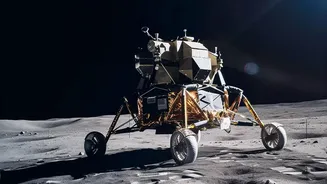
For decades, these impacts were rare, isolated events. That is rapidly changing. With NASA’s Artemis program, and a growing number of commercial and international missions targeting the Moon, the cislunar environment is becoming increasingly crowded. This boom in activity means more operational spacecraft, but also more debris. The challenge of tracking rocket stages is no longer just a scientific curiosity; it’s a critical issue of space traffic management. Predicting and locating these collisions is essential to ensure that future lunar outposts, expensive scientific equipment, and, eventually, astronauts on the surface are not endangered by falling debris. What was once the work of a few astronomers is now the foundation for ensuring a safe and sustainable future for humanity on the Moon.