




Remixing the Cosmos
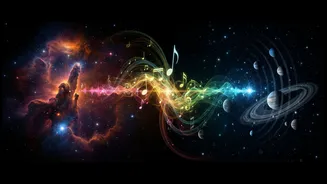
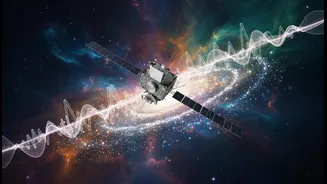
Let’s be clear: space is a vacuum, so there’s no sound in the traditional sense. You can’t put a microphone on a satellite and record the Milky Way’s greatest hits. Instead, scientists are using a process called data sonification. Think of it like this:
telescopes like the Chandra X-ray Observatory collect immense amounts of digital data — information about light, energy, and cosmic events that are invisible to the human eye. Usually, this data (ones and zeroes) is translated into the stunning images of galaxies and nebulae we see online. Sonification takes that same data and maps it to sound, assigning pitches, volumes, and instruments to different data points. A bright star might become a loud, sharp note, while a diffuse gas cloud might be a sustained, humming drone. It’s a bit like a DJ remixing the raw data of the universe into an audio track we can experience.
Chandra, The Cosmic DJ
The lead artist in this cosmic concert is NASA's Chandra X-ray Observatory. Chandra specializes in detecting high-energy X-rays from incredibly hot and violent parts of the universe, such as exploding stars and the regions around supermassive black holes. This makes its data particularly dramatic for sonification. The team at the Chandra X-ray Center, led by visualization scientist Dr. Kimberly Arcand in collaboration with astrophysicist Dr. Matt Russo and musician Andrew Santaguida, has been pioneering this effort since 2020. They've translated data from iconic celestial objects, including the chaotic heart of our own Milky Way galaxy, the ghostly remnants of the Cassiopeia A supernova, and the famous 'Pillars of Creation'. The sound of the Galactic Center, for instance, builds to a crescendo as the scan moves towards the supermassive black hole, Sagittarius A*, turning a complex dataset into an emotional, narrative experience.
More Than Just a Gimmick
While turning space into a song is undeniably cool, sonification is far more than a novelty. For scientists, hearing data can reveal patterns, anomalies, or nuances that might be missed in a purely visual representation. It’s a new tool for analysis, another way to interpret the complex language of the cosmos. Furthermore, it's a revolutionary leap for accessibility. Sonification makes astronomical discoveries available to blind and low-vision communities, opening up a field that has been overwhelmingly visual for centuries. By representing data through sound, a new generation of aspiring astronomers and science enthusiasts can engage with the universe in a way that was previously impossible. Studies have shown that both sighted and blind or low-vision participants report high levels of enjoyment and learning from these projects.
A Soundtrack for the Digital Generation
Herein lies the biggest missed opportunity. In an age where a viral TikTok sound can define global culture for a month and ambient playlists are the backdrop to our lives, Chandra’s space sounds are an untapped well of creative potential. These aren't just scientific curiosities; they are a public-domain library of otherworldly audio. Imagine video game designers using the sonified data of a supernova to score an epic boss battle. Picture music producers sampling the hum of interstellar plasma for a new hit track. Think of students listening to the 'sound' of the Pillars of Creation while studying, or digital artists syncing animations to the rhythm of an expanding nebula. NASA has even made full symphonic scores and sheet music available for some sonifications, inviting orchestras to literally play the universe. These sounds are haunting, strange, and fundamentally real—a perfect fit for a generation that values authenticity and unique digital experiences.
Where to Tune In to the Universe
Getting started is easier than you think. NASA and the Chandra X-ray Center host the sonification projects on their websites and YouTube channels. You can find a growing catalog of cosmic sounds, from the deep hum of the Perseus galaxy cluster to the delicate notes of the 'Jellyfish' Nebula. Many are accompanied by videos that visually scan across the astronomical image as the corresponding sounds play, connecting what you see with what you hear. NASA also makes many of its sound files, including historic mission audio and data sonifications, available for download on platforms like SoundCloud, actively encouraging the public to use them. It’s an open invitation to listen, explore, and create. The universe is broadcasting its own, unique playlist; it's time for more of us to press play and turn up the volume.