




The First 'Taste' of Polar Soil
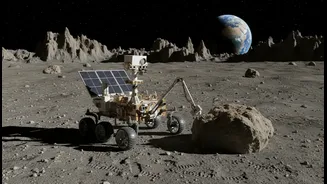
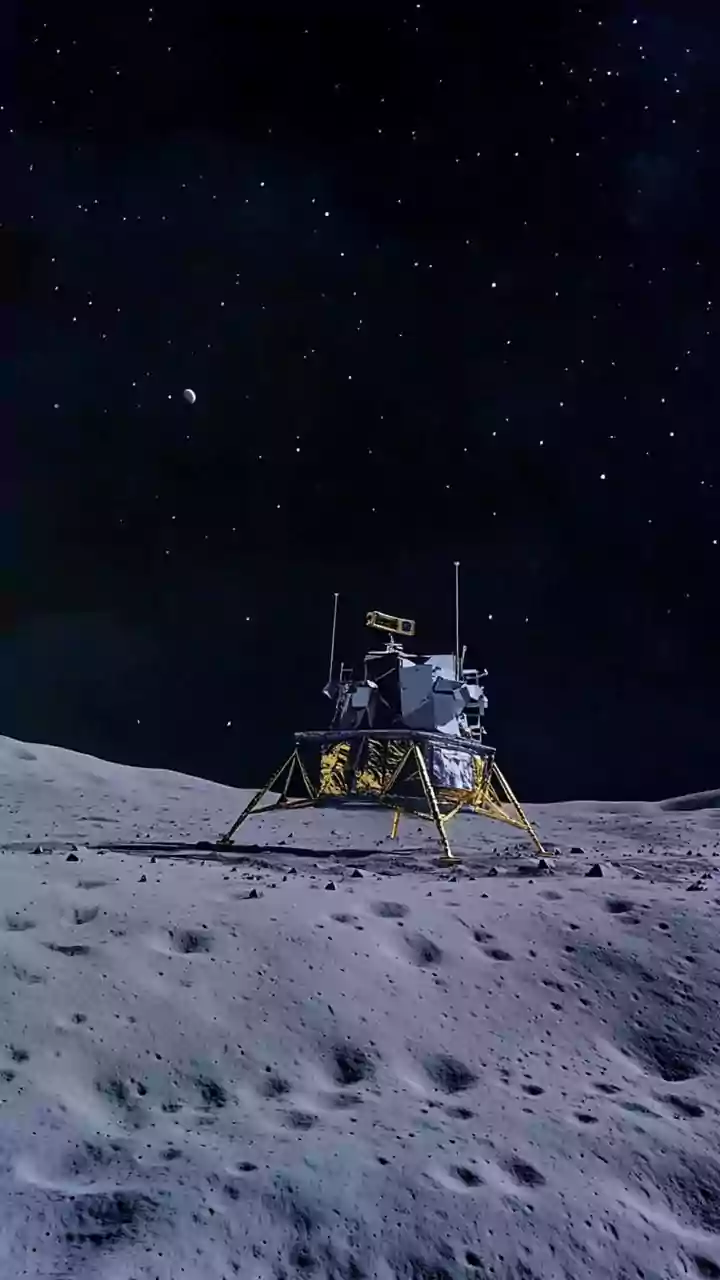
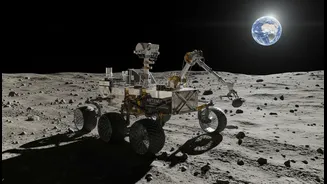
For the first time in history, humanity got to analyse the soil of the Moon's south pole directly on-site. Previous assumptions about its composition were based on data from orbiters or samples from equatorial regions collected decades ago. Pragyan, though
it only travelled about 100 metres, used its two key instruments, the Laser-Induced Breakdown Spectroscope (LIBS) and the Alpha Particle X-ray Spectrometer (APXS), to perform in-situ analysis. The LIBS instrument zaps the lunar soil with a high-energy laser, creating a tiny plasma cloud. By analysing the light from this plasma, scientists can determine the elements present. This gave us our first-ever ground-truth chemical inventory of this strategic and unexplored region.
The Surprising Sulphur Signal
The most unexpected discovery was the unambiguous confirmation of sulphur. While sulphur is common in the solar system, it was not expected in such concentrations at the lunar highlands, which are different from the volcanic plains where it has been found before. This finding is significant for several reasons. Firstly, its presence could be linked to ancient volcanic activity, giving us clues about the Moon's geological past. Secondly, some scientists believe the sulphur could be associated with water ice, a resource critical for future lunar missions. The theory is that sulphur, being volatile, may have been released and then trapped in water ice deposits thought to exist in the permanently shadowed craters of the south pole.
Confirming a Primordial Magma Ocean
Pragyan's data has provided strong new evidence for the 'Lunar Magma Ocean' hypothesis. This theory posits that the Moon, shortly after its formation, was covered in a giant ocean of molten rock. As this ocean cooled, lighter minerals like ferroan anorthosite floated to the top to form the crust, while heavier minerals sank. The APXS instrument detected these anorthositic rocks, which is what scientists expected to find in the highlands. But it also found higher-than-expected amounts of magnesium and iron, suggesting that material from the Moon's deeper layers was excavated and thrown onto the surface, likely by the massive impact that created the South Pole-Aitken Basin billions of years ago. A recent study even linked the soil composition at the landing site to a specific lunar meteorite found in Antarctica, ALHA 81005, reinforcing the idea that this area gives us a window into the Moon's ancient crust.
A Blueprint for Future Exploration
The value of Pragyan's measurements extends far beyond pure science. Confirming the presence of elements like aluminium, iron, silicon, calcium, chromium, and titanium on the spot is vital for the concept of In-Situ Resource Utilisation (ISRU). This means future astronauts or robotic missions could potentially 'live off the land' by extracting and using local materials. Sulphur, for instance, could be used to make sulphur-based concrete for construction, which hardens much faster than Earth's concrete, or even be used in fertilisers and batteries. The detailed chemical map created by Pragyan provides a crucial ground truth that will help calibrate instruments on future orbiter missions and guide the selection of landing sites for longer, more ambitious explorations.