



From a Single Tube Light to a Symphony of Layers
Think back to the quintessential Indian living room of the past. Its lighting was often dominated by a single, powerful tube light in the centre of the ceiling. Its purpose was purely practical: to banish darkness as efficiently as possible. This approach,
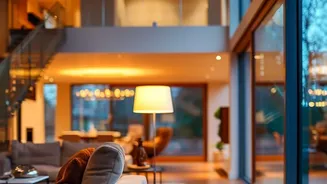
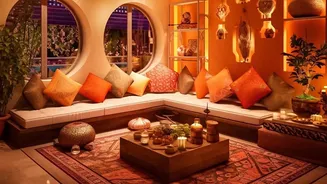
born from a focus on utility and cost-effectiveness, meant that for years, many homes were lit with a harsh, cool-white glare better suited for an office or factory floor. Today, that model is being replaced by a far more sophisticated concept: layered lighting. Interior designers and increasingly savvy homeowners now think in terms of ambient, task, and accent lighting. Ambient light provides the room's general, foundational glow, task lighting offers focused brightness for activities like reading or cooking, and accent lighting draws attention to art, textures, or architectural details, adding personality and depth.
The 'Instagram-Worthy' Home Effect
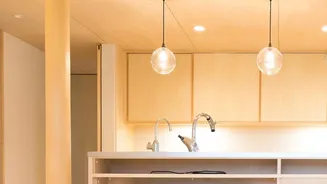
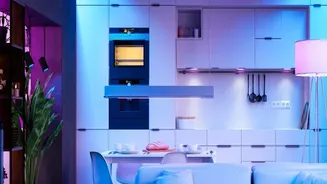
A major catalyst for this shift is the endless stream of design inspiration on social media platforms like Instagram and Pinterest. These visual galleries have democratised design, giving millions of Indians access to global trends and beautifully curated homes. Homeowners now arrive at design consultations with mood boards filled with images of sculptural floor lamps, elegant pendant lights over dining tables, and subtle LED strips creating a hotel-like ambience. This 'Instagram effect' has raised the visual benchmark; a home that felt perfectly fine a few years ago might feel dated today simply because of its basic lighting. It has encouraged homeowners to view their living spaces as a form of self-expression, an investment in comfort and aesthetics, not just a one-time expense.
Lighting as a Statement Piece
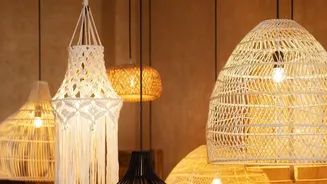
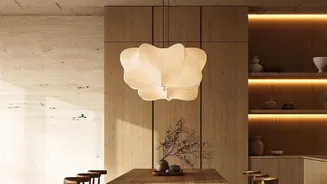
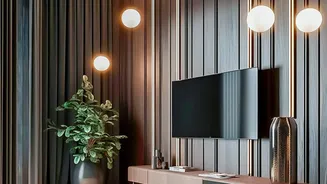
The most visible sign of this trend is the rise of the 'statement light'. These are no longer just sources of illumination but have become central design elements, akin to a piece of sculpture or art. Chandeliers are moving beyond traditional heavy crystal to embrace abstract, geometric, and nature-inspired forms. A bold, sculptural pendant light can anchor a living room or a double-height foyer, commanding attention even when switched off. Materials are also evolving, with a move away from high-polish chrome towards warmer, more tactile finishes like brushed brass and aged bronze. Natural fibres such as jute, rattan, and bamboo are also increasingly popular, diffusing light beautifully and adding an earthy texture that complements many Indian interiors.
A Reflection of Rising Aspirations
This growing interest in decorative lighting is part of a larger story about India's economic and social transformation. Rising disposable incomes mean that homeowners are spending more on interiors—sometimes 10-20% of a property's value. This trend is not limited to metros; Tier 2 cities like Jaipur, Lucknow, and Indore are seeing a surge in spending on design-led homes. The post-pandemic world, where homes became offices, schools, and entertainment hubs, made people acutely aware of their living environments. A well-lit home is now seen as an investment in well-being, capable of influencing mood and creating a sanctuary from the outside world. The home has become a primary canvas for personal identity, and lighting is one of the most powerful tools to paint it.
How to Embrace the Trend
Incorporating decorative lighting doesn't require a complete overhaul. A simple first step is to switch from cool-white bulbs (around 6500K) to warm-white ones (2700K-3000K) in living rooms and bedrooms to create a cosier, more inviting atmosphere. Another key is to introduce lighting at different heights. Instead of relying only on a ceiling fixture, add a floor lamp to a corner or place a table lamp on a side console. Dimmers are also a powerful tool, allowing you to adjust the brightness to suit the time of day or occasion. For those looking to make a bigger impact, consider adding accent lights to highlight a painting or a textured wall, or hang a stylish pendant light over a dining table to create an intimate focal point. Even simple, affordable options like string lights or LED strips can dramatically change the feel of a space.