






The Ticket Price is Just the Beginning
Budget airlines are masters at advertising incredibly low base fares to catch your eye. While technically correct, these prices often exclude many services that travellers consider standard. By the time you navigate through the booking process, you are presented
with a series of add-ons that can significantly inflate the final cost. These extras often include charges for checked baggage, selecting your preferred seat (like a window or aisle), and even for meals and beverages on board. What starts as a cheap ticket can quickly approach the price of a full-service carrier, especially if you aren't careful about deselecting these optional but often necessary additions.
The Baggage Fee Trap
One of the most common and costly surprises is baggage fees. Most budget domestic airlines in India offer a standard checked baggage allowance of 15 kg. Exceeding this limit, even by a small margin, can result in hefty charges, with airlines often charging between ₹600 to ₹800 per extra kilogram at the airport counter. A bag that is 5 kg overweight could cost you an additional ₹3,000 or more. While some airlines offer the option to pre-purchase extra baggage online at a slightly lower rate, it’s an expense many travellers don't account for when comparing initial flight prices. In contrast, trains offer a much more generous baggage allowance, largely eliminating this potential cost.
The Cost of Getting to the Airport
Airports are almost always located on the outskirts of cities, and the journey to and from them can be a significant hidden expense. Whether it’s Bengaluru’s Kempegowda International Airport in Devanahalli, 35 km from the city centre, or Delhi's IGI Airport, getting there requires time and money. A one-way taxi fare to the airport in major cities like Mumbai, Delhi, or Bengaluru can easily range from ₹1,200 to ₹2,500, depending on the distance and time of day. This means a round trip could add ₹2,400 to ₹5,000 to your travel budget before you even step on the plane. Railway stations, on the other hand, are typically located in the heart of the city, making them far more accessible and cheaper to reach.
Calculating the True 'Time' Cost
A one-hour flight might seem much faster than a five-hour train journey, but this comparison is misleading. The total 'door-to-door' travel time for a flight is much longer. You need to travel to the airport (1-1.5 hours), arrive at least 90 minutes before your flight for check-in and security, then spend time deplaning and collecting your baggage upon arrival (30-45 minutes), and finally, travel from the destination airport into the city (1-1.5 hours). Suddenly, that one-hour flight has consumed five to six hours of your day. A five-hour Vande Bharat Express journey, for example, is truly five hours from one city centre to another, often making it a faster or comparable option in reality for routes under 600 km.
Considering the Alternatives: Trains and Buses
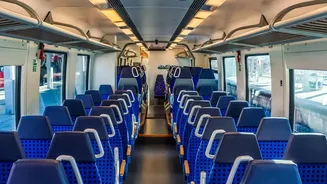
For short-distance holiday routes like Mumbai-Pune, Delhi-Chandigarh, or Bengaluru-Chennai, modern trains like the Vande Bharat and Tejas Express present a compelling alternative. They offer comfortable, air-conditioned travel, city-centre to city-centre convenience, and are often significantly cheaper when all costs are considered. For example, a round trip on the Mumbai-Pune Vande Bharat can save a traveller between ₹4,000 and ₹5,500 compared to flying, and is often faster door-to-door. Similarly, for many routes, premium AC buses offer a comfortable and highly economical option that eliminates the multiple hidden costs associated with air travel.