





Why the Renewed Confusion?
The conversation around cooking oils seems to be in a constant state of flux. Health advice shifts as scientific understanding evolves. We have moved from viewing all fats as bad to understanding the difference between unsaturated (good) and saturated (to
be limited) fats. This has led to a re-evaluation of traditional Indian choices like ghee, coconut oil, and mustard oil, which were once pushed aside in favour of refined vegetable oils. Now, with a greater focus on natural and minimally processed foods, families are questioning the industrial processes behind those clear, odourless refined oils.
Refined vs. Cold-Pressed: The Real Difference
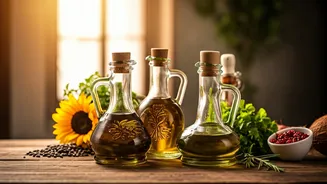
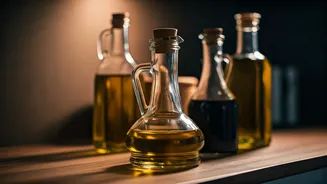
Walk down any supermarket aisle and you will see two main types: refined and cold-pressed (or 'kachi ghani'). The difference is significant. Refined oils are extracted using high heat and chemical solvents like hexane to get the maximum yield from the seeds. This is followed by bleaching and deodorising, which strips the oil of its natural colour, flavour, and, unfortunately, many of its nutrients like vitamin E and antioxidants. Cold-pressed oils, on the other hand, are extracted by mechanically crushing the seeds at a low temperature without chemicals. This process preserves the oil's natural nutrients, aroma, and flavour, making it a nutritionally superior choice. Traditional oils like mustard, groundnut and coconut, when cold-pressed, retain more of their natural goodness.
The Right Oil for the Right Job
Not all oils behave the same way under heat. Every oil has a 'smoke point', the temperature at which it begins to break down and produce harmful compounds. Using an oil beyond its smoke point can negate its health benefits. Indian cooking involves a variety of methods, from high-heat deep-frying to tempering (tadka) and sautéing. Oils with high smoke points, such as cold-pressed mustard oil (around 250°C) and groundnut oil (around 230°C), are well-suited for frying. Ghee and coconut oil are also stable at high temperatures. For lower-heat cooking or for drizzling over salads, extra virgin olive oil is a good choice, but it's not ideal for deep-frying common in Indian kitchens.
The Case for Rotating Your Oils
Nutrition experts increasingly advise against relying on a single type of cooking oil. The concept of 'oil rotation' is gaining traction, and for good reason. Different oils have different fatty acid profiles and offer a unique mix of vitamins and nutrients. For example, mustard oil is rich in heart-healthy monounsaturated fats and has a good balance of omega-3 and omega-6 fatty acids, while sesame oil provides antioxidants like sesamol. By rotating between two or three different cold-pressed oils—perhaps mustard for one month, groundnut for the next, and sesame for the third—you provide your family with a broader spectrum of nutrients. This approach ensures you get a balanced intake of different types of healthy fats.
A Word on Reusing Oil
A common practice in many households is to reuse oil after frying to avoid waste. However, this can be a serious health hazard. When oil is repeatedly heated, it degrades and forms harmful compounds, including trans fats and other toxic substances that are linked to an increased risk of heart disease, inflammation, and other chronic illnesses. The Food Safety and Standards Authority of India (FSSAI) recommends not reheating oil more than a few times. As a rule of thumb, if the oil looks dark, has become thick, or foams when heated, it should be discarded safely.