





Why Your Morning Matters Most
The initial moments after you wake up set the tone for your entire day. Instead of reaching for your phone and scrolling through a cascade of notifications and news, what if you dedicated just five minutes to your body? A morning stretch routine is more
than just a way to shake off sleep; it's a powerful tool for physical and mental well-being. It increases blood flow to your muscles and brain, improves flexibility, relieves tension built up during sleep, and promotes a sense of mindfulness before the day's chaos begins. Think of it as a thank you to your body for carrying you, and a way to gently awaken your mind. The energy you cultivated on Yoga Day can become a daily reality, not just a yearly event.
Challenge 1: The 5-Minute Sunrise Flow
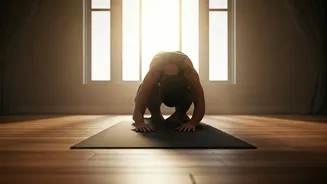
This is the perfect entry point for making stretching a non-negotiable part of your morning. The challenge is simple: for one week, before you do anything else, perform this short sequence. You can even film a time-lapse for your social media to track your consistency. Start by standing tall and taking three deep breaths. On an inhale, raise your arms overhead (Urdhva Hastasana). On an exhale, fold forward from your hips, bending your knees generously (Uttanasana). Inhale to a halfway lift, flattening your back (Ardha Uttanasana). Exhale and step back into a plank position. Hold for one breath, then lower your knees, chest, and chin to the mat. Inhale, sliding forward into a gentle cobra pose (Bhujangasana), lifting only your chest. Exhale and push back to a child's pose (Balasana) for three breaths. Repeat this flow three to five times. The goal isn't perfection; it's presence.
Challenge 2: The 'Desk-Ready' Posture Prep
If you spend your day sitting at a desk, this challenge is for you. The focus is on opening the hips, chest, and shoulders—the areas most affected by prolonged sitting. The challenge is to integrate these stretches into your pre-work routine. Begin with Cat-Cow stretches on all fours to warm up the spine. Move into a low lunge (Anjaneyasana) on each side, focusing on stretching the hip flexors. Hold each side for 30 seconds. Follow this with a seated forward bend (Paschimottanasana), reaching for your shins or feet to stretch the hamstrings and lower back. Finally, find a wall and perform a chest stretch. Stand with your forearm against the wall, elbow bent at 90 degrees, and gently turn your body away from the wall until you feel a stretch across your chest and shoulder. Hold for 30 seconds on each side. This routine counteracts the 'computer hunch' before it even starts.
Challenge 3: The Gratitude & Mobility Challenge
This challenge combines gentle movement with a mindfulness practice. The goal is to connect with your body and cultivate a positive mindset. As you perform each stretch, mentally thank that part of your body for what it does for you. Start with ankle and wrist circles, thanking your joints for their mobility. Move to gentle neck rolls, releasing tension and thanking your neck for supporting your head. Lie on your back and hug your knees to your chest, thanking your core for its strength. Extend one leg up and perform gentle hamstring stretches, thanking your legs for their power to move you. Finish with a supine spinal twist on each side, a simple and effective way to release the back. This isn't about deep, intense stretching; it's about gentle, mindful movement and starting your day from a place of appreciation.
Challenge 4: The 7-Day Balance Pose Challenge
Looking for something to share and track online? A balance pose challenge is perfect. Not only does it improve physical stability and focus, but it also creates a great visual for a video or photo series. The challenge: hold a different balance pose for 30-60 seconds on each side every day for a week. Day 1: Tree Pose (Vrikshasana) Day 2: Eagle Pose (Garudasana) Day 3: Warrior III (Virabhadrasana III) Day 4: Dancer's Pose (Natarajasana) Day 5: Half Moon Pose (Ardha Chandrasana) Day 6: High Lunge Day 7: Your favourite of the week! Don't worry if you wobble or fall; that's part of the process. The goal is to notice the small adjustments your body makes to find its centre. Progress, not perfection, is the win here.