

Why Venus Will Shine So Bright
Venus is consistently the brightest planet we can see, outshining every star in the night sky. This is thanks to its thick, highly reflective clouds of sulfuric acid, which bounce about 70-76% of sunlight back into space. But on September 18, it will
achieve what astronomers call its 'greatest brilliancy' or 'greatest illuminated extent'. At this time, it will shine at an extraordinary magnitude of -4.8, which is over 150 times brighter than Sirius, the brightest star in our sky. Paradoxically, this peak brightness doesn't happen when Venus is a full disc from our perspective. Instead, it occurs when it's a relatively slim crescent. The magic is a combination of two factors: its phase and its proximity to Earth. As Venus gets closer to us in its orbit, its apparent size grows larger, even as the illuminated portion we see shrinks into a crescent. The point of peak brilliance is the perfect balance where the crescent is large enough and close enough to reflect the maximum amount of light toward us.
Your Guide to Watching in India
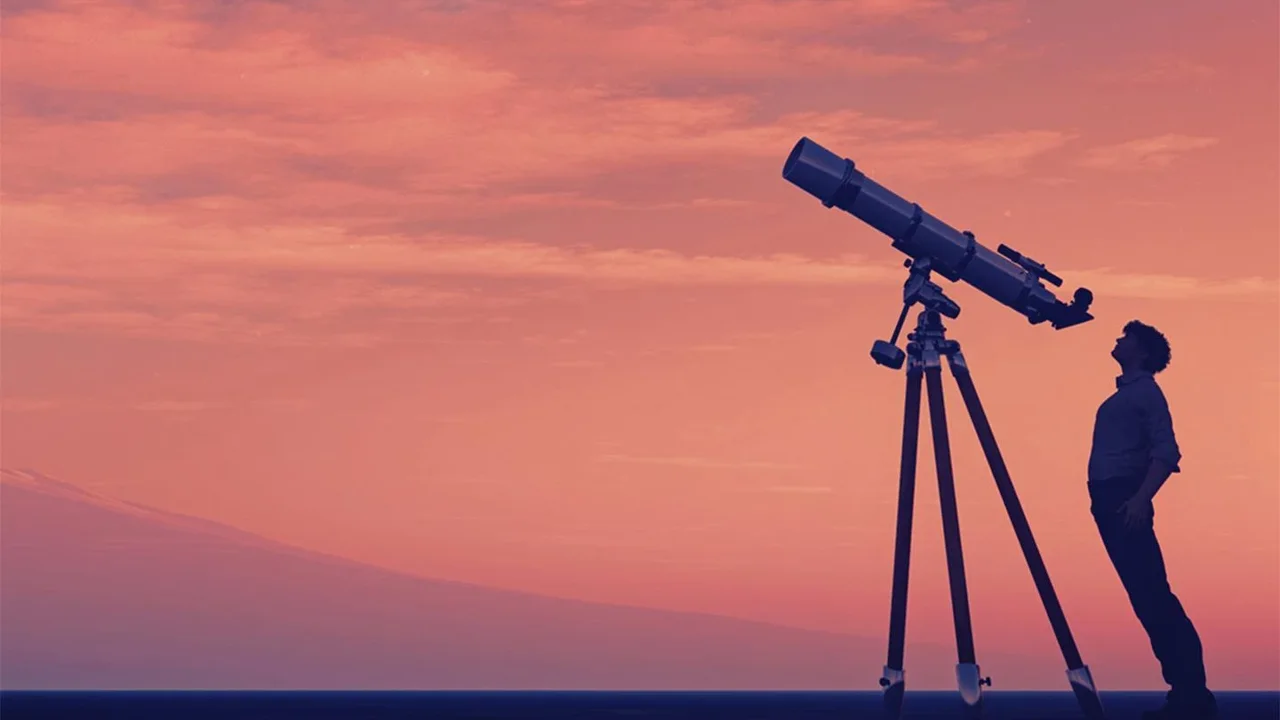
The best time to look for Venus will be shortly after sunset. Find a location with a clear, unobstructed view of the western horizon. As dusk begins to settle, Venus will emerge as an unmistakably bright, steady point of light. You won't need a telescope or binoculars to see it; its brilliance makes it easily visible even from light-polluted cities. On September 18, the planet will be relatively low on the horizon, so finding a spot without tall buildings or trees in your western view is key. The planet will set about an hour and a half after the sun. While the absolute peak is on the 18th, Venus will appear spectacularly bright on the nights just before and after this date, so you have a multi-day window to enjoy the show. For an added celestial treat, look for the crescent moon near Venus on the evenings of September 13 and 14.
The Science of the 'Evening Star'
Venus is often called the 'Morning Star' or 'Evening Star' because, due to its orbit being inside Earth's, it never strays far from the sun in our sky. This means we only ever see it for a few hours after sunset or before sunrise. For the past several months, it has been a fixture of our evening sky. Its peak brilliance on September 18 marks a turning point. After this, it will appear to sink rapidly toward the sun each evening, becoming harder to spot by early October. It will then pass between the Earth and the sun (an event called inferior conjunction) in late October before re-emerging as a dazzling 'Morning Star' in the pre-dawn sky in November. This cycle of appearing in the evening and morning is a constant dance between our two planets as they journey around the sun.
Shukra: Venus in Indian Culture
Beyond its scientific wonder, Venus holds a significant place in Indian culture and astrology, where it is known as Shukra. In Hindu mythology, Shukra is the Guru (teacher) of the Asuras (demons) and is revered for his immense wisdom. He is the son of the great sage Bhrigu and is said to possess the knowledge of 'Mrita Sanjeevani', the art of resurrecting the dead. In Vedic astrology, or Jyotisha, Shukra is a benefic planet that governs love, beauty, luxury, romance, wealth, and artistic pursuits. A strong Venus in a person's birth chart is believed to bestow charm, artistic talent, and an appreciation for the finer things in life. The day Friday, or 'Shukravara', is dedicated to the planet, with many observing rituals to seek its blessings for harmony and prosperity. As you look up at the brilliant planet, you are also seeing a celestial body deeply woven into the fabric of Indian tradition.