






Beyond the Carpeted Tower
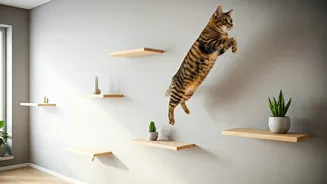
Forget the bulky, carpet-covered cat trees of the past that sit awkwardly in a corner. The new wave of feline-friendly design is architectural, stylish, and, most importantly, vertical. We're talking about a network of sleek wooden shelves, sisal-wrapped
posts, and suspended bridges that mount directly onto your walls. This creates a 'cat superhighway' that allows your pet to navigate a room without ever touching the floor. It’s a design trend known as 'cattification'—the art of modifying a human-centric home to meet a cat’s natural instincts, turning blank walls into an engaging, three-dimensional playground.
The Psychology of Altitude
So, why is climbing so crucial for a cat’s well-being? According to animal behaviourists, it’s all about instinct. In the wild, cats are both predators and prey. Height gives them a strategic advantage, offering a secure vantage point to survey their territory (your living room) and spot potential 'threats' (the vacuum cleaner). For indoor cats, especially in multi-pet households, vertical space provides an essential escape route. It allows them to de-stress and establish their own territory away from a pestering dog or another cat. A cat with access to high perches is often a more confident and less anxious pet.
Unlocking Your Home’s Vertical World
Creating a vertical paradise doesn't require a complete home renovation. The beauty of this concept is its scalability. You can start small with a few strategically placed shelves that allow your cat to hop from a bookshelf to a window sill. The goal is to create a 'route.' Observe where your cat likes to hang out and build from there. A simple floating shelf above a doorway or a series of steps leading up to the top of a cabinet can make a world of difference. This approach maximizes your living area by utilizing unused wall space, a major plus for anyone living in a compact apartment or flat.
Design for Both Cat and Human
One of the biggest barriers for pet owners has been aesthetics. Many are hesitant to install items that clash with their home decor. Thankfully, designers have responded. Modern cat furniture companies now offer minimalist, modular systems in natural wood, white, or black that blend seamlessly into contemporary interiors. These systems often look like floating shelves or modern art installations. Materials matter, too. Look for solid wood for durability, and ensure climbing surfaces are wrapped in non-slip materials like sisal rope or durable fabric to provide good grip and a satisfying scratching surface.
Getting Started: A Simple Plan
Ready to build your cat a highway to happiness? First, plan a path. Think about a logical route from a low point to a high perch. Use existing furniture like sofas or side tables as starting points. Second, ensure safety. Use wall studs for mounting heavy-duty shelves and bridges; drywall anchors are not strong enough to support a leaping cat. Always check the weight capacity of any product you buy. Finally, introduce your cat to the new setup slowly. Use treats, catnip, or toys to lure them up, making the experience positive. Let them explore at their own pace until the wall becomes their favourite new domain.