





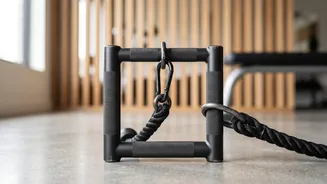

The Foundation: Mastering the Standard Row
Before exploring variations, it's crucial to perfect the basic seated cable row. This compound movement is a staple for developing back thickness and strength. Sit tall on the bench, place your feet firmly on the platform with a slight bend in your knees,
and grab the handle with your arms fully extended. Keep your torso upright and your core braced. Initiate the movement by drawing your shoulder blades together, then pull the handle towards your lower abdomen. Focus on driving your elbows back while keeping them close to your body. Squeeze your back muscles at the peak of the contraction, then slowly return to the start, controlling the weight through the entire range of motion. A common mistake is using momentum by rocking the torso back and forth; your upper body should remain stable throughout the exercise.
Wide Grip: Building Upper-Back Width
Swapping the standard V-handle for a long bar allows for a wide, overhand grip. This variation shifts the focus to your upper-back muscles, including the rear deltoids, rhomboids, and middle trapezius. To perform it, grasp the bar with your hands placed wider than your shoulders. As you pull, allow your elbows to flare out to the sides. This change in elbow path is what helps to target those upper-back muscles responsible for creating width and improving posture. Think of it as pulling the bar towards your chest rather than your stomach. This angle is excellent for counteracting the forward-rounded posture many people develop from sitting at a desk.
Narrow Grip: For Lats and Mid-Back Thickness
A narrow or neutral grip, often performed with a V-handle where your palms face each other, is ideal for targeting the latissimus dorsi (lats) and the middle back. This grip keeps your elbows tucked close to your sides as you pull, which is the primary function of the lats. The narrow grip generally allows you to pull heavier weight safely, making it a great option for building overall back strength and mass. Focus on pulling the handle deep towards your navel and squeezing your shoulder blades together to fully engage the rhomboids and mid-traps, which adds density and thickness to your back.
Underhand Grip: Emphasizing Lats and Biceps
Using a straight bar with an underhand (supinated) grip, where your palms face up, introduces another shift in muscle engagement. This variation strongly activates the lower lats and also brings the biceps into the movement more significantly than an overhand grip. The mechanics of the underhand pull allow for a slightly different range of motion, which can lead to a powerful contraction in the lats. Keep your elbows tucked in close to your body and pull the bar towards your lower abdomen. This is a fantastic variation for those looking to add an extra stimulus for bicep growth while still performing a primary back exercise.
Single-Arm Rows: Correcting Imbalances
Performing the seated row one arm at a time, known as a unilateral movement, offers unique benefits. Using a single D-handle attachment, the single-arm row forces each side of your back to work independently, which is highly effective for identifying and correcting strength imbalances. This variation also demands greater core engagement, as your abdominal and oblique muscles must work hard to prevent your torso from twisting. When performing this exercise, focus on keeping your torso stable and facing forward. Pull with your back muscles and avoid rotating your body to move the weight. This focused approach enhances the mind-muscle connection and improves core stability.