



The 'Real' Deal
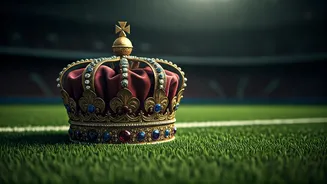
To understand the connection, you first need to look at a word that prefixes many of Spain’s most famous clubs: ‘Real’. Think Real Madrid, Real Sociedad, or Real Betis. This isn’t a brand name; it’s a royal seal of approval. ‘Real’ is Spanish for ‘Royal’,
and the title is a patronage granted by the reigning monarch. This tradition began in the early 20th century with King Alfonso XIII, a keen sports enthusiast who saw football's potential to forge a modern national identity. By bestowing the ‘Real’ title, he symbolically placed these clubs—and the sport itself—under the protection and prestige of the Spanish Crown. It was a brilliant move, instantly elevating football from a simple pastime to an institution of national importance.
A Federation Under the Crown
The connection goes beyond individual clubs. The national team itself operates under the Royal Spanish Football Federation (Real Federación Española de Fútbol, or RFEF). Founded in 1909, it was granted its own royal charter in 1913, solidifying the monarchy’s role as the official patron of Spanish football. This wasn't merely ceremonial. In a country with fierce regional identities, having the monarch as the head patron of the national sport provided a powerful, unifying symbol. The team wasn't just playing for a region or a city; it was playing for a kingdom, under the banner of a federation sanctioned by the head of state. This established a direct line of loyalty and identity that persists to this day, linking the players on the pitch to the highest office in the land.
Surviving Turmoil, Symbolising Unity
The relationship has weathered significant political storms. During the Franco dictatorship, the monarchy was in exile, and football was heavily co-opted for political purposes. However, with the restoration of democracy in the late 1970s and the return of the monarchy under King Juan Carlos I, the royal family’s association with the national team took on a new, powerful meaning. The King became a symbol of a new, democratic, and unified Spain. His enthusiastic support for La Furia Roja, especially during their fallow years, helped reinforce the team as a vehicle for a shared, forward-looking national pride, distinct from the divisive politics of the past. The team’s success in the 21st century became intertwined with the image of a modern, successful Spain, with the royals often leading the celebrations.
Modern Royal Superfans
Today, the bond is carried on by King Felipe VI and Queen Letizia. They are not distant, formal patrons; they are genuine, passionate supporters. King Felipe was famously in the stands in Vienna for the Euro 2008 final, the victory that kickstarted Spain’s golden era. He and the Queen celebrated with the team after their 2010 World Cup triumph and the Euro 2012 win. It’s common to see them visiting the players in the dressing room after a crucial match, offering handshakes, hugs, and personal congratulations. This isn't just a photo opportunity. It’s a public display of the monarch's role as the nation’s number one fan, reinforcing the idea that the team’s triumphs and heartbreaks are shared by the entire country, from the average citizen to the King himself.
A Symbol of the Nation
Ultimately, the royal connections are less about any direct influence over the game and more about powerful symbolism. There are no players with noble titles on the squad. The King doesn't pick the starting eleven. Instead, the relationship serves to frame the national team as something that transcends sport. It represents the state in its entirety. When the players pull on the shirt of the ‘Royal Spanish Football Federation’, they carry the weight of a century of history. And when the King applauds from the royal box, it acts as a visual confirmation of the team’s status as a cherished national institution, binding together the Crown, the country, and the beautiful game.