





Why Bring the Moon to Earth?
Bringing lunar samples to Earth allows for analysis with powerful laboratory equipment that is too large or delicate to send into space. While previous missions by the US, the former Soviet Union, and China have returned samples, they were from different
geological zones. Chandrayaan-4 is targeting the geologically rich southern polar region to collect materials that could hold clues about the origins of the Earth-Moon system and the presence of water ice. Studying these pristine samples on Earth will provide unparalleled insights that remote instruments alone cannot achieve, potentially answering fundamental questions about our solar system's evolution.
A Complex, Multi-Part Mission
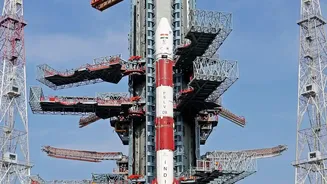
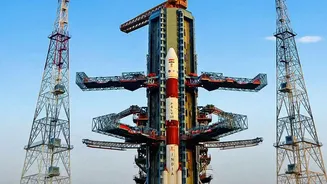
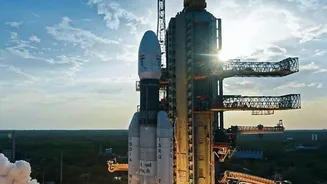
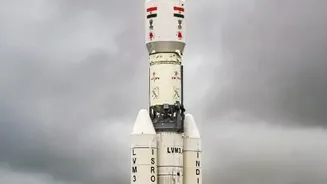
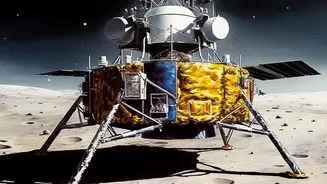
The Chandrayaan-4 mission is so ambitious that it requires five separate spacecraft modules: a Propulsion Module, a Descender Module (lander), an Ascender Module, a Transfer Module, and a Re-entry Module. Due to the sheer weight and complexity, the mission will be launched in two parts using two of India's powerful LVM3 rockets. This dual-launch strategy is a first for ISRO, highlighting the significant technological leap the mission represents.
The Journey: Docking and Descent
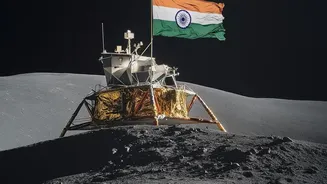
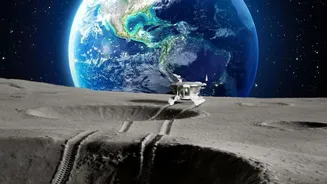
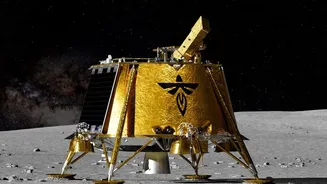
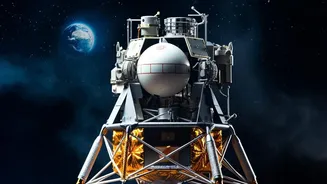
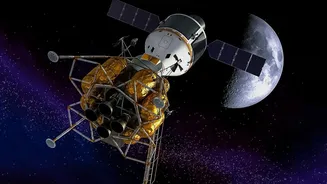
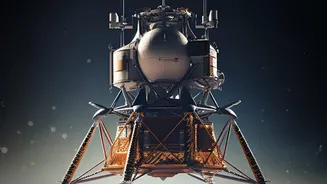
The first launch will carry the Descender and Ascender modules, while the second will carry the Propulsion, Transfer, and Re-entry modules. The two stacks will then perform a crucial manoeuvre: docking in Earth's orbit to form a single, integrated spacecraft. From there, the craft will journey to the Moon. Once in lunar orbit, the Descender and Ascender modules will separate and begin their powered descent to land softly on the Moon's surface, likely near the south pole.
The Crucial Collection: Scooping and Drilling
Once safely on the lunar surface, the mission's main scientific work begins. A robotic arm on the Descender module will scoop up to 3 kilograms of surface soil (regolith). In addition, a drilling mechanism will collect subsurface samples. These precious samples will be transferred into containers within the Ascender module and hermetically sealed to prevent any contamination during the long journey home. The entire process will be carefully monitored via video cameras.
The Escape Act and Orbital Rendezvous
In what will be a landmark moment for India's space program, the Ascender module will launch from the lunar surface, using the Descender as a launchpad. It will then travel to lunar orbit to perform another critical docking manoeuvre with the Transfer and Re-entry modules that were left orbiting the Moon. Once docked, the sealed sample containers will be automatically transferred from the Ascender to the Re-entry Module. This complex orbital rendezvous and sample transfer is a feat only achieved by a handful of nations.
The Final Voyage Home
With the lunar treasure secured, the Transfer Module will fire its engines to push the Re-entry Module out of lunar orbit and onto a path back to Earth. As it approaches our planet, the Re-entry Module will separate and perform a fiery, high-speed ballistic re-entry through the atmosphere. It is designed to withstand the intense heat and pressure before landing safely on Earth, delivering its priceless cargo to ISRO scientists.