




The Great Transformation
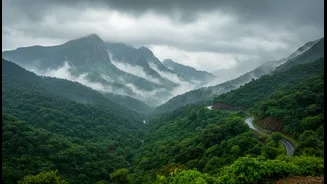
The arrival of the southwest monsoon along India's western coast is a spectacle of nature's power and grace. For months, the Sahyadri ranges and the southern hills lie dormant, a canvas of brown and ochre. Then, as the rain-bearing clouds roll in from
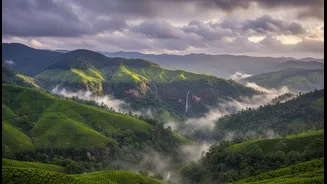
the Arabian Sea, a dramatic change begins. The parched earth soaks in the life-giving water, and within days, a vibrant green fuzz appears, quickly thickening into a lush carpet of vegetation. The air, once thick with heat, becomes cool, heavy with the scent of wet soil and blooming flowers. This annual rebirth is a deeply sensory experience, a shift in the very rhythm of life for the entire region, which stretches from Gujarat down to Kerala. Destinations across Maharashtra, Goa, Karnataka, and Kerala, from Mahabaleshwar to Munnar, are currently witnessing this peak monsoon scenery.
A Symphony of Waterfalls
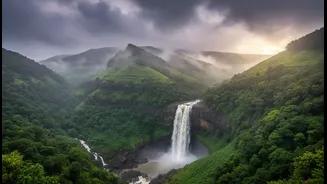
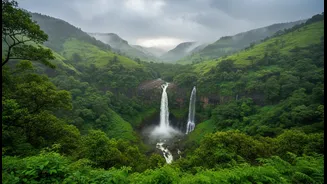
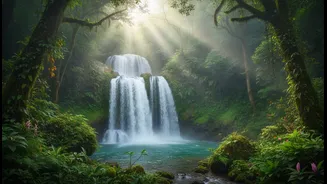
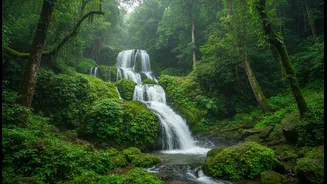
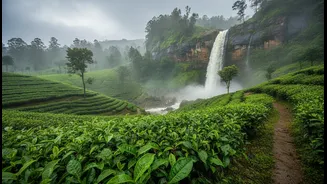
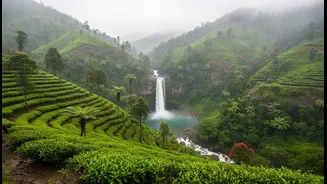
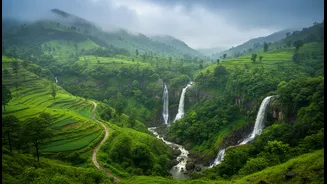
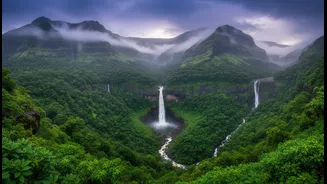
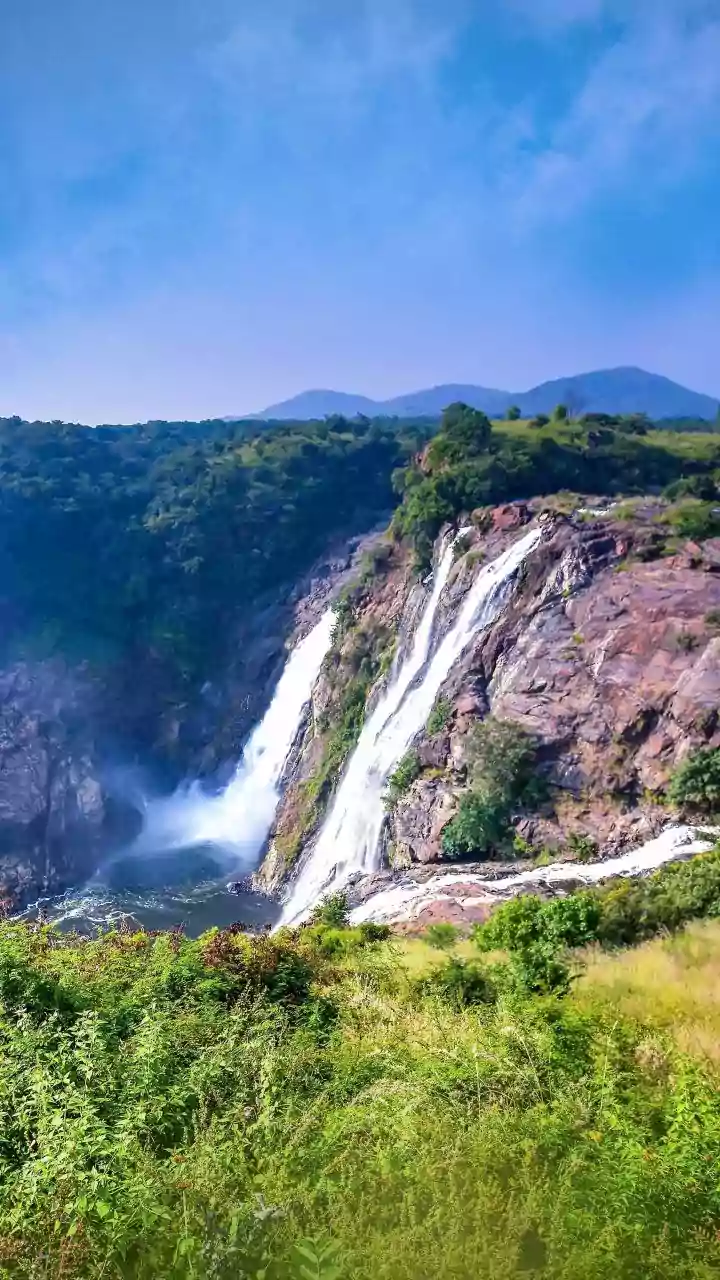
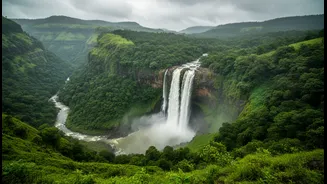
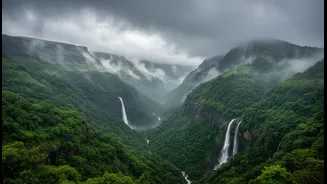
The most dramatic sign of the monsoon's return is the reawakening of countless waterfalls. Streams that were mere trickles a few weeks ago are now thunderous cascades, drawing visitors from across the country. In Maharashtra, the roads through Malshej Ghat and Tamhini Ghat become destinations themselves, with dozens of unnamed falls pouring directly onto the tarmac. Further south, iconic falls like Abbey and Iruppu in Coorg, and Soochipara in Wayanad, are gaining immense volume, their roar echoing through the valleys. Athirappilly Falls in Kerala, often called the Niagara of South India, transforms into a powerful, 100-metre-wide spectacle. These sites become focal points for monsoon tourism, a celebration of water's raw power and beauty, though authorities often issue safety advisories, cautioning visitors against getting too close to the powerful currents.
An Ecosystem Reawakens
The monsoon is the engine of biodiversity in the Western Ghats, a UNESCO World Heritage site and one of the world's 'hottest hotspots' for biological diversity. The rains trigger a flurry of activity that is often hidden from the casual eye. This is the primary breeding season for a vast array of amphibians. Species like the endemic Malabar Gliding Frog and various colourful bush frogs become active, their calls filling the night air. Naturalists now lead 'frog walks' in places like Agumbe and Wayanad for those keen to witness this nocturnal world. The forests are alive with the flash of a Crimson-backed Sunbird or the chatter of a Lion-tailed Macaque. Even insects and flora put on a show, from firefly trails illuminating forests in the Sahyadris to wild orchids and the unique Karvi blooms that flower only once every seven years.
A Season for People and Culture
The monsoon's impact extends deep into the human landscape. For farmers, it dictates the rhythm of the agricultural calendar, and the sight of newly planted paddy fields glowing emerald green is a quintessential Western Ghats experience. The season also buoys a unique 'rain economy'. Homestays and resorts that once closed for the season now offer specialised monsoon packages, catering to travellers who seek the misty, romantic atmosphere of the hills. From trekking through cloud-kissed shola forests in the Nilgiris to sipping hot tea in a cafe overlooking a rain-drenched valley in Chikmagalur, the monsoon offers a different kind of travel experience. It’s a quieter, more introspective season, inviting visitors to slow down and appreciate the rejuvenation of the natural world. While the 2026 monsoon has had a delayed start in some parts, the recent heavy rains along the west coast have kickstarted this annual revival.