





The Great Kitchen Swap
Across Indian kitchens, a quiet revolution is taking place. The trusted kadai, slick with oil for deep-frying everything from morning vadas to evening bhajis, is making way for the air fryer. This countertop appliance has become a fixture in many homes,
driven by a collective desire for healthier eating without giving up traditional comfort foods. The headline claim is compelling: a reduction in oil usage by 70 to 80 percent. This massive drop in oil means fewer calories and less fat, transforming what was once an indulgence into a more regular treat. Beyond health, home cooks also praise the convenience. Air frying eliminates the mess of splattering oil, the challenge of maintaining a perfect temperature, and the lingering smell of fried food that can permeate a home for hours.
How Does It Actually Work?
Unlike deep-frying, which submerges food in hot oil, an air fryer is essentially a compact convection oven. It circulates extremely hot air at high speed to cook the food and create a crispy exterior. This process requires only a tiny fraction of the oil used in deep-frying, often just a teaspoon or a light spray, which is used more to aid browning than to cook. The '80 percent less oil' figure comes from comparing the small amount needed for air frying to the cups of oil absorbed by food during deep-frying. Research suggests that this method can also reduce the formation of acrylamide, a compound that can form in starchy foods during high-heat frying. The result is food with a significantly lower fat content that mimics the satisfying crunch of its deep-fried counterpart.
From Kadai to Air Fryer Basket
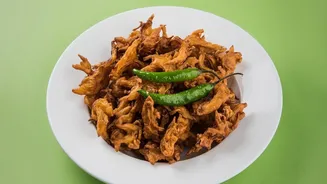
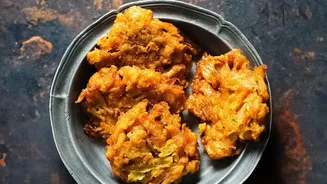
The good news is that many of India's diverse regional fritters adapt beautifully to the air fryer. The key is a batter that is thick enough to hold its shape. Thin, runny batters that rely on instant setting in hot oil will simply drip through the air fryer basket. Popular choices for successful air frying include onion bhajis (pyaz ke pakore), potato pakoras, and spinach pakoras. More complex fritters like Gobi Pakora (cauliflower) and even Corn Pakodas are also proving to be excellent candidates. Cooks are also finding success with lentil-based vadas and even flattening the fritters midway through cooking—a technique known as 'double fry'—to ensure they are cooked through and extra crispy, a trick borrowed from traditional methods.
Tips for the Perfect Air-Fried Pakora
Achieving that perfect, guilt-free crunch requires a few adjustments to traditional recipes. First, ensure your batter is thick, often described as being like a paste. Many successful recipes recommend salting sliced onions and letting them sit to release their natural water, which is then used to form the batter without adding extra liquid. A small amount of rice flour or cornflour added to the besan (gram flour) can enhance crispiness. Do not overcrowd the basket; cook in batches to allow the hot air to circulate freely around each pakora. A light spray or brushing of oil on the fritters before and halfway through cooking is crucial for achieving a golden-brown colour and crispy texture. Finally, remember to shake the basket or turn the pakoras midway to ensure even cooking on all sides.
Managing Taste and Texture Expectations
It is important to be realistic: an air-fried pakora is not an exact replica of a deep-fried one. The taste and mouthfeel are different. Because the food absorbs very little oil, the resulting fritter is lighter and less rich, with a crispiness that some describe as drier than the unctuous crunch from deep-frying. However, most users agree that it's a worthwhile trade-off. The flavour of the vegetables and spices often comes through more clearly without the dominance of oil. Rather than viewing it as a lesser substitute, it is better to appreciate the air-fried version as a delicious and distinct snack in its own right, one that allows you to enjoy the nostalgic flavours of home more frequently and with far less worry.