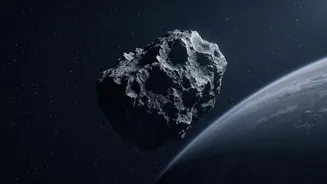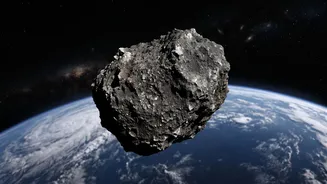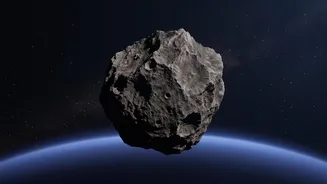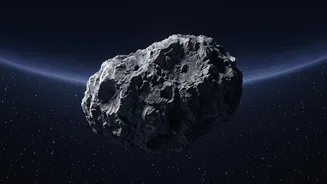






In the vast emptiness of space, even a tiny rock can hold enormous secrets. Meet 1998 KY26, a near-Earth asteroid so small it could fit inside a large room, yet so unusual it has become a top priority for scientists around the world.
A Cosmic Speedster
Discovered in 1998,
1998 KY26 is a minuscule object, measuring only about 11 meters (36 feet) in diameter. While its size is unimpressive, its behaviour is anything but. The most startling characteristic of this asteroid is its incredible rotation speed. It completes a full spin once every 5.35 minutes, making it one of the fastest-rotating objects ever observed in our solar system. To put that in perspective, a day on this tiny world is over before it even begins, with sunrises and sunsets happening every few minutes. This rapid spin is so extreme that if the asteroid were a loose pile of rubble held together by gravity, it would have flung itself apart long ago. This suggests it is likely a single, solid piece of rock—a monolithic body with enough internal strength to withstand the intense centrifugal forces.
The Mystery of Its Motion
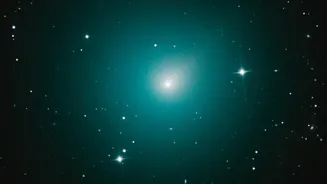
Beyond its dizzying spin, the orbit of 1998 KY26 has presented a persistent puzzle. Its path around the sun is not just influenced by the gravity of larger bodies like Earth and Jupiter. Scientists have detected a strange, slight acceleration in its trajectory that cannot be fully explained by gravitational pull or the gentle push of sunlight. This led to an intriguing theory: could 1998 KY26 be a 'dark comet'? Dark comets are objects that look like asteroids but are secretly venting gases, like a comet, creating a tiny, invisible thrust that alters their path. However, recent modeling studies have cast doubt on this idea. Researchers calculated that the asteroid is too warm to hold onto the subsurface ice needed for this kind of outgassing to occur over long periods. This leaves the cause of its unusual orbital deviation an open and actively debated question.
A Destination for Hayabusa2
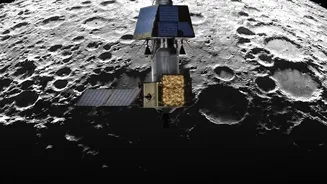
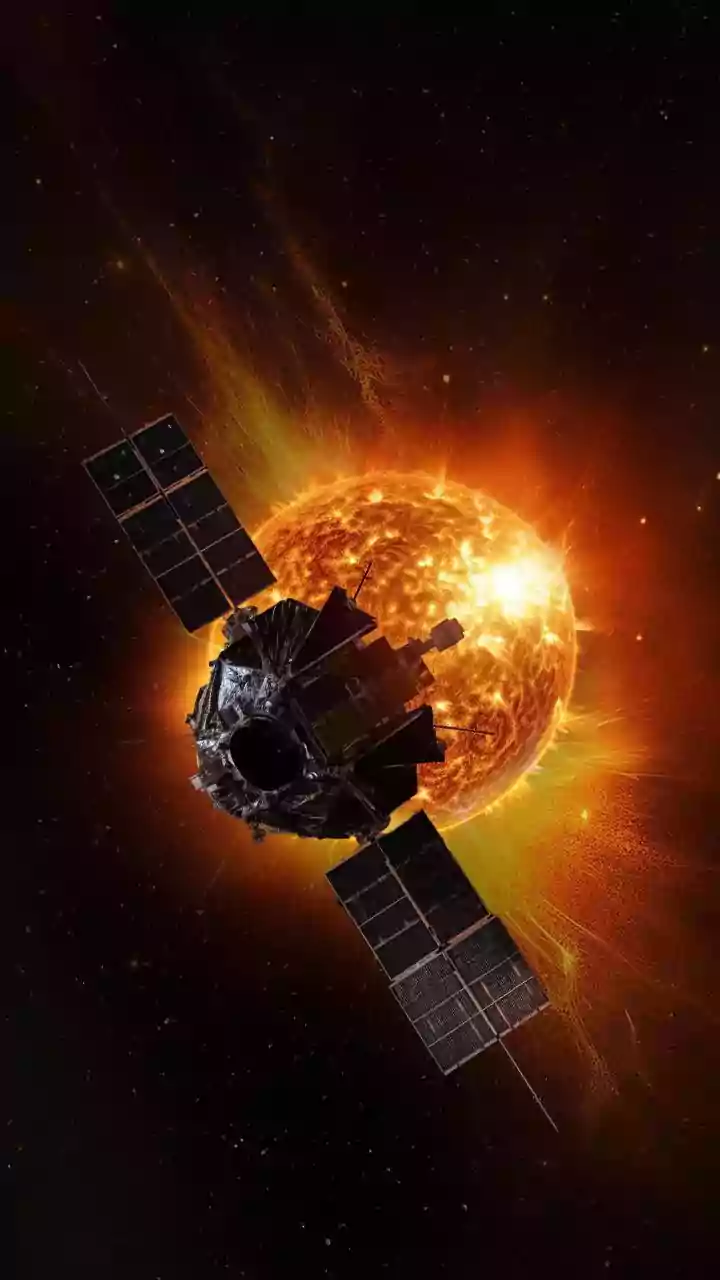
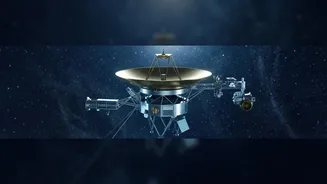
The mysteries surrounding 1998 KY26 make it a prime target for up-close investigation. In a testament to its scientific importance, the Japan Aerospace Exploration Agency (JAXA) has selected it as the final destination for its celebrated Hayabusa2 spacecraft. After successfully returning samples from the larger asteroid Ryugu, Hayabusa2 embarked on an extended mission. Its ultimate goal is to rendezvous with 1998 KY26 in July 2031. This encounter will be historic, making 1998 KY26 the smallest asteroid ever to be visited by a spacecraft. The mission aims to provide groundbreaking insights into the physical properties of these tiny, fast-spinning bodies, which are numerous but poorly understood.
Why This Tiny Rock Matters
Studying an object like 1998 KY26 is about more than just satisfying scientific curiosity. These small asteroids are remnants from the formation of our solar system, holding clues about the origin of planets and the delivery of water and organic materials to early Earth. Furthermore, understanding the composition and structure of near-Earth objects is crucial for planetary defense. While 1998 KY26 poses no threat itself—it would likely burn up in the atmosphere if it were on a collision course—studying its properties helps scientists prepare for the potential hazard of a larger object. Knowing whether an incoming asteroid is a solid rock or a loose rubble pile is critical for developing effective deflection strategies. The data gathered by Hayabusa2 will provide an unprecedented look at this class of asteroid, helping to validate our ground-based observations and refine our models for protecting our planet.