


A Taste of the Deccan's Fire
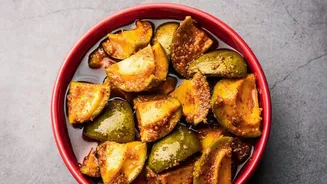
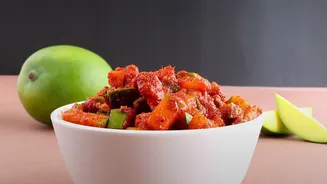
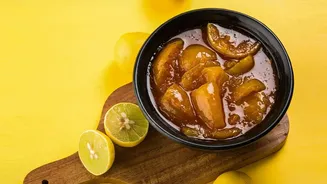
Travel to Andhra Pradesh and Telangana, and you'll find pickles that are as bold and fiery as the region itself. The undisputed king is Avakaya, a raw mango pickle that is a cornerstone of Telugu cuisine. Its name breaks down into 'aava' (mustard) and 'kaya'
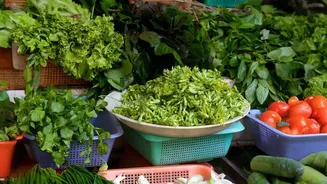
(raw fruit), hinting at its potent flavour profile derived from powdered mustard seed, red chillies, and sesame oil. Making Avakaya is a summer ritual, a communal affair where families gather to prepare jars that will last the year. Equally iconic is Gongura pachadi, made from the distinctively sour sorrel leaves that grow abundantly in the region. These leaves, known for their sharp, tangy flavour, are cooked down with spices to create a pickle that is deeply earthy and unmistakably Andhra.
Ingenuity from the Arid West
In the desert landscapes of Rajasthan, where fresh produce is scarce for much of the year, pickles are a testament to human ingenuity. Ker Sangri pickle is a prime example, born out of necessity during famines. It's made from Ker, a tart desert berry, and Sangri, the bean-like pods of the native Khejri tree. These hardy ingredients are dried and preserved in mustard oil with local spices, creating a unique, chewy pickle that tells a story of survival and resourcefulness. A little further west, in Gujarat, the pickle story turns sweet. Chhundo, a sweet and spicy grated mango pickle, is a regional icon. Traditionally, grated raw mango and sugar are left in the sun for days until the sugar dissolves and forms a thick, translucent syrup, which is then spiced with cumin and chilli powder.
Pungent Traditions of the East
Head east, and the flavour profiles shift again. In Bengal, Kasundi is more than just a condiment; it's a cultural artifact. This ferociously pungent fermented mustard sauce was historically prepared with great ceremony. Made from a blend of black and yellow mustard seeds, spices, and sometimes green mangoes, Kasundi’s preparation was once a ritual-bound process governed by strict social rules. Its sharp, tangy kick is the perfect accompaniment to the region's famous fried snacks. From the Northeast comes the legendary Bhoot Jolokia pickle, made from one of the world's hottest chillies. Cultivated in Assam and Nagaland, the 'ghost pepper' has a unique smoky flavour that, when pickled, creates a condiment that is both a challenge and a delight for spice lovers.
Coastal Flavours from the South
Along the lush coastline of Kerala, pickles reflect the bounty of the tropics. Kannimanga Achar is a beloved speciality made from tiny, tender baby mangoes, pickled whole with their stems intact. Harvested at the start of summer, these mangoes are brined in salt for days, allowing them to soften before being mixed with a fiery gravy of chilli powder and crushed mustard seeds. The pickle is known for its intense sour and spicy taste that pairs perfectly with cooling curd rice or simple rice gruel. The use of gingelly (sesame) oil is common, adding a nutty richness that helps preserve the pickle through the monsoon months.
A Jar Full of Heritage
Beyond being a mere condiment, the Indian pickle, or achar, is a method of preservation that has been passed down through generations, mostly through the matriarchs of the family. Each recipe is a carefully guarded secret, a link to one's ancestors and regional identity. The process often involves sun-drying, meticulous spicing, and patient maturation, techniques developed to make seasonal abundance last through the lean months. A jar of homemade pickle is not just food; it's a vessel of memory, culture, and love, capturing the essence of a place and its people in every flavourful bite.