




Why Wool Needs Special Attention
Before we decode the symbols, it’s important to understand why wool requires specific care. Wool fibres are covered in microscopic scales. When exposed to a combination of heat, moisture, and friction (like in a regular washing machine cycle), these scales open
up, interlock, and bind together permanently. This process, called felting, is what causes wool to shrink and become thick and dense. It’s an irreversible change, which is why following the care instructions is so crucial. Manufacturers recommend the safest methods to prevent this, ensuring your garment maintains its shape, size, and softness.
Decoding the Washing Symbols
The washtub symbol is your primary guide to washing. A number inside the tub indicates the maximum water temperature in Celsius; for wool, this is almost always 30°C or lower to prevent felting. A hand in the tub means hand wash only, which is the safest method for many delicate wools. Use lukewarm water and a mild, wool-specific detergent. If the label allows machine washing, it will often have one or two lines underneath the tub symbol, indicating a gentle or delicate cycle is required to minimise friction. A large 'X' through the tub means 'Do Not Wash' at all, signalling the item is likely dry-clean only.
Drying: The Most Critical Step
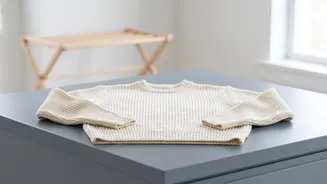
How you dry wool is just as important as how you wash it. A square with a circle inside is the symbol for tumble drying. For nearly all wool garments, this symbol will have an 'X' through it, meaning 'Do Not Tumble Dry'. The heat and agitation from a dryer are the fastest way to shrink and felt wool. Instead, look for symbols indicating air drying. A square with a horizontal line in the middle means 'Dry Flat'. This is essential for knitwear like sweaters, as hanging them can cause the weight of the water to stretch the garment out of shape. After washing, gently press or roll the garment in a towel to remove excess water—never wring it out—and then lay it flat on a clean surface away from direct sunlight or heat.
Ironing and Professional Cleaning
While wool is naturally crease-resistant, some items may need pressing. The iron symbol will have dots inside to indicate the temperature. One or two dots is typical for wool, signifying a low to medium heat setting (around 110°C-150°C). It's always best to use steam or a damp pressing cloth between the iron and the fabric to protect the fibres from direct heat and prevent shine. For knitwear, steaming without direct contact is the safest option. The final symbol is a circle, which relates to professional cleaning. An empty circle or a circle with a 'P' inside means it can be dry-cleaned. An 'X' through the circle means do not dry clean.
What the Other Symbols Mean
The triangle symbol refers to bleaching. A plain triangle means any bleach can be used, but for wool, you will almost always see a solid triangle with an 'X' through it. Bleach can damage wool's protein fibres. A triangle with two diagonal lines means you can only use a non-chlorine, oxygen-based bleach if necessary. Lastly, the symbol of a twisted garment with an 'X' over it means 'Do Not Wring'. Twisting wet wool can permanently distort its shape and stretch the fibres.