



A Sweet Discovery Near the Galaxy's Heart
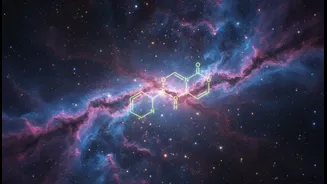
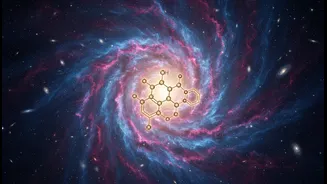
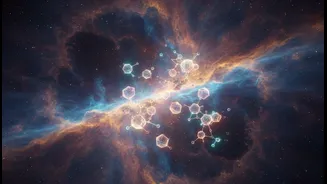
In a major step forward for understanding how life’s building blocks form, astronomers have detected a true sugar molecule in interstellar space for the first time.. An international team identified erythrulose, a four-carbon sugar also found in raspberries,
floating in a massive cloud of gas and dust near the center of our Milky Way galaxy.. Using highly sensitive radio telescopes in Spain, researchers matched the unique chemical signature of the molecule in the cloud G+0.693-0.027, confirming its presence thousands of light-years from Earth.. While sugars like glucose have been found in meteorites before, this is the first direct detection of a sugar in the interstellar medium, the raw material from which stars and planets are born.
More Than Just Sugar
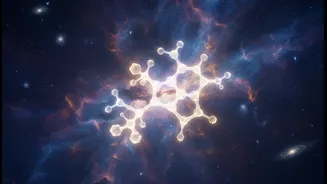
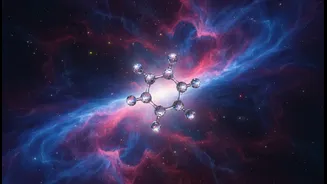
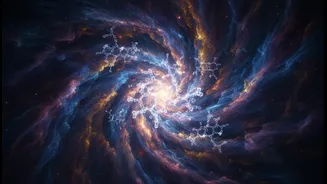
This discovery is part of a larger pattern of finding surprisingly complex molecules, often called COMs, in the most unexpected places.. The James Webb Space Telescope (JWST) has been instrumental, using its powerful infrared instruments to peer into cosmic nurseries.. In various star-forming regions, Webb has identified a diverse chemical inventory that includes not just simple ices but also ethanol (the alcohol in drinks), acetic acid (the main component of vinegar), and benzene.. These aren't just random chemicals; they are carbon-based molecules considered vital precursors for prebiotic chemistry—the steps that could eventually lead to life.. The detection of these compounds confirms that the chemistry to build complex organics can happen even before stars are fully formed..
From Cosmic Clouds to Planets
The big question is how these molecules get from a cold cloud of gas to a warm, rocky planet like Earth. The current theory is that these molecules form on the surfaces of icy dust grains.. Over millions of years, these grains clump together, forming asteroids and comets.. These celestial bodies can then act as delivery vehicles, crashing into young planets and seeding them with the raw materials needed for life to begin.. The discovery of abundant erythrulose in interstellar space, along with similar complex molecules found on asteroids like Ryugu, strengthens the evidence for this cosmic delivery service.. It suggests that the ingredients for life don't need to be made from scratch on a planet's surface; they can be inherited from the cosmic cloud where the planet was born..
Why This Changes Everything
For decades, scientists debated whether the complex molecules needed for life were a rare fluke or a common feature of the universe. The growing evidence suggests the latter.. Finding these compounds in diverse environments—from cold, dark clouds to the regions around young stars—implies that the potential for life-friendly chemistry is widespread.. For instance, detecting organic molecules in the Large Magellanic Cloud, a neighboring galaxy with different chemical conditions than our own, shows that these processes can occur even in environments similar to the early universe.. This pushes back the timeline for when life's building blocks could have first appeared and expands the range of places we might look for them. It strengthens the idea that Earth may not be uniquely special, but rather one of many places that received a starter kit of prebiotic chemicals from space.