






A Window into the Past
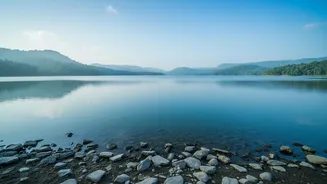
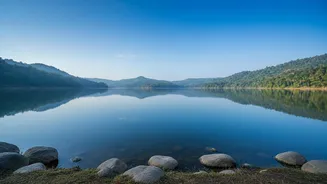
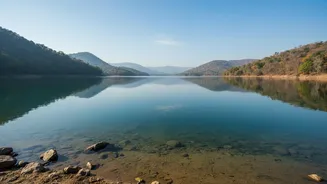
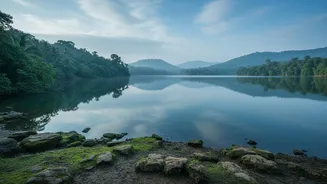
In the Korba district of Chhattisgarh, scientists from the Lucknow-based Birbal Sahni Institute of Palaeosciences (BSIP) have turned their attention to Raja Rani Lake. This site lies in the heart of India’s Core Monsoon Zone (CMZ), a region that receives
the vast majority of the country's annual rainfall and is highly sensitive to changes in the Indian Summer Monsoon. By drilling into the lakebed and extracting a 40-centimetre-long core of sediment, the researchers have essentially acquired a natural archive of environmental history. These layers of mud, built up over millennia, contain a detailed record of the climate and vegetation that once defined this landscape, stretching back about 2,500 years.
Pollen: The Microscopic Storyteller
The key to unlocking this history lies in palynology, the scientific study of pollen grains. As plants release pollen, some of it settles in nearby lakes and becomes embedded in the sediment. These microscopic grains are remarkably durable and can remain preserved for thousands of years. By identifying the types of pollen found in different layers of the sediment core, scientists can reconstruct what the surrounding vegetation was like at a specific point in time. A high concentration of pollen from forest-loving plants, for instance, points to a warm and humid climate with plenty of rain, while a dominance of grasses and herbs suggests drier conditions. Each layer of sediment acts as a snapshot, allowing researchers to build a timeline of climatic shifts.
A Stronger Medieval Monsoon
The study's most significant finding challenges previous assumptions about India's climate history. The pollen record revealed that between roughly 1060 and 1725 CE, central India experienced a period of unusually strong and sustained monsoon rainfall. This era, which corresponds with a global warm phase known as the Medieval Climate Anomaly (MCA), saw the region transform from a wooded savannah to dense, mixed tropical deciduous forests. The evidence points to a climate that was warmer and significantly more humid than previously believed for that time. Crucially, the researchers found no signs of major dry spells during this period within the Core Monsoon Zone, indicating a remarkably stable and intense monsoon system.
What Drove the Intense Rains?
Scientists attribute this powerful medieval monsoon to a combination of interconnected global and regional climate drivers. The evidence suggests the presence of La Niña-like conditions in the Pacific Ocean, which are typically associated with stronger monsoons in India. This was likely coupled with a northward shift of the Inter Tropical Convergence Zone (ITCZ), the belt of low pressure near the equator that governs weather patterns. Furthermore, the period was marked by increased sunspot activity and higher solar radiation, which contributed to warmer global temperatures and, in turn, fueled the intensified monsoon.
Why Ancient Climate Matters Today
Understanding that the monsoon has been much stronger in the past is not just an interesting historical footnote; it is vital for our future. With instrumental weather records only going back to the 1870s, our direct knowledge of climate behaviour is limited. Studies like this one provide a much longer-term perspective, revealing the natural variability and full range of the monsoon system. This information is crucial for critiquing and improving the climate models used to predict future changes. As India faces the challenges of modern climate change, knowing how the monsoon has responded to past warm periods gives scientists a valuable baseline to better forecast future trends, helping to secure water resources and food production for a region that depends so heavily on these seasonal rains.