



Swap Plastic Cutting Boards for Wood
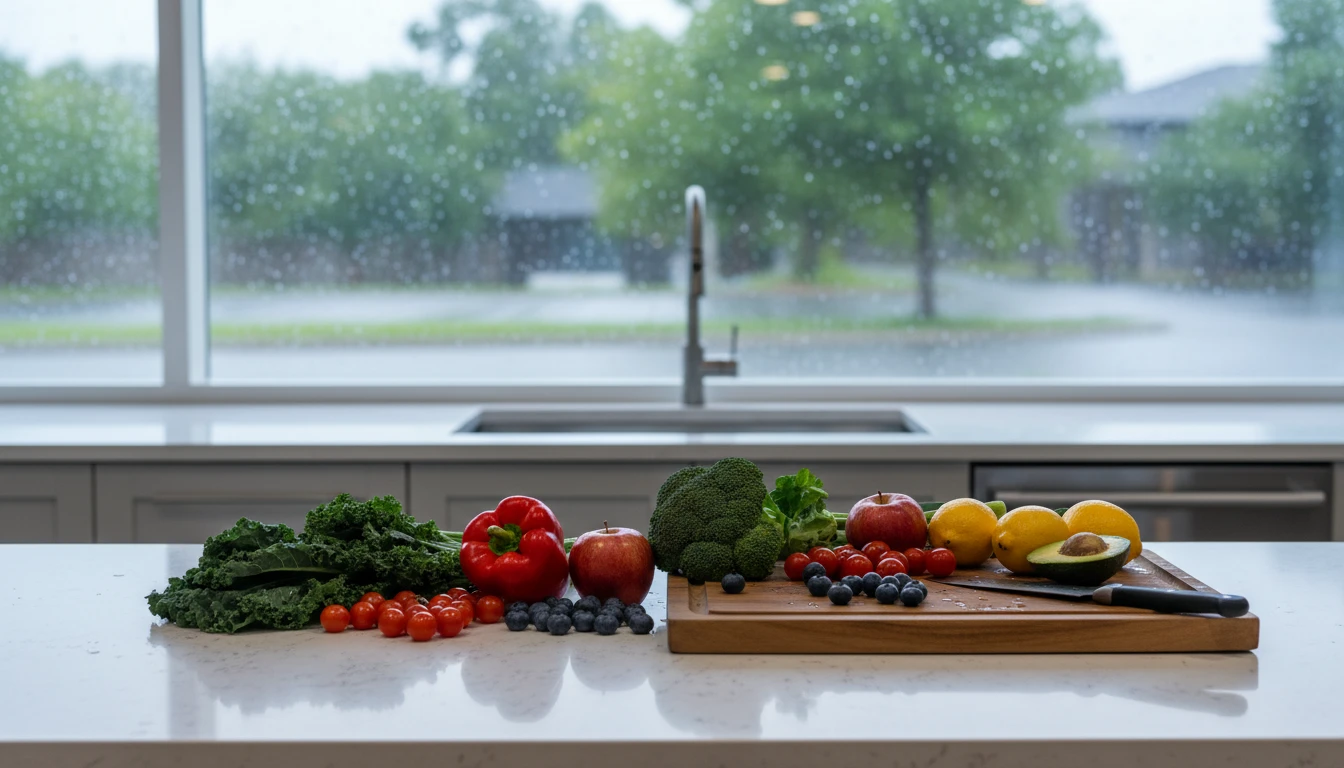
That plastic chopping board you use for your daily sabzi prep might be a significant source of microplastics. Studies have shown that chopping vegetables on a plastic board can shave off thousands, or even millions, of tiny particles directly into your food.
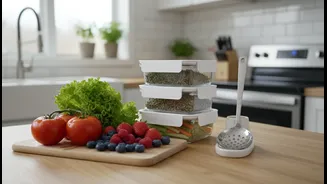
A 2023 study called plastic cutting boards a "potentially significant source of microplastics in human food." Over a year, this could add up to several grams of plastic. A simple and effective switch is to use a traditional wooden or bamboo cutting board. They are durable, and when cared for properly, they provide a safer surface for your food preparation. This single change can make a substantial difference in reducing the plastic you and your family ingest.
Rethink Your Food Storage
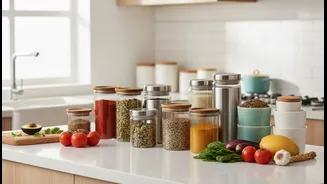
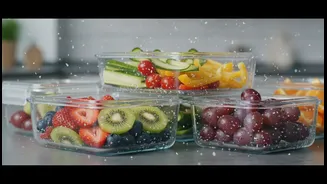
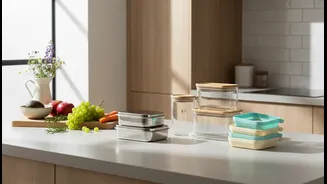
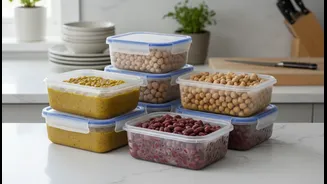
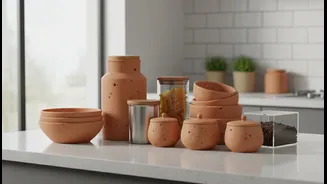
Storing leftovers, dals, and curries in plastic containers is common in many Indian households. However, plastic leaches chemicals and particles into food, a process that accelerates with hot, oily, or acidic ingredients. Instead of plastic tiffins and boxes, consider returning to traditional materials like stainless steel (dabbas) and glass. These materials are non-reactive, meaning they won't release particles into your food. They are also durable and can be used for years, making them a more sustainable choice in the long run. For storing dry goods like spices and grains, glass jars are an excellent alternative to plastic packets and containers.
Be Careful With Non-Stick Cookware
Non-stick pans offer convenience, but their coatings can be a hidden source of plastic particles. These pans are often coated with PTFE (commonly known by the brand name Teflon), a type of plastic. When this coating gets scratched by metal spoons or harsh cleaning, it can release thousands of microplastics into your food. One study found a single crack could release around 9,100 plastic particles. If your non-stick pan is scratched or flaking, it's time to replace it. Consider using cookware made from stainless steel, cast iron (like a traditional kadai or tawa), or ceramic, as these materials do not contain plastic coatings and won't shed particles into your meals.
Never Microwave Food in Plastic
Reheating food in the microwave using plastic containers is a major risk for microplastic exposure. The heat from the microwave dramatically speeds up the release of plastic particles from the container into your food. Research has shown that microwaving can release millions of microplastics and billions of even smaller nanoplastics in just a few minutes. Even if a container is labelled "microwave-safe," it can still shed particles. The safest practice is to always transfer food to a glass or ceramic dish before microwaving. It's a small extra step that offers significant protection.
Check Your Tea and Spices
Even your daily cup of chai could be a source of microplastics. Many teabags are sealed with plastic and can release particles when steeped in hot water. Opting for loose-leaf tea and using a stainless steel infuser is a simple way to avoid this. Similarly, many pre-ground spices come in plastic packaging. Over time, plastic can migrate into the contents. Whenever possible, buy whole spices and grind them at home, or choose brands that use glass or paper packaging. Rinsing foods like rice and vegetables thoroughly before cooking can also help wash away surface microplastics.