





A Clear View of Root Health
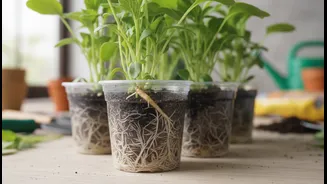
The primary reason gardeners are switching to clear plastic pots is the unparalleled ability to monitor a plant's root system without disturbing it. In a traditional opaque pot, the roots are hidden, and problems often only become apparent when the plant's leaves
start to wilt or yellow. By then, significant damage may have already occurred. Clear pots remove this mystery. At a glance, you can see the colour, density, and overall health of the roots. This visual access is a game-changer, especially for beginners who are still learning to read their plants' needs. It transforms plant care from a guessing game into an observable science, allowing you to become a more confident and intuitive gardener.
Spotting Root Rot Before It’s Too Late
Root rot is caused by fungi that thrive in overly wet, low-oxygen conditions. In a clear pot, the early signs are easy to spot. Healthy roots are typically firm and white or a light tan colour. When root rot begins, you will see them start to turn brown or black. They will also look soft, mushy, and may even appear slimy. Catching this discolouration early allows you to act fast. You can adjust your watering schedule or, in more advanced cases, unpot the plant to trim the affected roots and repot it in fresh, well-draining soil. This early intervention is often the difference between a plant that recovers and one that is lost.
Beyond Rot: Other Key Benefits
Besides spotting root rot, clear pots help you perfect your watering technique. You can see the moisture level throughout the soil, identifying dry pockets or seeing when the bottom of the pot is still saturated. This is especially helpful for plants that prefer to dry out between waterings. You can also watch root development, which is incredibly satisfying and a sure sign of a happy plant. For certain plants like epiphytic orchids (such as Phalaenopsis), clear pots are almost essential. Their specialised roots contain chlorophyll and can photosynthesise, so light exposure is beneficial.
Are There Any Downsides?
While the benefits are significant, there are a couple of potential drawbacks to consider. The main one is algae growth. Since light can penetrate the pot, you might notice a green film developing on the inside surface where moisture and light meet. While generally harmless to the plant, it can be unsightly. Another consideration is that roots are naturally programmed to grow away from light (a process called negative phototropism). Some also argue that clear pots can heat up more in direct sun. However, these issues are easily solved. To prevent both algae and excess light or heat, you can simply place the clear pot inside a decorative, opaque outer pot (often called a cachepot). This gives you the best of both worlds: the diagnostic benefits of a clear pot and the aesthetic you desire.
Best Plants for a Clear View
While most common houseplants can benefit from the monitoring a clear pot provides, some are particularly well-suited. Orchids are the classic example, as their roots actively photosynthesise. Aroids—a massive family that includes popular plants like Monstera, Philodendron, and Anthurium—also do exceptionally well. These plants often have thick, fleshy roots and appreciate the ability to monitor moisture levels closely to prevent rot. Propagating cuttings in clear pots is also a fantastic way to watch for new root growth and know exactly when the new plant is established enough to be potted up.