








El Niño's Shadow Over India
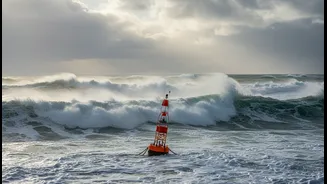
El Niño is a naturally occurring climate pattern, but its effects are anything but gentle. It begins with the unusual warming of surface waters in the eastern Pacific Ocean. This seemingly distant event triggers a cascade of atmospheric changes that disrupt
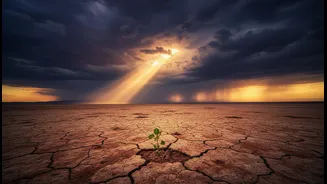
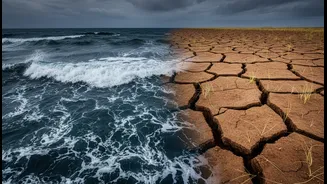
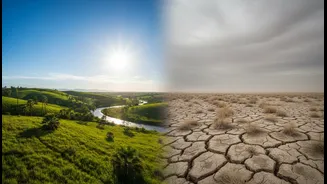
weather systems worldwide. For India, the stakes are particularly high. A strong El Niño is often linked to a weaker southwest monsoon, the lifeblood of the country's agriculture-dependent economy. Weaker monsoons can lead to below-normal rainfall, threatening crop yields, straining water reservoirs, and potentially fueling food price inflation. While not every El Niño leads to drought in India, the historical correlation is strong enough to cause significant concern each time the phenomenon develops.
The Science of Brighter Clouds
The proposed solution, known as marine cloud brightening, sounds like science fiction. The core idea, first proposed in 1990, is to spray a fine mist of seawater into the lower atmosphere over the ocean. The tiny salt particles act as cloud condensation nuclei, helping to form a greater number of smaller cloud droplets. This makes the clouds whiter and more reflective. Brighter clouds bounce more of the sun’s energy back into space, which has a cooling effect on the ocean surface below. While previous research focused on this as a tool to counteract long-term global warming, new studies are looking at it for a more targeted, short-term purpose: weakening a developing El Niño.
From Computer Models to Reality
Recent computer modelling studies have shown this idea has promise. A study published in Science Advances in July 2026 suggested that a targeted and well-timed cloud brightening operation could potentially turn a super El Niño into a neutral event. Researchers were partly inspired by a 'natural experiment'—the devastating 2019-2020 Australian bushfires. Smoke from the fires drifted over the Pacific, and the particles brightened marine clouds, which researchers believe contributed to the subsequent multi-year La Niña phase. However, moving from models to the real world is a huge leap. A small-scale, open-air test by the University of Washington in Alameda, California, was halted in 2024 due to a lack of public notice and local government concerns, highlighting the social and political hurdles facing such research.
A Double-Edged Sword
The potential to neutralise a destructive El Niño is tempting, but the risks of this geoengineering approach are significant and poorly understood. Tampering with a major climate system like the El Niño-Southern Oscillation (ENSO) could have widespread, unpredictable consequences. For instance, computer models suggest that while weakening El Niño, cloud brightening might inadvertently cause warming in other parts of the world, like Europe and Asia. There is also the risk of triggering a powerful La Niña event in its place, which brings its own set of extreme weather challenges, including potential floods in some regions. Scientists stress that a full-system understanding is critical before any deployment could ever be considered.
The Debate Over Geoengineering
This research is at the heart of a fierce debate in the climate science community. Critics of geoengineering argue that it is a dangerous distraction from the necessary work of cutting greenhouse gas emissions. They worry it could create a 'moral hazard', giving polluters a perceived license to continue emitting if a technological fix seems possible. Proponents, however, argue that with the world already locked into a certain amount of warming, it would be irresponsible not to research potential tools that could mitigate the worst impacts. They see targeted interventions, like taming an El Niño, as a less risky application than a permanent, planet-wide cooling effort. The consensus, for now, is that the technology is nowhere near ready for large-scale use and that much more research into its effectiveness and unintended consequences is urgently needed.