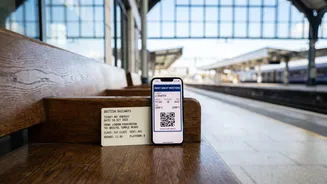








The Supreme Court's Landmark Directive
In a significant move for passenger welfare, the Supreme Court of India has ordered that all train tickets, including those purchased offline at station counters, must include travel insurance coverage. This directive, which takes effect from October
27, 2026, aims to close a critical gap in passenger safety. Previously, this insurance was an optional add-on available only to those booking tickets online through the IRCTC portal. The court's decision, spurred by a petition following the tragic Odisha train accident in 2023, ensures that all travellers, particularly those from lower economic strata who often buy tickets at counters, receive the same financial protection. The Railway Board has been made directly responsible for implementing this mandatory order.
What Does the Insurance Actually Cover?
The travel insurance scheme, which costs a nominal fee of just 35 to 49 paise per passenger, provides substantial financial coverage in case of a train accident or other 'untoward incidents' as defined by the Railways Act. The policy offers a sum of up to ₹10 lakh in the unfortunate event of death or permanent total disability. For permanent partial disability, the coverage is up to ₹7.5 lakh. Additionally, the insurance includes up to ₹2 lakh for hospitalisation expenses for injuries sustained during the journey and ₹10,000 for the transportation of mortal remains. This coverage is valid from the actual departure to the arrival of the train, including the process of boarding and deboarding.
How the New Rule Affects You
Starting October 27, 2026, travel insurance will no longer be an optional box to tick for any passenger. For those who book online via the IRCTC website or app, the process will likely remain similar, but the choice to opt out will be gone. The most significant change is for passengers buying tickets at station counters, who will now automatically be included in the insurance scheme. While the premium for online tickets is a mere 45 paise, the final mechanism and cost for offline tickets are yet to be confirmed by the Railway Board. This move is designed to provide a universal safety net, ensuring every passenger has a degree of financial protection, irrespective of their booking method.
The Critical Step: Filling Nominee Details
Simply having the insurance is not enough; ensuring a smooth claim process for your family is crucial. After booking a ticket online, passengers receive an SMS and an email from the assigned insurance company with a link to fill in nominee details. This step is vital. If a nominee is not declared, the family or legal heirs of the passenger would have to obtain a Succession Certificate from a court to process a claim, a process that can be slow and arduous. For the new system covering counter tickets, the Railways will need to establish a clear procedure for passengers to declare their nominees, a detail that will be critical for the effective implementation of the court's order.
Understanding the Claim Process
In the event of an incident, the claim must be filed directly with the insurance company, not with IRCTC or the Railways. The policy information, including the provider's name, is sent via SMS and email after booking. The claim process typically requires submitting a filled claim form along with documents like the ticket details, railway authority's report confirming the accident, medical reports, disability certificates, and identity proof of the claimant. It is essential to initiate the claim within a specified timeframe, generally around four months from the date of the incident, to ensure it is processed correctly.